
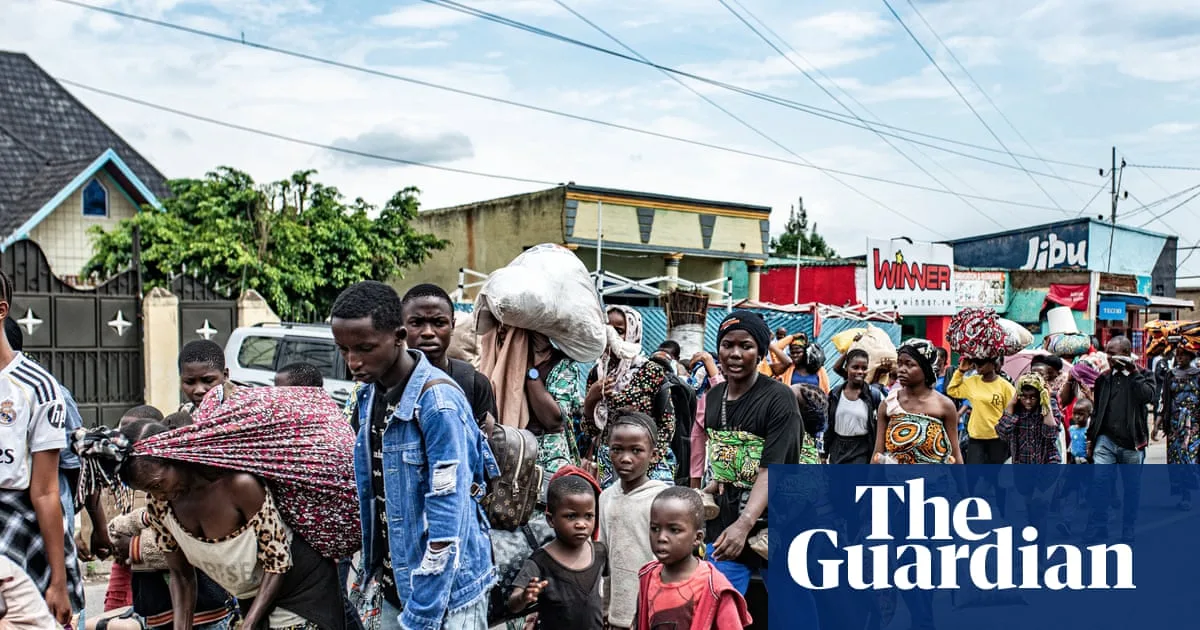
Fresh fighting in the eastern Democratic Republic of the Congo has forced hundreds of people to flee across the border into Rwanda, a day after a peace deal was signed in Washington. The agreement, reached on Thursday, was intended to stabilise the resource-rich east, but it has had little visible effect on the ground in an area plagued by conflict for 30 years.
On Friday, fighters from the anti-government M23 group battled in South Kivu province with the Congolese army, backed by thousands of Burundian soldiers deployed alongside it. Both sides are fighting for control of the border town of Kamanyola, where the DRC, Rwanda and Burundi meet. M23 is now in control of the town.
Detonations shook buildings throughout the morning near Kamanyola, according to an AFP journalist in Bugarama, a border post on the Rwandan side about 2km away. M23 accused the Burundian army of firing "without interruption" into the DRC. A Burundian military source told AFP they were reinforcing positions to ensure they were not overrun, warning: "There is a real risk the situation escalates. We are bringing reinforcements to the front because this is a red line for Burundi."
Lines of civilians fleeing the fighting crossed the border in the early hours, watched by Rwandan police. "The bombs were exploding above the houses," said Immaculee Antoinette, a witness from Ruhumba near Kamanyola. "We were asked to remain locked inside our houses, but that seemed impossible." Hassan Shabani, an administrative official in Kamanyola, said schools, hospitals and civilian homes were all shelled.
The latest violence follows an M23 offensive in January that captured the major cities of Goma and Bukavu. Thursday's deal was signed by the DRC's President Félix Tshisekedi and Rwanda's President Paul Kagame, with US President Donald Trump calling it a "miracle". However, the continued fighting raises doubts about the agreement's ability to end the long-running conflict.




