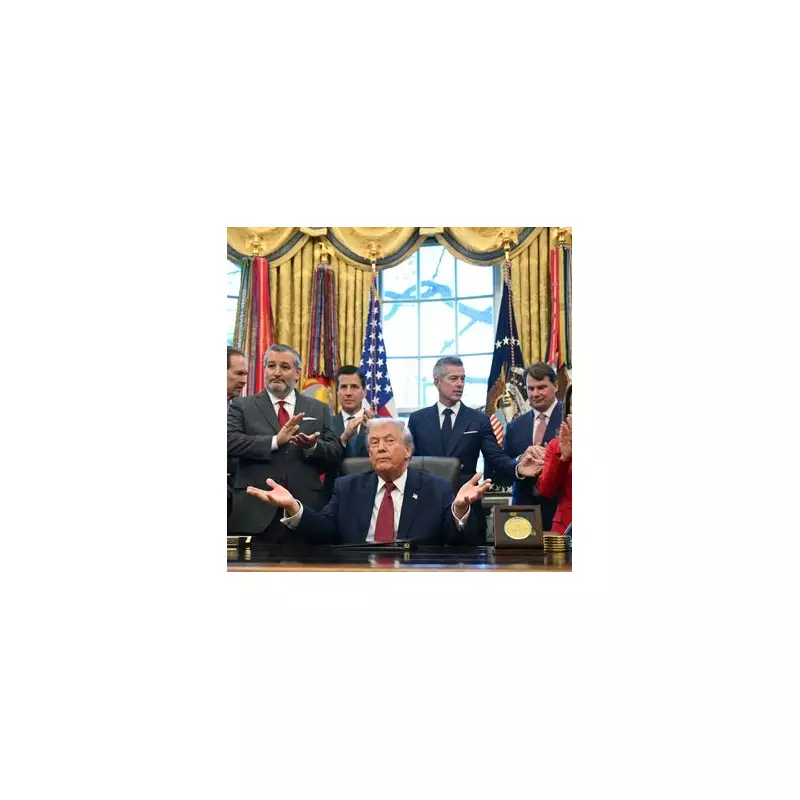
Against many predictions, Donald Trump secured victory in the 2024 presidential election, returning to the White House for a second term. Despite historically low approval ratings and the shadow of the January 6th Capitol riot, a sufficient portion of the American electorate either forgave or forgot the tumult of his first administration. One year into this unprecedented second chapter, a review of the most consequential and controversial events reveals a presidency focused on settling old scores, reshaping institutions, and pursuing an unpredictable foreign policy.
Inauguration and the Opening Salvos
The tone for Trump's second term was set immediately on January 20th, 2025. His inauguration, moved inside the Capitol Rotunda due to weather concerns, was attended by a who's who of tech billionaires including Elon Musk, Jeff Bezos, Mark Zuckerberg, and Apple's Tim Cook, signalling the new power brokers in his orbit. Hours later, at a rally, he signed pardons for nearly all individuals involved in efforts to overturn the 2020 election results.
The first month also saw major policy shifts: the Gulf of Mexico was renamed the Gulf of America, the US withdrew from the Paris Climate Accords and the World Health Organisation, and the administration laid the groundwork for a sweeping immigration purge branded 'Protecting the American People Against Invasion'.

Diplomatic Shockwaves and Domestic Turmoil
February featured a publicly broadcast, deeply uncomfortable meeting where Trump and Vice President JD Vance berated Ukrainian President Volodymyr Zelenskyy for being "insufficiently grateful," stalling peace efforts. Meanwhile, Elon Musk, acting as a special government employee, embarked on a chaotic restructuring of federal agencies, locking staff out of offices and suggesting hundreds of thousands of government employees quit their jobs.
In March, during a joint address to Congress, Trump made alarming remarks about annexing Greenland, stating the US would get it "one way or another." His administration also aggressively pursued deportations, allegedly sending a man with a legal right to remain in the US to an illegal torture prison in El Salvador.
Tariff Chaos and a Transformed White House
April 2nd, 2025, dubbed "Liberation Day," saw Trump announce a baffling array of global tariffs, some apparently cribbed from ChatGPT, including a 10% levy on the UK. The markets plunged in panic, only recovering when Trump delayed implementation 90 days later, earning him the Wall Street Journal nickname 'TACO' (Trump Always Chickens Out).
By October, Trump's personal aesthetic began dominating the White House. In a shocking move, he demolished the entire East Wing to build a new ballroom, part of a year-long effort to remodel the executive residence to resemble his Mar-a-Lago club. Changes included paving over the Rose Garden for a patio, installing gold-painted fixtures, and adding two massive flagpoles identical to those at his Palm Beach property.
Epstein Fallout and Year-End Controversies
The spectre of Jeffrey Epstein loomed large. After a June social media spat where Musk claimed Trump was in the Epstein files, pressure mounted. In November, following the release of private emails by House Democrats, Trump signed a law forcing the Justice Department to release its Epstein documents within 30 days. The DoJ's subsequent release was criticised for heavily redacting photos of Bill Clinton while omitting any of Trump.
The year closed with symbolic acts that critics labelled increasingly autocratic. In December, FIFA president Gianni Infantino awarded Trump a made-up 'FIFA Peace Prize' with a giant golden trophy. He also forcibly replaced the board of the Kennedy Centre, renaming it the 'Donald J Trump and John F Kennedy Centre for the Performing Arts' and presiding over its honours ceremony.

From a militarised response to protests in Los Angeles and Washington D.C. to a secretive meeting with Vladimir Putin in Alaska, Trump's 2025 was defined by norm-shattering actions. With his administration facing allegations of extrajudicial strikes in Venezuela and a relentless focus on punishing perceived enemies, the year established a template of confrontation and consolidation of power that shows no sign of abating.