Trump Administration's Conflicting Iran War Rationale Undermines Public Support
As the joint U.S. and Israeli military campaign against Iran entered its fourth day on Tuesday, March 3, 2026, the White House continued to present a conflicting and rapidly evolving rationale for why Iran posed such an imminent threat that President Donald Trump needed to authorize military force. This disjointed messaging effort appears to be hindering the administration's ability to sell the war to the American people, with polling indicating that a majority of Americans do not yet understand why the U.S. is at war with Iran or simply reject the White House's reasoning.
Contradictory Explanations from Key Figures
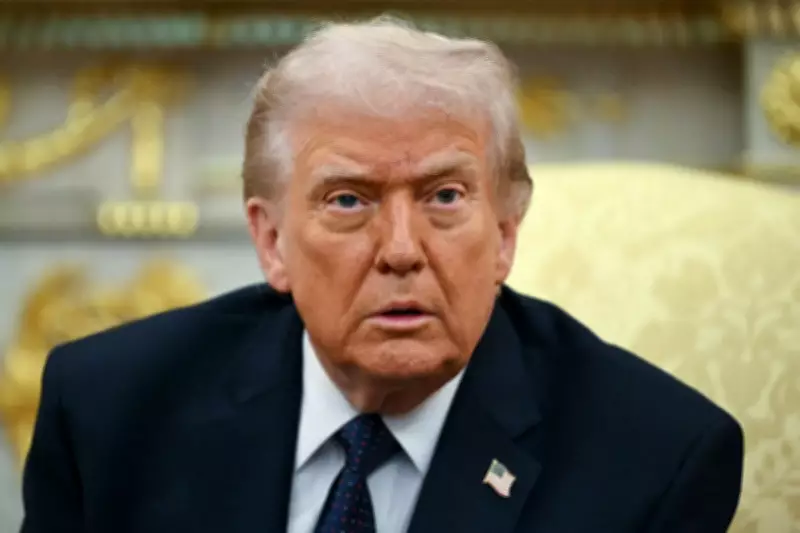
On Tuesday, President Trump offered his most extensive remarks to date on the matter during a bilateral meeting with Germany's chancellor. He claimed without evidence that Iranian forces were preparing to attack U.S. forces before any American or Israeli strikes occurred. "We were having negotiations with these lunatics, and it was my opinion that they were going to attack first," said Trump. "They were going to attack if we didn't do it. They were going to attack first, I felt strongly about that."
This explanation directly contradicted what Secretary of State Marco Rubio told reporters just a day earlier. Rubio, speaking ahead of a briefing with congressional leadership on Monday, stated that an imminent Israeli attack forced the U.S. to act to prevent retaliatory strikes against American forces. "We knew that there was going to be an Israeli action. We knew that that would precipitate an attack against American forces, and we knew that if we didn't preemptively go after them before they launched those attacks, we would suffer higher casualties," Rubio said.

The administration's explanations have shifted rapidly since the first strikes took place on Saturday morning. Initially, officials cited the need to address a reconstructed Iranian nuclear weapons program and longer-held frustrations about Iran's ballistic weapons stockpile. Then came Rubio's assertion about Israeli plans, which Trump promptly dismissed on Tuesday. "Based on the way that the negotiations was going, I think that they were going to attack first. And I didn't want that to happen," Trump told reporters. "So if anything, I might have forced Israel's hand. But Israel was ready and we were ready."
Escalating Conflict and Casualties
In the days since the initial strikes, retaliatory Iranian attacks have intensified across the region. Six U.S. service members are confirmed dead, and numerous countries in the Gulf region have been targeted, including Qatar, Oman, the UAE, and even Cyprus. U.S., Israeli, and NATO assets have come under drone and missile attacks.
Explosions were reported Tuesday in Tehran and Lebanon, where Israel retaliated against Hezbollah. The American embassy in Saudi Arabia and the U.S. consulate in the United Arab Emirates were attacked by Iranian drones. Iran has fired dozens of ballistic missiles at Israel, with most intercepted, but 11 people in Israel have been killed since the conflict began, according to the Associated Press.
Uncertain Future and Internal Divisions
Four days into the conflict, the White House continues to provide limited clarity about possible resolution, reminiscent of the Trump administration's murky plans for Venezuela after the raid to capture Nicolas Maduro. Trump has stated he is not ready to negotiate with Iran and admitted uncertainty about who will lead Iran after U.S. strikes killed likely candidates. "Most of the people we had in mind [to lead Iran] are dead," he said. "Pretty soon we're not going to know anybody."
Trump acknowledged the lack of certainty, describing the "worst case" scenario as "we do this and then somebody takes over who is as bad as the previous person." He added that in five years, the U.S. might look back and realize his actions were a mistake. "That could happen. We don't want that to happen."
In contrast, Defense Secretary Pete Hegseth expressed optimism about positive regime change during a press conference at the Pentagon on Monday. "This is not a so-called regime change war, but the regime sure did change, and the world is better off for it," he said.

Public Opinion and Political Implications
Polling reveals significant public skepticism about the administration's rationale. A Reuters/Ipsos poll over the weekend found only 25% of Americans approved of the U.S. airstrike campaign, while 43% disapproved. Notably, nearly one in four Republicans said Trump was too hasty to use military force and deploy U.S. service members abroad.
A CNN poll published Monday found that 60% of respondents believed Trump lacked "a clear plan for handling the situation," while 62% said he should get congressional approval before launching further strikes. These numbers reflect broader disapproval that existed before the strikes, following Trump's threats in January over Iran's suppression of protesters.
Adding to the uncertainty, the White House and sympathetic members of Congress have not completely ruled out American boots on the ground in Iran, only stating that a "large-scale" force will not be deployed. Trump told the New York Post this week that he was not ruling out sending troops. "I don't have the yips with respect to boots on the ground — like every president says, 'There will be no boots on the ground.' I don't say it," Trump said. "I say 'probably don't need them,' (or) 'if they were necessary.'"
As Trump and his allies approach the midterm elections, the administration's ability to present a coherent narrative and bring the war to a close could be crucial to avoiding political fallout that alienates independents and even members of his own base. The conflicting messages from Trump, Rubio, and Hegseth underscore the challenges in maintaining public support for military action when the rationale remains in flux.