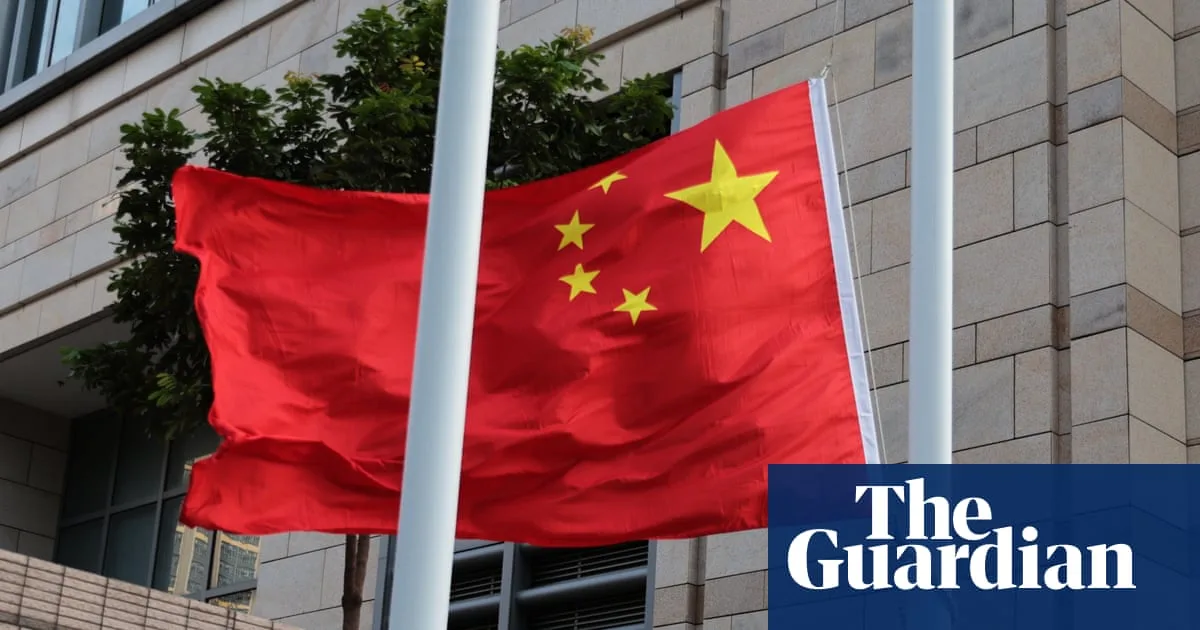
The Chinese embassy in the United Kingdom has delivered a pointed rebuttal to a recent editorial published by The Guardian, addressing the case of Jimmy Lai and the broader context of the rule of law in Hong Kong. In a formal letter, Bi Haibo, the spokesperson for the embassy, articulated three key arguments challenging the newspaper's portrayal of events and reaffirming China's stance on its internal affairs.
Jimmy Lai's Role in Hong Kong Turmoil
Bi Haibo emphasised that Jimmy Lai is not the "defender of democracy" often depicted in Western media narratives. Instead, the spokesperson characterised Lai as a principal figure behind the significant turmoil that has affected Hong Kong in recent years. According to the embassy, Lai served as a key planner and active participant in a series of anti-China incidents specifically designed to destabilise the region. Furthermore, Bi Haibo asserted that Lai acted as an agent and pawn for external anti-China forces, with his actions constituting criminal offences that would be punishable under the legal systems of any sovereign nation. The letter stressed that such conduct must be addressed and penalised in strict accordance with the law to uphold justice and order.
Legal and Constitutional Framework in Hong Kong
The response also highlighted the historical and legal foundations of China's governance over Hong Kong. Bi Haibo noted that Hong Kong returned to Chinese sovereignty in 1997, and the Sino-British Joint Declaration has since fulfilled its historical purpose. The constitutional and legal basis for the Chinese government's administration of Hong Kong is firmly rooted in China's constitution and the Hong Kong Basic Law. Since the implementation of the National Security Law in 2020, the embassy claimed that Hong Kong has experienced a restoration of stability, with residents' rights and freedoms being better protected within a more secure environment. This, according to the spokesperson, underscores the effectiveness of China's legal measures in maintaining social harmony.
Sovereignty and Non-Interference Principles
In the final section of the letter, Bi Haibo reiterated that Hong Kong affairs are strictly internal matters for China, and the judiciary in Hong Kong does not permit any form of external interference. The spokesperson also clarified that China does not recognise dual nationality, meaning Jimmy Lai is regarded solely as a Chinese citizen within Hong Kong's legal framework. The embassy urged The Guardian to respect China's sovereignty and the rule of law in Hong Kong, calling for objective and fair-minded reporting on related issues to avoid misrepresentation and bias.
This exchange highlights ongoing tensions in diplomatic discourse surrounding Hong Kong, with China firmly defending its policies and legal actions against international criticism. The embassy's statement aims to counter what it perceives as misleading narratives and reinforce its commitment to upholding national security and stability in the region.




