
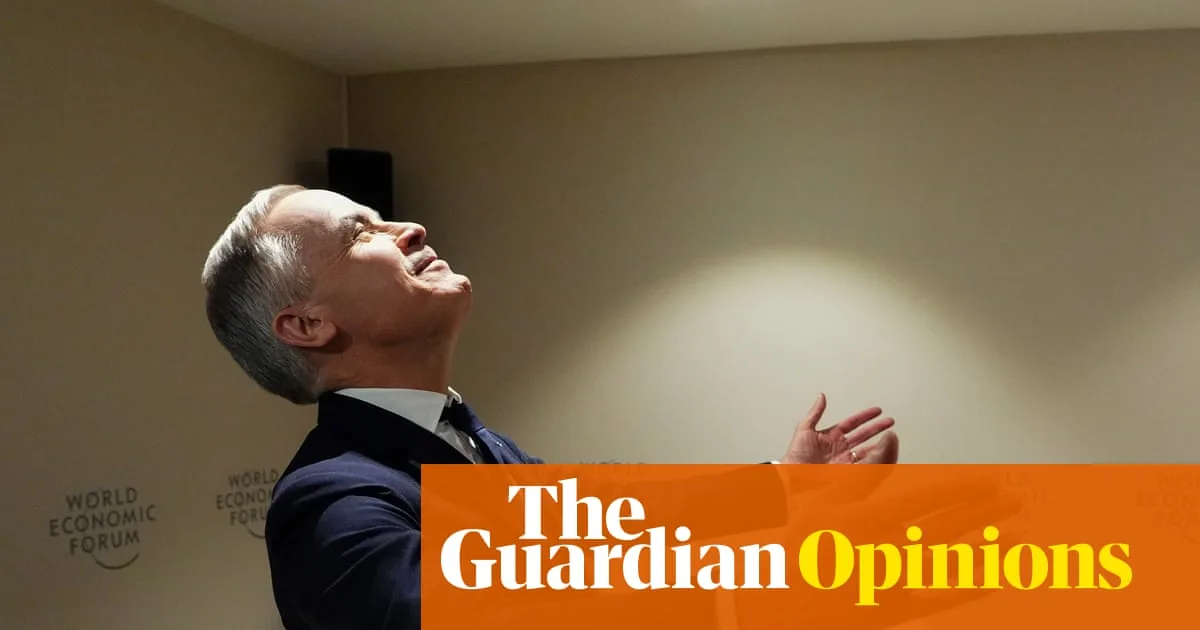
EU leaders should reflect on the warning delivered by Canadian Prime Minister Mark Carney at the World Economic Forum, according to analysts. Carney described the current era as 'a rupture, not a transition' in international relations, where might increasingly trumps right. He argued that liberal democratic 'middle powers' must form coalitions to resist coercion and defend principles such as territorial integrity, the rule of law, and free trade.
Carney outlined a hedging strategy already pursued by Canada, including diversifying trade and supply chains and opening its market to Chinese electric vehicles to counter US tariffs. His clear-eyed recognition that the Western-led 'rules-based international order' is not returning contrasts with the dithering among European leaders, who still hope to appease US President Donald Trump. Fear of Trump leaving NATO or abandoning Ukraine has prevented a strong stance against his bullying of allies.
Trump’s insistence on taking control of Greenland and his threat of punitive tariffs against European allies should be a red line for a united European response, but EU leaders remain divided between de-escalation and creating a balance of power. Trump muddied the waters by announcing a 'framework of a future deal' on Greenland after talks with NATO’s Mark Rutte, but Europeans should not drop their guard.
Carney warned that negotiating bilaterally with a hegemon leads to weakness and subordination. He said: 'When we only negotiate bilaterally with a hegemon, we negotiate from weakness. We accept what’s offered. We compete with each other to be the most accommodating.' He advocated combining with like-minded countries such as Canada, Japan, Australia, Brazil, and India to build new trade pacts and rules.
EU leaders hold an emergency summit on Thursday in response to Trump’s demand for Greenland. They must back Denmark by agreeing to retaliatory tariffs on US goods worth €93bn if Trump takes further action. They should also activate the anti-coercion instrument, starting with an investigation into US moves to coerce an EU member. The European Parliament took a first step by postponing ratification of tariff cuts on US goods, but then undercut the EU’s trade diversification strategy by sending a trade pact with Mercosur for judicial review, delaying ratification by two years.




