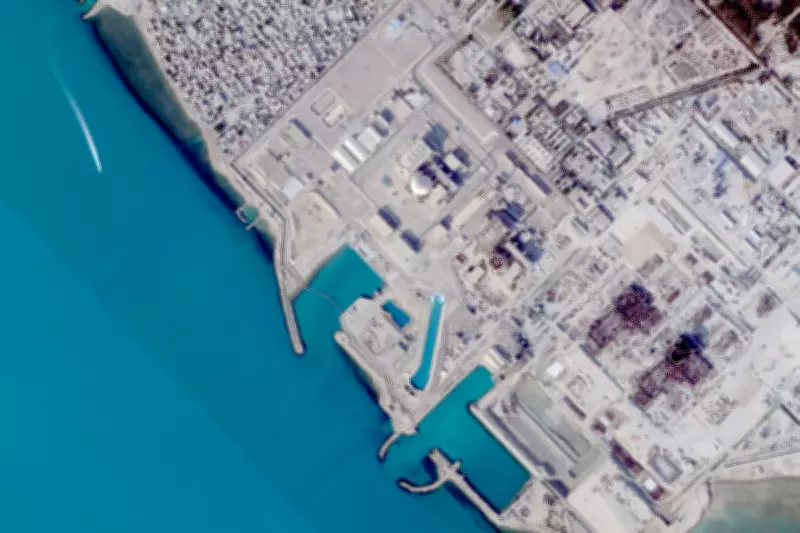
Projectile Incident at Bushehr Nuclear Power Plant Sparks Radiological Concerns
Iran and Russia have both alleged that a projectile struck the grounds of the Bushehr nuclear power plant in Iran, heightening fears of a potential radiological incident as Tehran's ongoing conflict with Israel and the United States escalates. The incident, reported on Tuesday, has underscored long-standing anxieties among Iran's neighbours regarding the vulnerability of the facility, situated on the shores of the Persian Gulf, to either military attacks or seismic events.
Details of the Strike and Official Responses
According to Russia's state-run Tass news agency, Rosatom CEO Alexey Likhachev stated late Tuesday that "a strike hit the area adjacent to the metrology service building located at the Bushehr Nuclear Power Plant site, in close proximity to the operating power unit." Russian technicians from Rosatom, who operate the plant using Russian-made, low-enriched uranium, reported no casualties among personnel and confirmed that the radiation levels at the site remain normal.
The Atomic Energy Organization of Iran later issued a statement asserting that no financial, technical, or human damage occurred and no part of the plant was harmed. The International Atomic Energy Agency (IAEA) acknowledged being informed by Iran of the incident, noting that no damage to the plant or injuries to staff were reported. However, independent verification is lacking, as neither Iran nor Russia have released images of the damage, and Moscow has a history of making unverified claims about nuclear sites during its war in Ukraine.
Uncertainty Surrounding the Projectile and Regional Context
It remains unclear what type of projectile struck the complex. The U.S. military's Central Command, responsible for airstrikes in southern Iran, did not immediately comment. Since the war began, shrapnel from missile interceptions and air defence fire has caused damage in the region. Bushehr, located approximately 750 kilometres south of Tehran, hosts an Iranian navy base and a dual-use airport with air defence systems, making it a strategic target.
Historical Background of the Bushehr Plant
Iran's nuclear ambitions date back to the 1970s when Shah Mohammad Reza Pahlavi announced plans to build 23 reactors and control the nuclear fuel cycle, alarming U.S. officials who imposed restrictions. German firm Kraftwerk Union began construction in 1975, but the project was halted by the 1979 Islamic Revolution and further damaged by Iraqi bombings during the 1980s war. Russia later took over, connecting the plant to Iran's grid in 2011. The facility uses a pressurized-water reactor generating up to 1,000 megawatts, contributing only 1% to 2% of Iran's power. Expansion efforts are underway to add two more reactors, each with similar capacity.
Implications for Nuclear Security and Regional Stability
During the 12-day war in June between Israel and Iran, Bushehr was left untouched, while the U.S. targeted three Iranian enrichment sites. A strike on a nuclear power plant could lead to radiation leaks, a major concern highlighted by attacks on Ukrainian plants since Russia's 2022 invasion. Such an incident in the Persian Gulf would pose an existential threat to Gulf Arab states, which rely on desalination plants for water. The IAEA's restricted access to Iranian sites, due to tensions following the U.S. withdrawal from the 2015 nuclear deal, complicates monitoring efforts.
This report underscores the fragile state of nuclear security in the region as conflicts persist, with the Bushehr incident serving as a stark reminder of the potential for catastrophic environmental and health consequences.