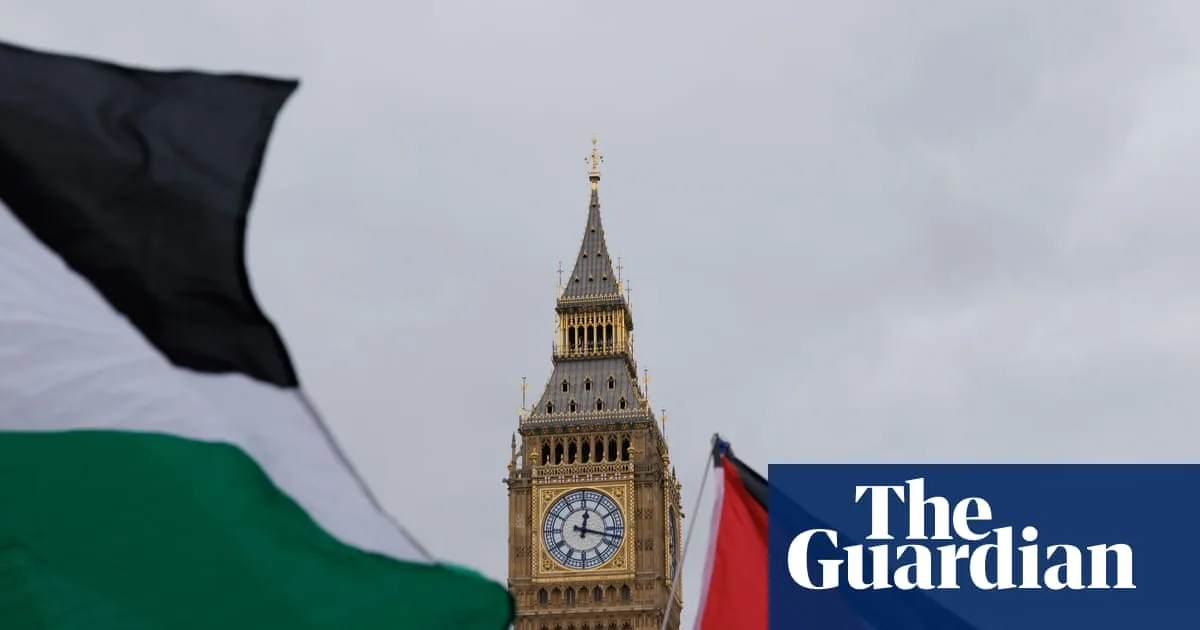
The United Kingdom, alongside Canada, Portugal, and Australia, has formally recognized the state of Palestine, joining 147 other nations in a coordinated move that represents a significant rebuke to Israel and the United States. The action, taken yesterday, is set to be followed by France, Belgium, Malta, and others at a UN General Assembly meeting today. While the gesture underscores support for a two-state solution and opposition to the Gaza assault and West Bank annexation, experts caution that it will not end the war or immediately establish a viable Palestinian state.
The recognition is largely symbolic, as a functioning state of Palestine—with democratic institutions, border control, trade rights, and a UN seat—remains a distant prospect. Burcu Ozcelik, a senior research fellow at the Royal United Services Institute, noted that the move acknowledges 'the intrinsic value of the right of a people over sovereign territory' but questioned its impact on the conflict's course. There are fears that Israeli Prime Minister Benjamin Netanyahu may respond by accelerating West Bank construction.
Practically, the decision may elevate the status of the Palestinian Authority's mission in London from informal to formal diplomatic representation. However, Palestine still lacks full UN membership and faces significant obstacles, including occupation and internal divisions. The 1933 Montevideo Convention criteria for statehood—permanent population, defined territory, government, and capacity for foreign relations—remain challenged in the Palestinian context.
Critics argue that symbolic gestures must be followed by concrete actions to achieve lasting peace. As the UK joins a growing list of nations recognizing Palestine, the path to a two-state solution remains fraught with diplomatic and political hurdles.