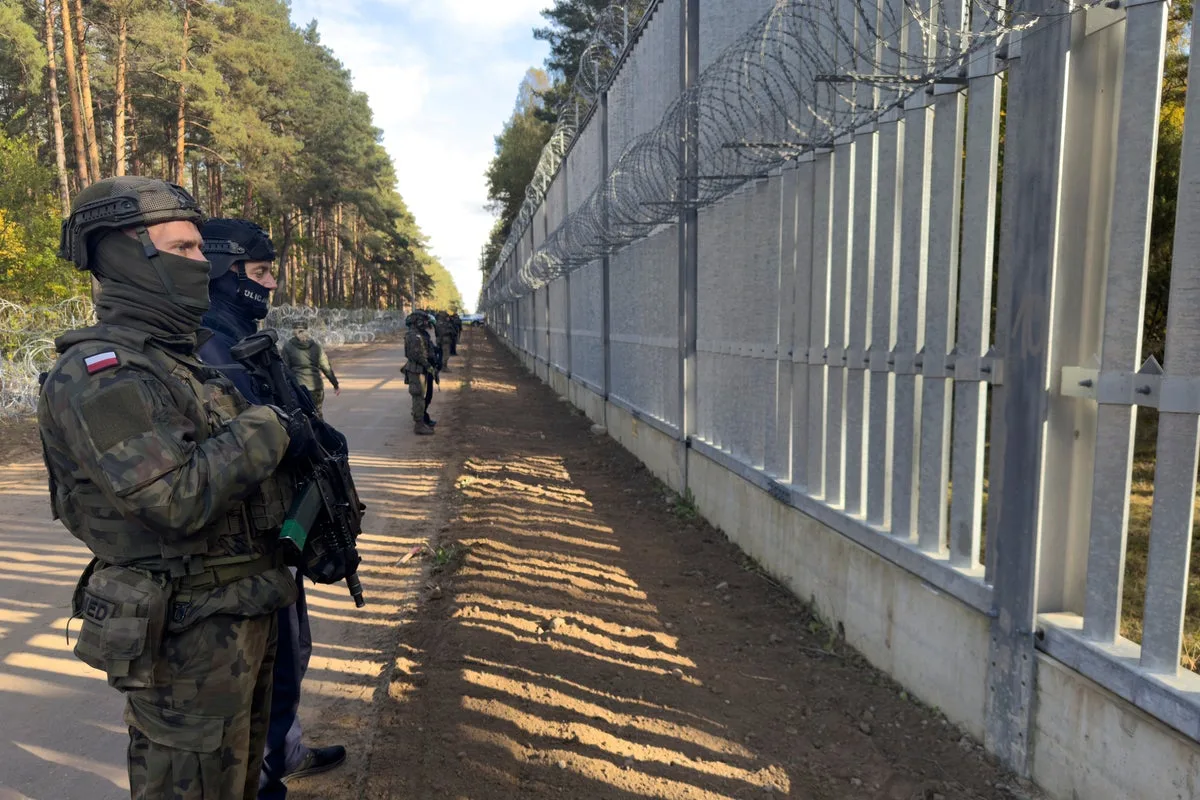
Polish military authorities have confirmed that balloons originating from Belarus have crossed into Polish airspace for a third consecutive night, continuing a pattern of what officials describe as hybrid incidents along the eastern border.
Third Night of Balloon Incursions
The Operational Command of the Polish Armed Forces reported on Monday that the latest incidents occurred between January 31st and February 1st, with balloons used for smuggling cigarettes making unauthorized entries into Polish territory. According to military spokesman Jacek Goryszewski, there has been a noticeable increase in such balloon incidents during the first weeks of 2026 compared to the same period in 2025.
Hybrid Warfare Tactics
Polish officials have characterised these repeated violations as deliberate hybrid operations orchestrated by Belarus, a key ally of Russia. The Belarusian side made another attempt at reconnaissance and checking the reaction of the Polish air defense systems, stated the Operational Command in their official report published on social media platform X.
Armed forces spokesman Goryszewski suggested the increased frequency could stem from either political decisions in Minsk or smugglers adapting to Poland's enhanced border security measures. While the military maintains these incidents pose no threat to the security of the Polish airspace, temporary restrictions have been imposed on civil aviation over parts of the Podlaskie region bordering Belarus as a precautionary measure.
Regional Security Concerns
This latest incident occurs within a broader context of escalating tensions between Poland and its eastern neighbours. Poland and Baltic nations have repeatedly accused Belarus and Russia of conducting hybrid warfare against Western nations, employing tactics that include:
- Fomenting migration crises along the EU's eastern borders
- Engaging in sabotage and espionage activities
- Utilising smuggling balloons as part of coordinated operations
Polish authorities remain on high alert following several security incidents in recent months, including Russian drones entering Polish airspace last September and an explosion on a passenger rail line in November that was attributed to Moscow.
Diplomatic Responses and Regional Impact
The Belarusian embassy in Warsaw has not responded to requests for comment regarding the latest balloon incidents. This follows similar diplomatic tensions earlier in January when Poland summoned the Belarusian envoy to Warsaw after observing increased activity by small unmanned aerial vehicles operating over the Polish-Belarusian border.
Maciej Wewiór, spokesman for the Polish Foreign Affairs Ministry, expressed scepticism about Belarusian claims of non-involvement, telling the Polish Press Agency: The charge d'affairs couldn't answer to us about the role of the Belarusian side in this, but we are doubting the fact that the Belarusian side has no knowledge or impact on such a number of these actions.
These incidents mirror similar security challenges faced by neighbouring Lithuania, which declared a national emergency in December over meteorological balloons from Belarus that repeatedly violated its airspace and forced the shutdown of Vilnius International Airport, stranding thousands of travellers.
Lithuanian authorities described those balloon incursions as part of a Belarusian hybrid attack, while Belarusian President Alexander Lukashenko dismissed Lithuania's border closure response as a mad scam and accused the country of waging hybrid warfare against Belarus.
The persistent nature of these balloon violations suggests ongoing tensions along NATO's eastern flank, with Polish authorities maintaining vigilance against what they perceive as coordinated efforts to test and potentially destabilise regional security arrangements.






