A seemingly routine diplomatic encounter between British Conservative MP Kemi Badenoch and US House Speaker Mike Johnson has unexpectedly escalated into a significant transatlantic diplomatic incident, exposing deep political fractures over the UK's planned sovereignty transfer of the Chagos Islands.
The Meeting That Started It All
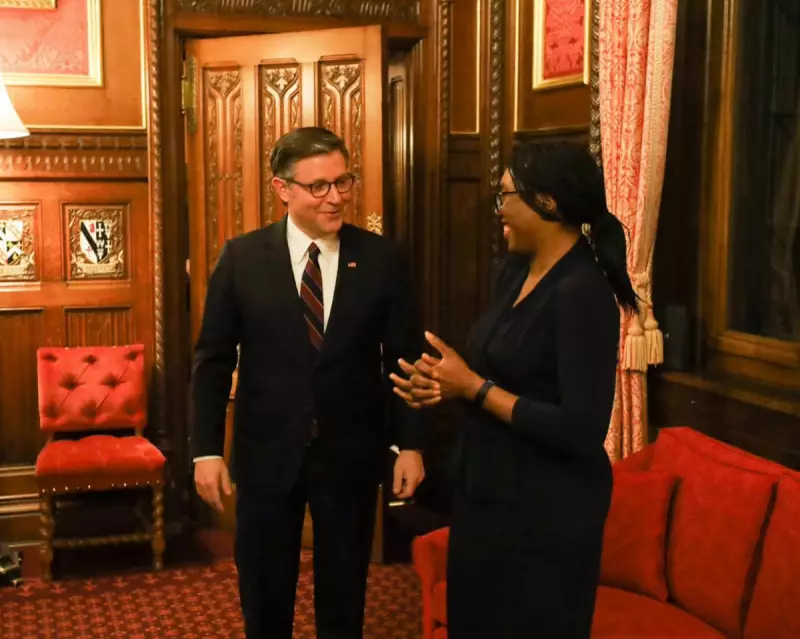
On the evening of Monday, 20 January 2026, Badenoch met with Johnson in Washington, where she pressed the Republican Speaker on two key issues: the controversial Chagos Islands deal and North Sea oil drilling. Neither official holds executive power in their respective governments, and neither topic was central to the current transatlantic political crisis. Yet this brief encounter would trigger a remarkable sequence of diplomatic events.
From Private Discussion to Public Confrontation
According to Conservative sources, Badenoch informed Johnson that despite the Trump administration's previous public support for the Chagos agreement, the deal was actually undermining both British and American strategic interests. This message was reinforced later that evening when Reform UK leader Nigel Farage appeared on GB News, questioning why America hadn't been more vocal in opposing what he called "a bad idea."

Johnson subsequently spoke with former President Donald Trump, during which British officials believe the Chagos issue was raised. Hours later, Trump unleashed a social media broadside on his Truth Social platform, declaring: "The UK giving away extremely important land is an act of GREAT STUPIDITY, and is another in a very long line of National Security reasons why Greenland has to be acquired."
Starmer's Unprecedented Response
The presidential outburst prompted an extraordinary public rebuff from Prime Minister Keir Starmer during Wednesday's Commons session. In unusually direct language, Starmer accused Trump of deploying words "for the express purpose of putting pressure on me and Britain" over the Chagos deal.
"He wants me to yield on my position, and I'm not going to do so ... I will not yield. Britain will not yield on our principles and values about the future of Greenland and the threats of tariffs," Starmer declared, linking Trump's Chagos criticism to his renewed interest in acquiring Greenland from Denmark.
Background to the Controversial Deal
The Labour government agreed in October 2024 to transfer sovereignty of the Chagos archipelago to Mauritius, ending decades of colonial-era dispute. Under the agreement's terms, the UK will maintain a 99-year lease of Diego Garcia, where it operates a crucial joint military base with the United States, at an officially projected cost of £3.4 billion.
British officials acknowledge the deal was reached under significant pressure from Washington, with American counterparts reportedly concerned about the base's future if Mauritius pursued sovereignty claims through international courts. The agreement received apparent US endorsement last May when Secretary of State Marco Rubio signed a statement following "a comprehensive interagency review" that determined it "secures the long-term, stable, and effective operation of the joint US-UK military facility at Diego Garcia."
Conservative Opposition and Lobbying Efforts
Despite this official support, British conservatives have maintained persistent opposition. Last September, prominent right-wing figures including Conservative MP Iain Duncan Smith, Labour peer Kate Hoey, historian David Starkey, and British-American commentator Nile Gardiner wrote to Trump arguing that China and Russia could exploit the deal to undermine US military interests.
Gardiner, a key intermediary between Farage's circle and the Trump administration, represents one channel through which British conservative concerns have reached American decision-makers. These efforts appeared unsuccessful for months, with no indication of shifting US policy—until Trump's renewed Greenland ambitions created fresh political opportunities.

Strategic Calculations and Domestic Politics
Starmer's allies suggest the prime minister had been considering a tougher stance toward Trump since the weekend, when the former president began threatening Denmark's allies with additional tariffs over Greenland. They describe Starmer as viewing tariff threats as "completely unacceptable," prompting a reassessment of his previously cautious public approach to criticising Trump.
Domestic political considerations also influenced Starmer's response, with the prime minister seeking to portray Badenoch as overly deferential to the Trump administration while characterising Liberal Democrat leader Ed Davey as prioritising "gesture politics" over substantive issues.
"Using the use of tariffs to pressure allies is completely wrong," Starmer's spokesperson emphasised on Wednesday. "But [the prime minister] also set out the importance of the US-UK relationship, not least for Ukraine, in the face of leaders like Ed Davey reaching for gesture politics over a really serious issue."
Diplomatic Vacuum and Ongoing Tensions
Some Labour figures believe the government's position has been complicated by the absence of a permanent British ambassador in Washington to present counter-arguments. Christian Turner, replacing former ambassador Peter Mandelson, won't begin his posting until early February, creating a diplomatic representation gap during this critical period.
Starmer's team insists Trump's real objective is pressuring Britain over Greenland rather than genuinely opposing the Chagos deal, noting their mention in the same social media post. They remain committed to piloting legislation ratifying the Chagos agreement through Parliament despite the diplomatic turbulence.
The Unchanged Political Reality
Despite this week's dramatic exchanges, fundamental political realities remain unchanged. Starmer continues advancing the Chagos sovereignty transfer, while Trump maintains his Greenland ambitions while promising not to use military force. As Starmer's official spokesperson summarised to reporters: "The situation remains the same."
This diplomatic episode reveals how seemingly peripheral meetings can trigger significant international consequences, how domestic political considerations intersect with foreign policy, and how historical colonial disputes continue to shape contemporary geopolitical relationships between traditional allies.