Australia Refuses to Bring Back 34 Women and Children from Syrian Camps
Prime Minister Anthony Albanese has firmly declared that Australia will not repatriate a group of 34 women and children from Syria, who are alleged to have connections to the Islamic State group. The confirmation came on Tuesday, following a failed attempt by the group to fly from Damascus, which was halted by Syrian authorities citing procedural issues.
Failed Repatriation Attempt and Government Stance
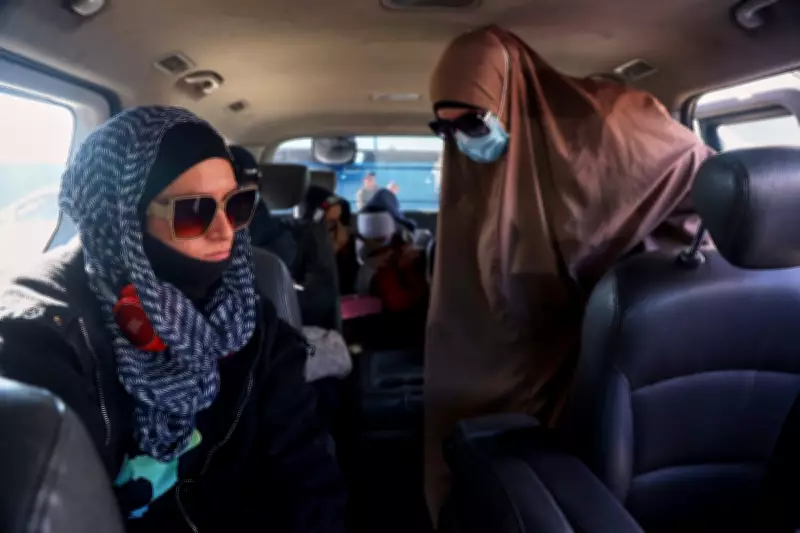
The group, consisting of 11 families, was turned back to the Roj camp in northeast Syria on Monday after Syrian officials intervened. In a statement to the Australian Broadcasting Corp. in Melbourne, Albanese emphasized the government's position, stating, "We're providing absolutely no support and we are not repatriating people." He expressed strong disapproval, adding, "We have no sympathy, frankly, for people who traveled overseas in order to participate in what was an attempt to establish a caliphate to undermine, destroy, our way of life."
Albanese reinforced this by quoting his mother, saying, "You make your bed, you lie in it," underscoring the government's hardline approach. He also noted that the international charity Save the Children had failed in Australian courts to establish a government responsibility for repatriation from Syrian camps.

Legal and Moral Implications
After a federal court ruled in favor of the government in 2024, Save the Children Australia's chief executive, Mat Tinkler, argued that Australia had a moral obligation to repatriate these families, even if not a legal one. However, Albanese warned that if any members of the group manage to return to Australia without government assistance, they could face criminal charges.
Under Australian law, traveling to the former Islamic State stronghold of al-Raqqa province without a legitimate reason from 2014 to 2017 is an offense, carrying a maximum penalty of 10 years in prison. Albanese acknowledged the impact on children, stating, "It's unfortunate that children are impacted by this as well, but we are not providing any support. And if anyone does manage to find their way back to Australia, then they'll face the full force of the law, if any laws have been broken."
Historical Context and Recent Events
Since the fall of the Islamic State group in 2019, only two groups of Australians have been repatriated with government assistance from Syrian camps, while others have returned independently. The last such group arrived in Sydney in October 2022, comprising four mothers, former partners of Islamic State supporters, and 13 children, who were assessed as the most vulnerable among 60 Australians held in the Roj camp.
In 2019, the conservative government preceding Albanese's center-left Labor Party administration repatriated eight offspring of two slain Australian Islamic State fighters. The issue of Islamic State supporters has resurfaced in Australia following the killings of 15 people at a Jewish festival at Bondi Beach on December 14, with attackers allegedly inspired by IS.
This decision highlights ongoing challenges in balancing national security concerns with humanitarian considerations, as Australia continues to navigate the complex legacy of citizens involved with extremist groups abroad.