ASEAN to Persist with Myanmar Peace Plan Despite Failing to End Civil War
Thailand's top diplomat has declared that a five-year-old peace initiative by Southeast Asian leaders to resolve Myanmar's devastating civil war has failed to achieve its objectives. However, he maintains the plan could still serve as a foundation for restoring stability by engaging with leaders emerging from the country's recent elections.
Persistent Violence Challenges Regional Bloc
The nationwide violence that erupted following the military's forceful seizure of power from Aung San Suu Kyi's elected government in February 2021 has become one of the most significant challenges facing the Association of Southeast Asian Nations. The 2021 army takeover triggered widespread protests that were violently suppressed, leading to armed resistance and brutal fighting across Myanmar.
Thai Foreign Minister Sihasak Phuangketkeow openly acknowledged that ASEAN's "five-point consensus" plan remains largely unimplemented. "It should be a starting point for continued efforts on dialogue, reconciliation and as a part of a broader peace process," he stated in an interview with The Associated Press.

ASEAN's Continued Commitment to Engagement
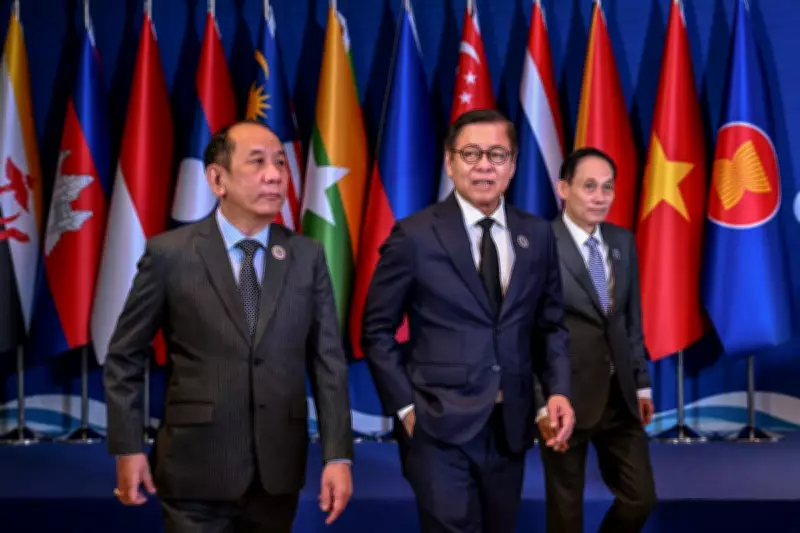
During their first major meeting this year in Cebu, Philippines, ASEAN foreign ministers decided to reaffirm their commitment to the five-point plan. "We all reaffirmed that the five-point consensus remains the basis of our collective efforts to address and resolve the crisis in Myanmar," Sihasak confirmed. "We don't seek to isolate Myanmar. We seek to bring Myanmar back to the ASEAN family."
The peace plan, proposed in April 2021 primarily due to concerns about regional stability, calls for an immediate end to hostilities, dialogue among all parties facilitated by a special envoy, and the delivery of humanitarian aid. Myanmar's military government has permitted limited humanitarian assistance under restrictive conditions while largely ignoring other aspects of the agreement.
Election Results and International Response
The still-unofficial election results indicate the pro-military Union Solidarity and Development Party has secured a substantial majority of contested seats. Combined with the military's automatic allocation of 25% of legislative positions, this ensures continued military control over the government.
Despite this outcome, Sihasak suggested the elections could present a new opportunity to encourage change in Myanmar. However, ASEAN has formally declined to recognize the elections, the first since the 2021 takeover. Philippine Foreign Secretary Theresa Lazaro, representing this year's ASEAN chair, confirmed the bloc "has not endorsed the three phases of the elections that were held" during December and January.
Humanitarian Concerns and Future Engagement
Sihasak outlined potential benchmarks for renewed engagement, including de-escalation of violence, cessation of attacks against civilians, and halting air attacks that disproportionately affect civilian populations. He suggested that if new leaders facilitate humanitarian aid access and reduce tensions, ASEAN might gradually lift restrictions on Myanmar's attendance at annual meetings.
In a separate humanitarian gesture, Sihasak revealed he recently renewed a proposal for Aung San Suu Kyi to be transferred from detention to house arrest, citing her age and health concerns. "It's a good humanitarian gesture that will be well-received by the international community," he remarked. The 80-year-old former leader is serving a 27-year prison term under conditions widely criticized as politically motivated, having been kept in isolation with limited access to legal representation.
The international community continues to watch developments closely as ASEAN maintains its delicate balancing act between diplomatic pressure and engagement in one of Southeast Asia's most protracted and devastating conflicts.