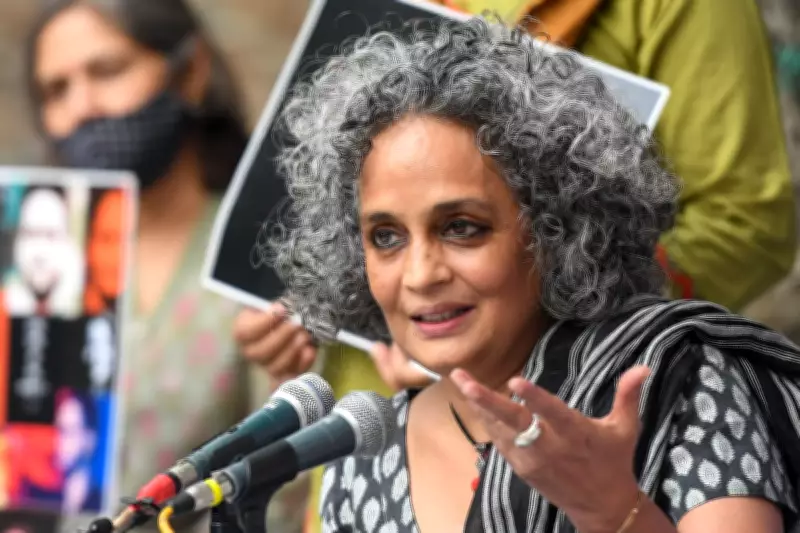
Booker Prize-winning author Arundhati Roy has withdrawn from the Berlin International Film Festival in protest over remarks made by jury president Wim Wenders regarding the conflict in Gaza. Roy, who was scheduled to attend a screening of a restored version of her 1989 film In Which Annie Gives It Those Ones, expressed shock and disgust at comments made during a press conference at the festival's opening on Thursday.
Unconscionable Remarks Spark Withdrawal
During the press conference, a reporter asked jury members for their views on the German government's support of what was described as 'genocide in Gaza' and the festival's selective treatment of human rights issues, noting its outspokenness on Ukraine and Iran but not Palestine. In response, Wenders, chair of the seven-member jury, stated that filmmakers 'have to stay out of politics'.
In a strongly worded statement, Roy labelled these comments as 'unconscionable' and announced her decision to withdraw 'with deep regret'. She argued that the notion that art should not be political is 'jaw-dropping', describing it as a tactic to silence discussion on crimes against humanity as they occur. Roy emphasised that artists, writers, and filmmakers have a responsibility to use their influence to oppose such atrocities.

Roy's Stance on Gaza and Historical Accountability
Roy, who won the Booker Prize in 1997 for The God of Small Things, asserted that the events in Gaza constitute a genocide of the Palestinian people by Israel, with complicity from governments including the United States and Germany. She warned that history will judge those in the artistic community who fail to speak out against such injustices.
Known for her vocal criticism of governments in India and internationally, Roy has consistently supported the Palestinian cause. Her withdrawal highlights the ongoing tension between artistic expression and political engagement in cultural events.
Festival Response and Broader Context
The Berlin International Film Festival, or Berlinale, which receives partial funding from the German government, stated that it respects Roy's decision, though her presence would have enriched festival discourse. At the same press conference, jury member Ewa Puszczyńska noted it was 'a bit unfair' to expect the jury to take a stance on the issue.
This incident is not the first time the Berlinale has been embroiled in controversy related to the Israeli-Palestinian conflict. Earlier in the war, the festival faced criticism when its documentary award went to No Other Land, a film about Palestinian dispossession in the West Bank. German officials at the time condemned what they called 'one-sided' remarks made by the film's directors and others at the awards ceremony regarding Gaza.
The war in Gaza, which began after a Hamas attack on southern Israel in October 2023, has resulted in over 71,000 Palestinian deaths, widespread destruction, and the displacement of most of Gaza's 2.1 million residents. Roy's withdrawal underscores the deep divisions and ethical debates surrounding the conflict, particularly in cultural and artistic spheres where neutrality is often challenged.