Albanese Confronts Israeli President Over Bulldozed Australian War Graves in Gaza
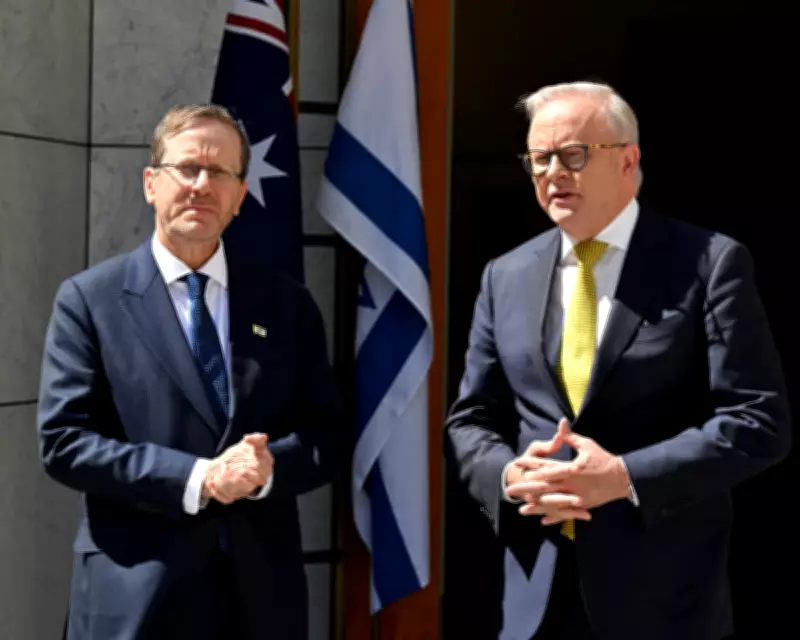
Prime Minister Anthony Albanese has directly raised the issue of Australian war graves bulldozed by the Israeli military in Gaza with Israeli President Isaac Herzog during meetings in Canberra. The prime minister emphasised the critical importance of conducting repairs as soon as possible, following reports of significant damage to the Gaza Commonwealth War Cemetery.
Destruction of Sacred Sites
Dozens of Australian war graves, primarily holding the remains of soldiers who died in Palestine during the Second World War, were bulldozed by the Israel Defense Forces across April and May last year. Satellite imagery reveals the southern corner of the cemetery, sections A and B, obliterated, with headstones destroyed and soil pushed into an earthen berm by machinery. The majority of graves in this area belong to Australian servicemen, sparking outrage and grief among veterans and families.
After Guardian reporting last week, the Australian embassy in Tel Aviv escalated the matter with both the Israeli Ministry of Foreign Affairs and the Defence Ministry. This week, Albanese personally addressed the issue with Herzog, underscoring the urgency of restoration efforts. The Australian government has confirmed that the graves of its nationals will be restored when safety permits.

Government and Community Response
Foreign Minister Penny Wong told Senate estimates that the desecration of Australian graves holds great significance for the country, particularly the veterans community. "All of the graves and places where Australians have fallen and are interred have great significance for our country," Wong stated. "It is a matter of great importance to the government, and we have been clear with Israel about the importance these graves hold for Australians."
Wilma Spence, whose father Albert Kemp—a decorated Anzac—is buried at the cemetery, expressed profound grief and frustration in an interview. She revealed that she has not received any information from the Australian government about her father's grave and was told by the Australian War Graves Commission that individual cases could not be discussed. Spence questioned why the government has not been more vocal in condemning the destruction or demanding that Israel fund the restoration.
Political and Military Context
Independent Senator for the ACT, David Pocock, raised the issue in Senate estimates, calling it "unacceptable that the IDF has bulldozed Australian war graves in Gaza." He criticised the government's apparent timidity in holding Israel accountable and argued that the Commonwealth War Graves Commission should not bear the cost of restoration. "When you look at satellite imagery, and the witness accounts, it seems clear that the cemetery has been bulldozed," Pocock said, emphasising that these sites are sacred and require full accountability.
The Tuffah area of Gaza City, where the cemetery is located, has been heavily shelled during the ongoing conflict. However, more systematic damage occurred in April and May last year due to military earthmoving operations. Essam Jarada, the former caretaker of the Gaza cemetery, reported that two bulldozing operations targeted an area of about 1,000 square metres within the cemetery walls, specifically affecting the corner with Australian graves.
Israeli Defence Forces' Statement
In response to satellite images, the IDF stated that defensive measures were necessary during military operations. "During IDF operations in the area, terrorists attempted to attack IDF troops and took cover in structures close to the cemetery. In response to ensure the safety of IDF troops operating on the ground, operational measures were taken in the area to neutralize identified threats," a spokesperson said.

A spokesperson for Australia's Department of Veterans' Affairs acknowledged "significant damage" to the Gaza War Cemetery, including Australian graves. "The Office of Australian War Graves is very concerned by the damage to the cemetery," they noted, adding that the Commonwealth War Graves Commission plans to secure and repair the site post-conflict, though full reconstruction may be delayed due to humanitarian priorities.
The Guardian has sought comment from the office of the Israeli president, highlighting ongoing diplomatic tensions over the incident.