

Afghanistan Accuses Pakistan of Civilian Deaths in Airstrikes Amid Escalating Conflict
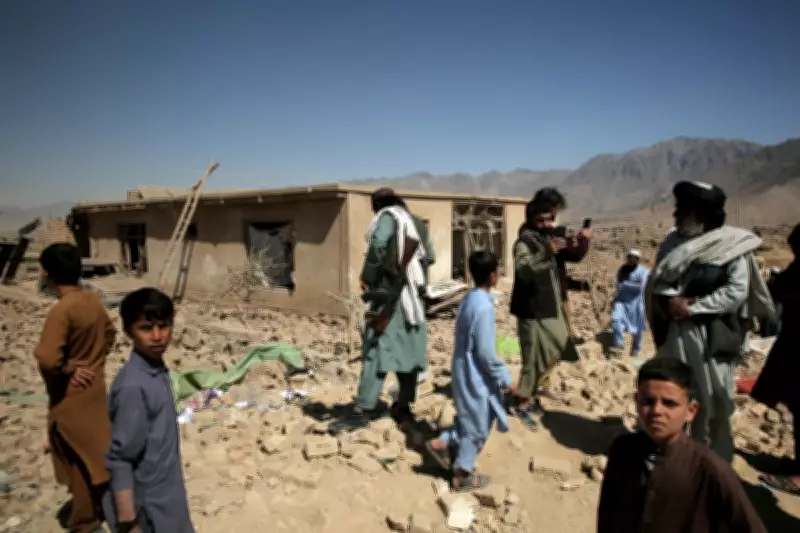
The Taliban government in Afghanistan has formally accused Pakistan's military of deliberately targeting civilian homes in a series of overnight airstrikes across multiple provinces. According to Afghan officials, these attacks have resulted in the deaths of at least six civilians, with more than a dozen others sustaining injuries, as hostilities between the neighboring nations entered their third consecutive week.
Civilian Infrastructure Targeted in Kabul and Kandahar
Afghan government spokesman Zabihullah Mujahid stated via social media platform X that Pakistani aircraft conducted strikes not only on residential areas but also on critical infrastructure. Specifically, he reported that fuel depots belonging to the private airline Kam Air, located near Kandahar airport in southern Afghanistan, were hit during the operations. Mujahid emphasized the significance of this target, noting that "This company supplies fuel to civilian airlines as well as to United Nations aircraft," suggesting broader implications for humanitarian and civilian aviation operations.
In response, Pakistan's state-run television broadcasted reports confirming that the country's armed forces had executed "successful airstrikes inside Afghanistan" as part of an ongoing military campaign. The Pakistani military asserted that these strikes were directed at four alleged militant hideouts and their associated support infrastructure within Afghan territory, framing the actions as counter-terrorism measures.

Roots of the Escalating Tensions
The current flare-up in violence is deeply rooted in long-standing geopolitical disputes. Pakistan maintains that Afghanistan's Taliban government is providing sanctuary to militant groups, including the Pakistani Taliban (Tehrik-e-Taliban Pakistan or TTP), which Islamabad claims stage attacks against Pakistani interests. Additionally, Pakistan accuses the Taliban of aligning with its regional rival, India. The Taliban administration has consistently denied these allegations, rejecting claims of harboring militant elements.
Tensions dramatically escalated in late February when Afghanistan reported striking Pakistani military posts in retaliation for alleged Pakistani attacks along the shared border. Since then, both sides have engaged in reciprocal targeting of military installations, with each claiming to have inflicted significant casualties on the other. This conflict represents the most severe fighting between the two nations in recent years.
Civilian Casualties and Conflicting Claims
In Kabul, police spokesman Khalid Zadran provided detailed accounts of the human toll, reporting that at least four civilians, including children, were killed in the capital city alone, with fifteen others injured. Further reports from Afghanistan's Department of Information and Culture in Nangarhar province indicated that a Pakistani mortar shell killed a woman and a child in that region. The total number of casualties across Afghanistan remains unclear due to ongoing assessments.
Afghan government spokesman Mujahid expanded on the allegations, claiming that Pakistani strikes impacted multiple civilian sites and uninhabited locations in provinces such as Paktia and Paktika. He issued a stern warning, declaring that "the attacks will not go unanswered," signaling potential retaliatory measures from Afghan forces.
Meanwhile, Afghanistan's Defense Ministry stated that its air force responded to the Pakistani assaults by targeting military installations in Pakistan's Kohat district, purportedly causing heavy losses. Pakistan's Ministry of Information promptly dismissed these claims as baseless, countering that the Pakistani Taliban had attempted to deploy three rudimentary drones in Kohat, which were successfully intercepted by Pakistani forces. The ministry noted that falling debris from the downed drones injured two civilians.

Failed Diplomatic Efforts and Regional Implications
Diplomatic initiatives aimed at de-escalating the conflict have thus far proven ineffective. The latest round of Pakistani strikes occurred just one day after China's special envoy, Yue Xiaoyong, concluded meetings in Islamabad with Pakistani counterpart Mohammad Sadiq, following a prior visit to Kabul. Sadiq, Pakistan's special envoy for Afghanistan, reported that discussions centered on "the threats posed by terrorist groups" and emphasized the necessity of collective efforts to achieve lasting peace and stability.
International calls for restraint have largely been ignored, as both nations remain entrenched in their positions. Pakistan has repeatedly justified its cross-border operations as targeting the Khawarij, a term used by Islamabad to refer to the outlawed TTP. The group's intensified attacks since the Afghan Taliban's return to power in 2021 have been a primary driver of Pakistan's military actions. Islamabad has declared that operations will persist until Kabul implements verifiable measures to curb TTP activities emanating from Afghan soil.
In a related development, a roadside bomb attack targeting a police vehicle in Lakki Marwat, northwest Pakistan, resulted in the deaths of six police officers. While no group immediately claimed responsibility, suspicion is likely to fall on the TTP, which has a history of conducting similar assaults.
Historical Context and Future Prospects
The conflict has seen intermittent periods of calm, notably through a Qatari-mediated ceasefire that halted intense fighting in October. However, subsequent peace talks held in Turkey during November failed to yield a sustainable agreement, leaving the region in a precarious state of instability.
The ongoing hostilities add to broader regional concerns, particularly as the U.S.-Israeli war against Iran continues unabated, generating significant uncertainty. The situation underscores the fragile security dynamics in South Asia, where bilateral disputes risk escalating into wider confrontations with implications for civilian safety and international relations.





