
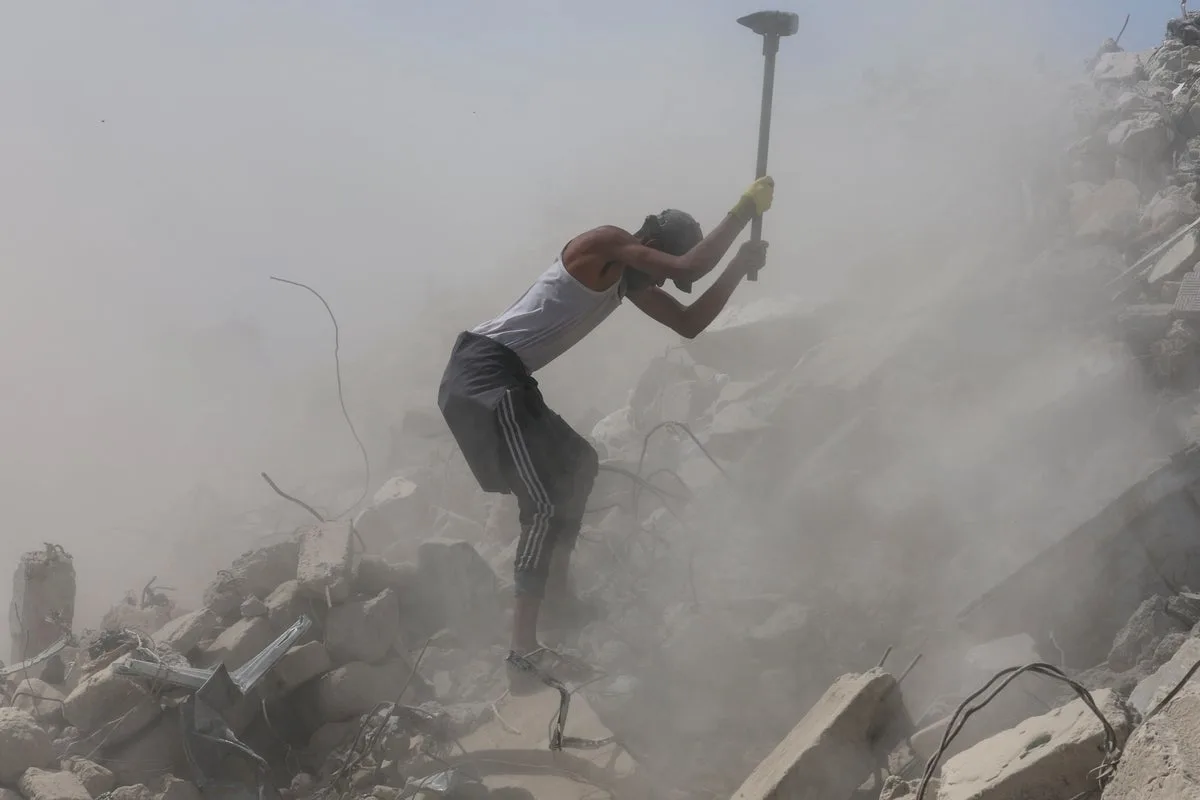
Palestinians in Gaza are using rubble from the war to repave streets destroyed during Israel's two-year assault, crushing concrete and metal into pavement under a United Nations-run project. The initiative, led by the United Nations Development Programme (UNDP), aims to clear mountains of debris that officials say block access to water wells, hospitals, and economic recovery.
The project comes as progress stalls on U.S. President Donald Trump's Gaza plan, which was meant to build on an October Israel-Hamas ceasefire by surging aid and rebuilding the enclave. Instead, the UNDP and Palestinians are using locally available machinery to reuse rubble for road rehabilitation and shelter paving.
Alessandro Mrakic, head of UNDP's Gaza office, said the territory faces one of the largest post-war clearance challenges in memory, with an estimated 61 million tons of rubble. "Beyond the collection, we have started sorting, we have started crushing, and reusing it," he said, noting that the amount reused nearly equals the amount collected.
In Khan Younis, workers operate heavy machinery to tear through destroyed concrete, sending plumes of dust into the air. However, progress is slowed by hidden dangers, including unexploded ordnance. Sites must be checked by the U.N. mine service before clearance. Ibrahim al-Sarsawi, 32, a worker, said he risks injury from stray Israeli fire due to the site's proximity to the armistice line.
UNDP says rubble clearance could take seven years, assuming unimpeded access for heavy machinery and consistent fuel supplies, which are scarce under Israeli restrictions. So far, only 287,000 tons have been removed—a fraction of the total. Recovery and reconstruction will require $71.4 billion over the next decade, according to a recent assessment by the EU, UN, and World Bank.
Displaced Palestinian Sobhi Dawoud, 60, living in a tent encampment in Khan Younis, described the effort as the beginning of a "new war" of reconstruction, focusing on infrastructure, electricity, water, sewage, schools, and streets.




