
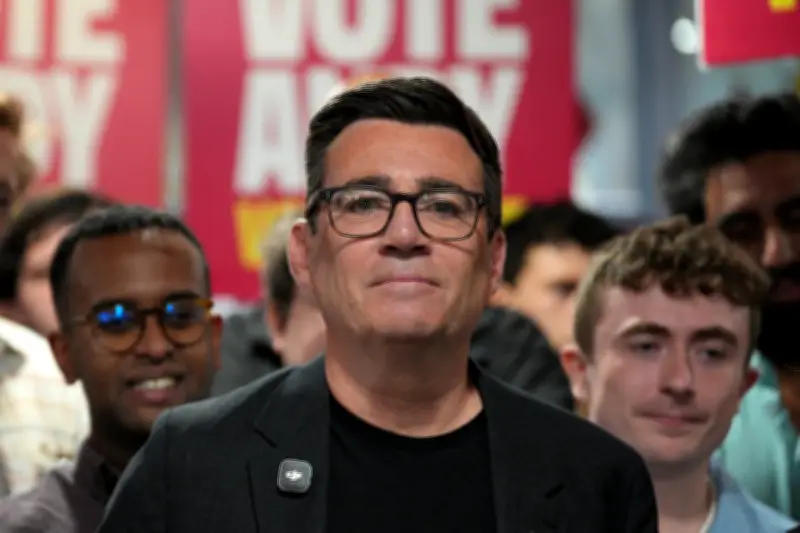
June 18th will forever go down in the annals of British history. After a march on the capital to seize power, Napoleon moved on from Paris and was defeated on that June date by Wellington at the battle of Waterloo in 1815. "I would rather have lucky generals than good ones," the French Emperor is quoted as once saying, even though historians doubt he ever actually uttered those words. But could "King of the North" Andy Burnham be Labour's lucky general?
As voters go to the polls in the Makerfield by-election on Thursday, Greater Manchester Mayor Mr Burnham is favourite to beat Reform UK's Robert Kenyon, according to polls, in what is widely seen as a two-horse race. Former Cabinet minister Mr Burnham has also made clear that if he returns to Parliament he will challenge Sir Keir Starmer for the Labour leadership and to be PM. If he does gain the keys to No10, it looks like he may inherit a better economic legacy than was handed to Sir Keir by Rishi Sunak's outgoing Conservative administration.
Economy
In the spring Budget just months before the July 2024 general election, Chancellor Jeremy Hunt lopped 2p off National Insurance. Labour MPs accused the Tories of laying an economic trap with what they said was a huge unfunded tax cut trumpeted by Mr Hunt as being worth £450 a year to an employee on an average salary of £35,000. The Conservatives rejected the claim, arguing it could be funded by welfare cuts. But as Rachel Reeves sought to get a grip on the public finances in her first Budget that autumn, she clobbered businesses with a £25 billion rise in employers' National Insurance contributions - partly to fund better public services including the NHS - but which was widely blamed for damaging many firms, the high street and the economy. The first ever woman Chancellor also had to find the money for a series of pay settlements for public sector workers. Having been blocked by Labour MPs from pushing through welfare cuts, Ms Reeves hit Britain with a second hefty tax blow in her second Budget last autumn, of £26 billion, which also saw her axe the two-child benefit cap and build a bigger "fiscal headroom", or economic cushion, of nearly £22 billion.
After the Budget turmoil, the economy appeared to be picking up at the start of the year but was then rocked by Donald Trump's Iran war which sent the cost of oil and borrowing spiralling. But with signs that America and Tehran may be close to a peace deal, hopes are rising again that the economy could gain momentum, possibly as Mr Burnham gets his feet under the desk in No10 if Sir Keir is ousted. Whether the difficult economic decisions taken by the PM and Ms Reeves were right or wrong, Mr Burnham could face a less challenging fiscal outlook than they were dealt. The greatest criticism, though, among Labour's ranks of the current Prime Minister is not so much that the party has not delivered a string of reforms and successes in Government but Sir Keir's inability to communicate these achievements to the nation.
Immigration
But it is the Conservatives Mr Burnham may have to thank for at least partly delivering for Labour what they failed to do, to cut net migration to the UK to the tens of thousands a year, the flagship general election pledge made by David Cameron. Some of the measures started by Rishi Sunak's Government and then ramped up by Labour, such as the restrictions on foreign nationals being recruited from overseas to work in care homes, may ultimately be harmful to Britain. But overall they will at least partially defuse the intensity of immigration as a political issue. The 'small boats' Channel crisis, though, continues with no government yet having found a way to stop tens of thousands of people a year risking their lives by embarking in often unseaworthy and overcrowded inflatable boats to try to reach Britain's shores.
NHS
With billions more being ploughed into the NHS, waiting lists are falling even if some of this is believed to be down to massaging of the figures. The overall size of the waiting list is down by several hundreds of thousands since the general election at 7.1 in March, still vastly too high. An interim target, for 65% of patients to be treated within 18 weeks by March 2026, was reached. This is again still a far cry from the key Labour manifesto target of 92% by the end of the Parliament in 2029. But with the resident doctors possibly calling off their strike action, former Health Secretary Mr Burnham could see the fall in NHS waiting lists speed up.
Housing
Sir Keir's flagship housing pledge, to build 1.5 million new homes this Parliament, got off to a slow start. Ministers argue that this was always going to be the case given how the construction industry works. The 1.5 million goal, which has also been hit by a shortage of workers, partly due to Brexit, and inflation in construction costs, looks ambitious to say the least, if not deluded. Planning reforms, though, could speed up the number of new homes being built later in the Parliament. Sir Sadiq Khan and Communities Secretary Steve Reed have also cut the amount of affordable homes needed in some schemes to try to kick-start more housing developments in London.
Europe
Ahead of the 2024 election, and even for a while after it, Labour ministers shied away from mentioning the B-word, Brexit, and the multi-billion blow it has delivered to the UK economy. But as the evidence has grown of the economic harm done from quitting the European Union, Ms Reeves and other Cabinet ministers have gradually found their voice to speak out on this issue. With Labour now facing the threat from Zack Polanski's Green Party in London and other cities, rather than just Nigel Farage's Reform UK in the English regions, ministers have been openly pushing for significantly closer economic ties with the European Union. Economists say undoing some of the damage of Brexit could deliver a significant boost to growth.
Away from Westminster, Mr Burnham has always been a keen footballer and at times has not always timed his tackles perfectly. But if the economy is set to pick up in coming months, NHS waiting lists to fall further, legal immigration to remain low and EU ties to grow closer, he might have well timed his arrival in No10, if it happens.




