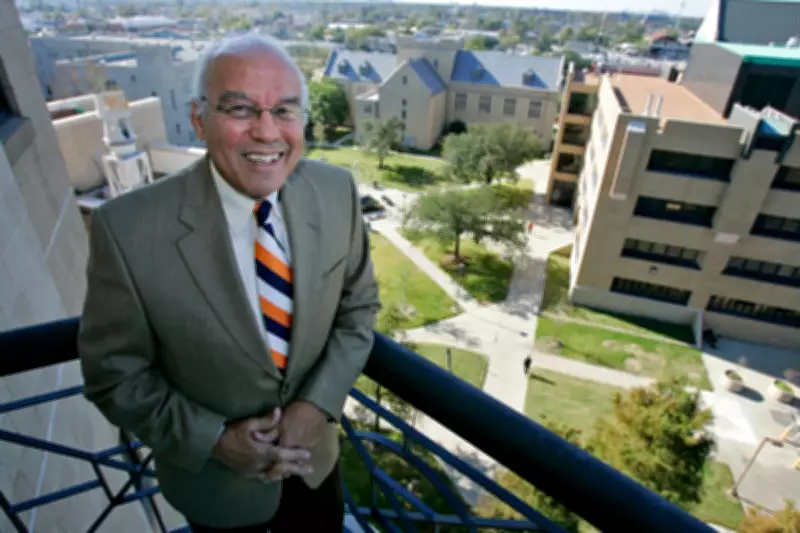
Norman C. Francis, Civil Rights Icon and Education Pioneer, Dies at Age 94
Norman C. Francis, a towering figure in the American civil rights movement and a celebrated champion of education, has died at the age of 94. His passing was confirmed on Wednesday by Xavier University in New Orleans, where he served as president for nearly five decades.
A Legacy of Leadership and Resilience
Francis was widely recognised for his pivotal role in helping to rebuild New Orleans following the devastation of Hurricane Katrina in 2005. He chaired the Louisiana Recovery Authority, overseeing the multi-billion-dollar reconstruction effort that aimed to restore the city's infrastructure and communities.
Former New Orleans Mayor Mitch Landrieu, who served as lieutenant governor during Katrina, described Francis as a steadfast leader who "stood in the breach" during the crisis. Landrieu noted that he frequently sought Francis's counsel during his most challenging moments, praising his unwavering commitment to treating every individual with dignity and respect.

Transformative Presidency at Xavier University
Francis's most enduring legacy is his 47-year tenure as president of Xavier University, beginning in 1968. Under his leadership, the institution—the nation's only predominantly Black Catholic university—experienced remarkable growth. Enrollment more than doubled, the endowment expanded significantly, and the campus underwent substantial physical development.
The university gained national acclaim for its success in preparing Black undergraduates for careers in medicine and the sciences, including biology, chemistry, physics, and pharmacy. Even when Hurricane Katrina submerged parts of the campus under eight feet of water, Francis remained resolute, vowing that Xavier would recover and continue its mission.
National Recognition and Personal Journey
In 2006, President George W. Bush awarded Francis the Presidential Medal of Freedom, the nation's highest civilian honour, in recognition of his lifelong contributions to civil rights and education. Multiple civil rights organisations, including the American Civil Liberties Union, also honoured him as one of the country's most distinguished college presidents.
Francis's personal story is one of perseverance and breaking barriers. The son of a barber from Lafayette, Louisiana, he earned his bachelor's degree from Xavier in 1952 before becoming the first Black student to integrate Loyola University's law school, where he received his law degree in 1955. After serving in the Army, he joined the U.S. Attorney General's office to assist in integrating federal agencies.
Despite these achievements, Francis faced persistent racial discrimination, recalling in a 2008 interview that he was often barred from using the front entrances of hotels, restaurants, and department stores in New Orleans. He credited his parents' encouragement—telling him he was "good enough to be president of the United States"—for sustaining his hope and determination.
Enduring Impact and Tributes
Francis began his association with Xavier University in 1957 as Dean of Men, embarking on a decades-long career that would shape generations of students. U.S. Representative Troy Carter of Louisiana highlighted Francis's belief that education was a pathway to justice, noting that "lifting one student could lift an entire family."
Xavier University President Reynold Verret reflected on Francis's profound influence, stating, "The nation is better and richer for his having lived among us." Francis is survived by six children and multiple grandchildren; his wife, Blanche, passed away in 2015.
His death marks the loss of a visionary leader whose work in civil rights, education, and community rebuilding has left an indelible mark on New Orleans and the broader American landscape.