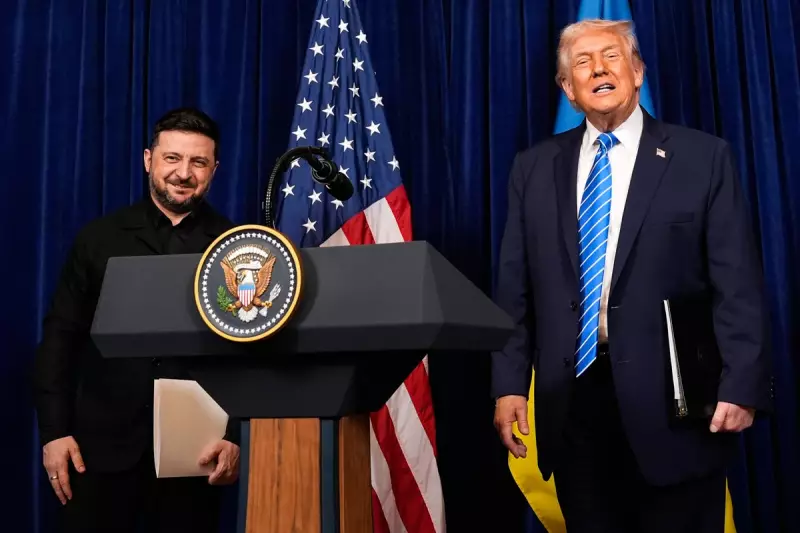
Ukrainian President Volodymyr Zelensky's recent diplomatic engagement with Donald Trump has, at best, secured a theoretical and precarious promise. The meeting at Mar-a-Lago on Monday 29 December 2025 yielded a US security guarantee envisioned to last 15 years, but analysts warn it offers little real deterrence against a future Russian invasion.
The Illusion of American Guarantees Under Trump
Given the capricious nature of the "America first" administration, any long-term commitment from Washington must be treated with extreme caution. Historical precedent is not encouraging. President Trump himself demonstrated this volatility when he signed a flimsy deal with the Taliban in 2020, effectively abandoning Afghanistan. This pattern of abandoning allies, seen previously with South Vietnam and Iraq, casts a long shadow over any promise made to Kyiv.
The core of the issue is the guarantee's substance. It is highly improbable that the Trump administration would station American troops or missiles on Ukrainian soil. Without a physical US presence, the agreement is unlikely to deter Vladimir Putin if he sees an opportunity for a quick victory. As one commentator noted, everyone knows President Trump wouldn't go to war with Russia over Estonia, a NATO member, making the idea he would for Ukraine seem ludicrous.

A Strategic Pause for European Rearmament
Despite its flaws, President Zelensky's primary achievement may be buying time. By engaging with Trump and securing even a notionally longer timeframe, he has potentially gifted Europe 15 years to finally get its act together. The critical task now is for Ukraine's more loyal allies in Europe to assume the role of genuine guarantors of its sovereignty and borders.
Some European leaders, like Germany's Chancellor Friedrich Merz, have shown clear-sighted understanding of this new reality, especially since Trump officials announced at the Munich Security Conference in February that America was disengaging from Europe. However, others have been hesitant to join the "coalition of the willing" being assembled by France and Britain. This window is a chance to bridge that gap and build a credible, European-led defence framework for Ukraine.
The Stalled Path to Peace and Putin's Calculus
The war, fundamentally about territory and Ukraine's existence as an independent state, grinds on. President Trump, who once promised to end the conflict "within 24 hours," now offers only vague speculation after his talks with Zelensky, stating "it'll either end or go on for a long time." He has even stopped pushing his own nomination for the Nobel Peace Prize.
Ultimately, the conflict will only conclude when Vladimir Putin decides it is in his interest, likely demanding a deal so advantageous it renders further fighting pointless. Current signals from the Kremlin suggest Russia still prefers "war-war to jaw-jaw," showing contempt for Trump's diplomacy without facing consequences. Zelensky's tactic must be to treat Trump with the respect he demands, agree to painful sacrifices, and sincerely engage in peace talks in a way Moscow will not, aiming to marginalise Putin as the obdurate imperialist.
With American guarantees unreliable, the resolution will likely be determined by military and economic means. This is precisely why Europe must ensure Ukraine does not lose. The coming 15 years are not a vacation from history but a final deadline to build the capacity that can secure Ukraine's future.