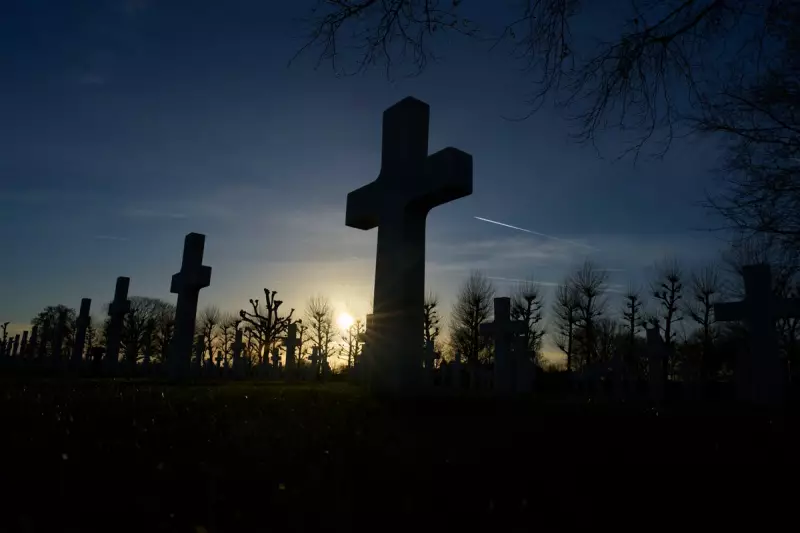
The quiet, hallowed grounds of the American Cemetery in Margraten, Netherlands, have become the centre of an international dispute following the unexplained removal of two informational panels honouring the contributions of Black American soldiers to the Allied liberation of Europe.
Panels Vanish, Sparking Public Backlash
In the spring of 2025, the American Battle Monuments Commission (ABMC), the US agency managing overseas war memorials, took down the displays from the cemetery's visitor centre. The cemetery is the final resting place for approximately 8,300 US service members and is meticulously cared for by local Dutch families. The removal, done without announcement, was soon met with a flood of objections in the guestbooks from visitors who noticed their absence.
The decision was later revealed to be a direct result of executive orders issued by US President Donald Trump, which ended federal diversity, equity, and inclusion (DEI) programmes. "Our country will be woke no longer," Trump stated in a March address to Congress. Emails obtained via a Freedom of Information Act request by the Jewish Telegraphic Agency and Dutch News confirmed the policy link.

Erasing a Complex History
The removed panels highlighted a crucial, often overlooked part of World War II history. One panel recounted the story of 23-year-old Private George H. Pruitt, a Black soldier buried at Margraten who died in 1945 trying to save a comrade from drowning. The other detailed the US military's official policy of racial segregation during the war.
During WWII, around 1 million Black Americans served, largely in segregated units and frequently assigned to support roles. Their vital work included the grim task of digging thousands of graves at Margraten during the Hunger Winter of 1944-45, a famine under German occupation. An all-Black unit performed this duty.
For individuals like Cor Linssen, 79, the son of a Black American soldier and a Dutch mother, the panels held deep personal significance. "It's an important part of history," Linssen told The Associated Press. "They should put the panels back." He visited the panels in February 2025 with other children of Black liberators.
Dutch Defiance and Lasting Legacy
The removal has provoked strong reactions in the Netherlands. Both the local municipality and the provincial government have formally demanded the panels' return. Theo Bovens, a Dutch senator and chair of the Black Liberators foundation, noted the irony: the ABMC originally installed the panels in 2024. "Something has changed in the United States," he observed.
In a act of defiance, a Dutch television programme recreated the panels and installed them outside the cemetery gates in November 2025, though police quickly removed them. The search for a permanent home for a memorial to Black liberators continues.
The local commitment to honouring all liberators remains steadfast. Thousands of Dutch families adopt graves, tending to them for generations. A small park in nearby Eijsden-Margraten is named for Jefferson Wiggins, a Black soldier who, at age 19, helped bury the fallen at Margraten. In his memoir, he wrote of the painful irony of burying white comrades he was forbidden to socialise with in life.
As historian Linda Hervieux, author of "Forgotten," stated, the removal "follows a historical pattern of writing out the stories of men and women of colour in the United States." For the Dutch who remember their liberation, the full story, including the sacrifice of Black Americans, is non-negotiable.