
Senior US lawmakers are set to question a top admiral on Thursday about a double strike on suspected drug-trafficking boats from Venezuela, as Republican criticism of the Trump administration's actions grows. Admiral Frank Bradley will meet with members of the House and Senate armed services committees for a classified briefing on the events of 2 September, when two strikes were carried out on vessels in the Caribbean.
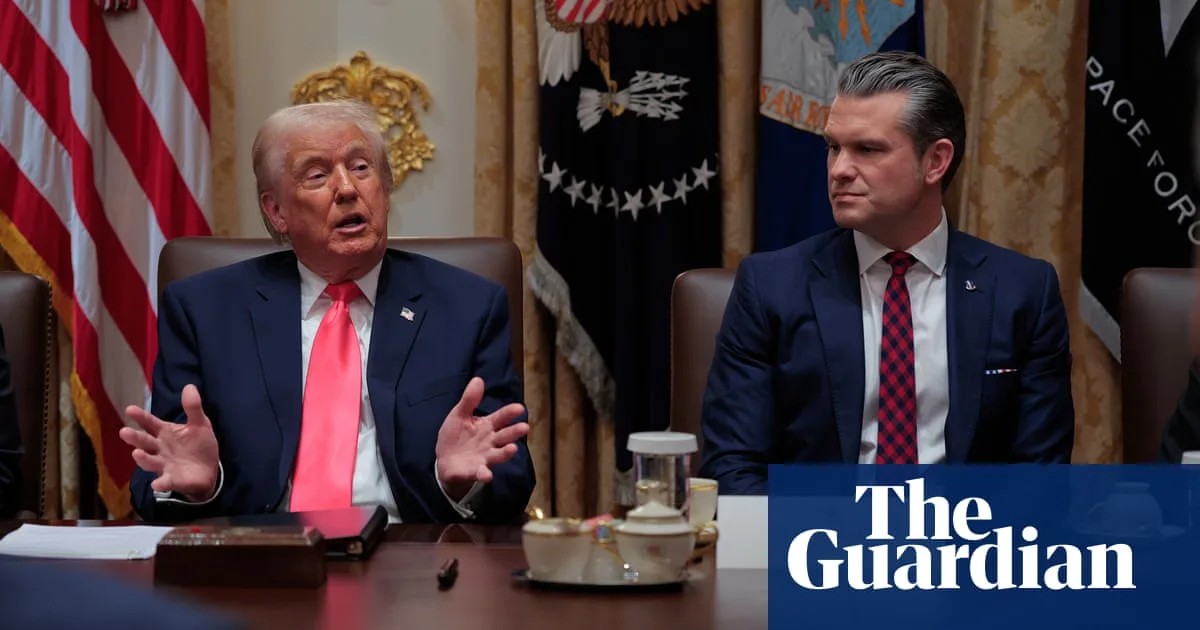
The second strike, which killed remaining survivors on one boat, has prompted particular concern. Defence Secretary Pete Hegseth has denied ordering the follow-up attack, but the White House press secretary, Karoline Leavitt, said Hegseth had authorised Admiral Bradley to conduct the strikes and that the admiral acted within his authority. The Washington Post reported that Hegseth gave the order for the second strike, a claim he has rejected.
Republican Senator Rand Paul of Kentucky said he was not convinced by the administration's explanation, citing shifting accounts. "On Sunday, Secretary Hegseth said he had no knowledge of this, and it did not happen," he told reporters. "And then the next day, from the podium at the White House, are saying it did happen. So, either he was lying to us on Sunday, or he's incompetent and didn't know it had happened." Senator Jim Justice of West Virginia described the operation as a "two-blow" action that made him "uncomfortable", adding that a strike to kill survivors would be "unacceptable".
Senator Roger Wicker, the Republican chairman of the Senate armed services committee, said members would conduct "vigorous oversight to determine the facts". The committee's top Democrat, Jack Reed, called on the administration to release video footage of the second strike. "If they've done nothing wrong, then that video should exonerate them completely. Why don't they release it?" he asked.
Outgoing North Carolina Senator Thom Tillis, who voted to confirm Hegseth in January and has since expressed regret, said the second strike "was a violation of ethical, moral and legal code". He told CNN: "If the facts play out the way they're currently being reported, then somebody needs to get the hell out of Washington." However, Republican Senator Roger Marshall of Kansas defended Hegseth and the strikes, saying: "This is a war, and it's ugly. War is never pretty. I want to gather all the facts." He added that the strikes were slowing the import of "deadly, deadly drugs" that kill hundreds of Americans daily.




