US and UK Military Presence in the Middle East Amid Rising Tensions
The Middle East is engulfed in chaos as Iran retaliates against joint US-Israeli strikes, targeting military assets across the region. This escalation has put a spotlight on the extensive network of US and UK military bases scattered throughout the area, which are now at heightened risk of attack.
Recent Attacks and Incidents
On Sunday, an Iranian drone struck a US naval base in Bahrain, igniting a major fire near an adjoining UK naval facility. Fortunately, no casualties were reported as the area had been evacuated beforehand. In a separate incident, Kuwaiti air defences mistakenly shot down three US F15 fighter jets involved in Iran-related operations. All six aircrew ejected safely and are in stable condition. Additionally, the Cypriot government confirmed that two unmanned drones heading towards the UK's Akrotiri air base in Cyprus were successfully intercepted.
Iran's Military Capabilities and Threats
Iran possesses the largest stockpile of ballistic missiles in the Middle East, with capabilities that pose a significant threat to US and UK installations. According to estimates, even Iran's short-range missiles can reach up to 435 miles, putting several bases in Kuwait, Iraq, Qatar, Oman, and the UAE within striking distance. The US Office of the Director of National Intelligence notes that Iran has used these missiles and drones for large-scale attacks, though its medium-range stockpile may be depleted, leaving ample short-range options.
General Sir Richard Barrons, a former senior UK military officer, highlighted that Iran's options are limited due to recent losses of top leaders. However, movements to fire missiles could expose launch sites to counterattacks from the US and Israel.
Overview of US and UK Base Locations
Bahrain: Naval Support Activity Bahrain serves as the home for the US Naval Forces Central Command and the United States Fifth Fleet. This deep-water port can accommodate aircraft carriers and other large vessels. The UK's historical involvement dates back to the 1920s, with the Royal Navy initially operating the port.
Iraq: The US maintains several bases here, including Al-Harir and Al Asad air bases, alongside numerous camps. These sites have been targeted by pro-Iran militant groups following Israel's invasion of Gaza in 2023. The UK has around 200 personnel deployed for training and support roles, not combat.
Kuwait: Hosting multiple US installations, such as Ali Al Salem Air Base, which supports combat operations in the region. The RAF has previously utilized this base for its operations.
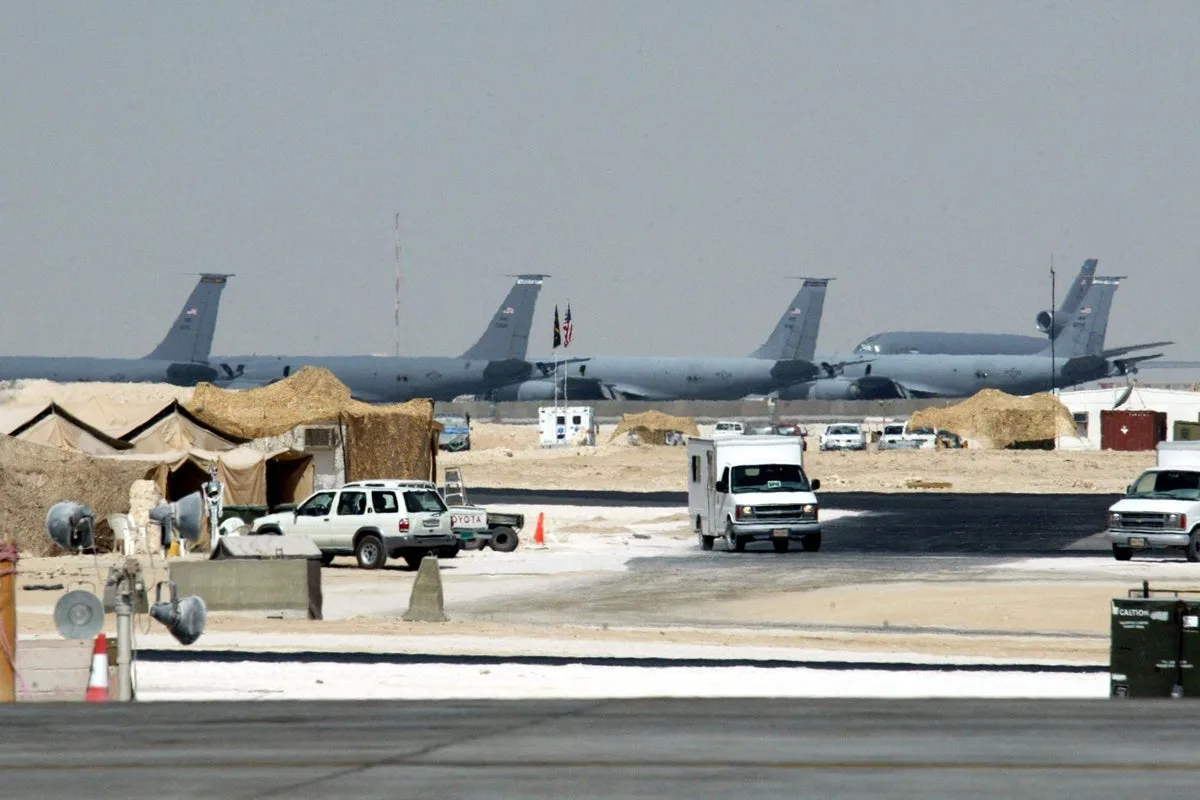
Qatar: Al Udeid Air Base is the largest in the region, housing approximately 10,000 US troops and serving as the forward headquarters for US Central Command. It includes airlift, refueling, and surveillance assets.
Saudi Arabia: Key sites include Prince Sultan Air Base and Eskan Village, with RAF personnel attached to training projects under the Ministry of Defence Saudi Armed Forces Projects.
United Arab Emirates: Al Dhafra Air Base hosts the US 380th Air Expeditionary Wing and MQ-9 Reaper drones, while the RAF operates from Al Minhad Air Base, established as a permanent UK facility in 2024.
Jordan: Muwaffaq Salti Air Base has received significant funding for upgrades and hosts international military partners, featuring long runways for operations.
Oman: The UK maintains a strategic hub at Duqm port, providing a permanent maritime base east of Suez, outside the Gulf region.
Cyprus: The UK has two Sovereign Base Areas, with RAF Akrotiri serving as the main operating base for combat aircraft, refueling, and surveillance missions.
Strategic Implications and Regional Impact
The US operates a broad network across at least 19 locations in the Middle East, including eight permanent bases in countries like Bahrain, Egypt, and the UAE. Tens of thousands of US troops are stationed in Gulf countries, positioned closer to Iran than Israel. While these bases are equipped with sophisticated air defences, they face challenges such as limited warning times against missile and drone attacks. The conflict has already impacted key aviation and trade hubs, with blasts reported in cities like Jerusalem, Dubai, and Doha, underscoring the widespread instability in the region.




