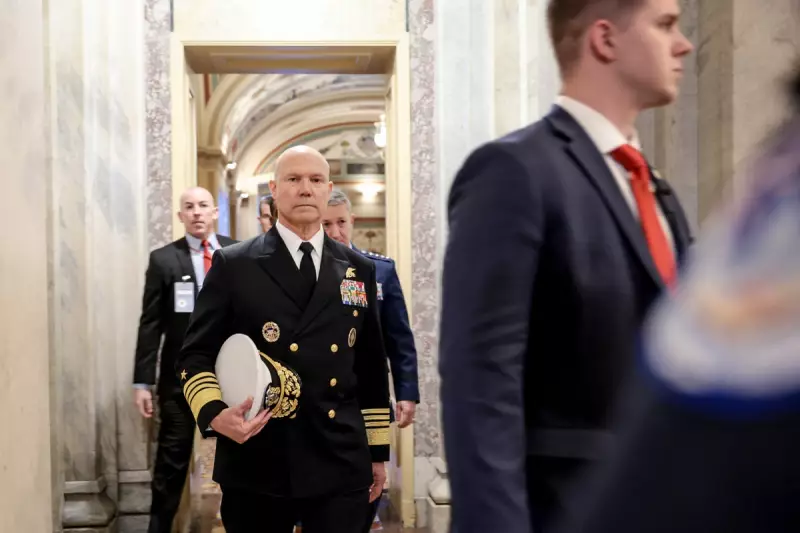
A senior United States Navy admiral has reportedly informed lawmakers that two survivors of an initial missile strike on an alleged drug-smuggling vessel were left with no means to call for assistance before a second, fatal strike was ordered.
Closed-Door Briefing Reveals Disturbing Details
In a classified briefing to members of the House and Senate Armed Services and Intelligence Committees on Thursday, 5 December 2025, Admiral Frank ‘Mitch’ Bradley presented footage of the controversial incident. According to three sources familiar with the briefing who spoke to CNN, Bradley stated the survivors did not appear to possess any communications equipment that would have enabled them to contact others.
The strikes, which occurred on 2 September in the Caribbean, have been vigorously defended by the Trump administration for weeks. Officials argued that individuals aboard the boat posed a continuing threat, as they could have summoned other alleged “narco-terrorists” or attempted to resume their drug run.

Lawmakers React to 'Troubling' Footage
The footage shown to legislators reportedly depicted the two individuals clinging to their partially capsized and damaged vessel. Democratic Representative Jim Himes, the ranking member of the House Intelligence Committee, confirmed viewing the material, describing it as “one of the most troubling things I have seen in my time in public service.”
“You have two individuals in clear distress, without any means of locomotion, with a destroyed vessel, who are killed by the United States,” Himes told reporters.
However, Republican Senator Tom Cotton, Chairman of the Senate Intelligence Committee, offered a starkly different interpretation. He asserted the admiral was justified in authorising the follow-up strikes due to the perceived ongoing threat.
“I saw two survivors trying to flip a boat ― loaded with drugs, bound for the United States ― back over, so they could stay in the fight,” Cotton said. He added that context suggested other narcoterrorist boats in the area could have come to their aid.
Legal Scrutiny and Mounting Death Toll
The administration's campaign of strikes against vessels accused of trafficking illicit narcotics in the Caribbean and Eastern Pacific has resulted in at least 80 fatalities. All those killed have been labelled “narco-terrorists” by officials, though public evidence has not been provided.
According to the briefing, Bradley and the military command centre overseeing the operation deliberated on the second strike. After consulting with a Judge Advocate General (JAG) officer, they determined it would be legal. Initial reports alleging Defence Secretary Pete Hegseth had issued a “kill everybody” order were denied by both the White House and Bradley during the briefing.
The legality of the strikes under the laws of war remains unclear. While the administration and some Republican lawmakers insist they were lawful, the Pentagon's own guidelines state it is considered a war crime to kill shipwrecked persons who are “in need of assistance and care”. The Independent has contacted the Pentagon for further comment.