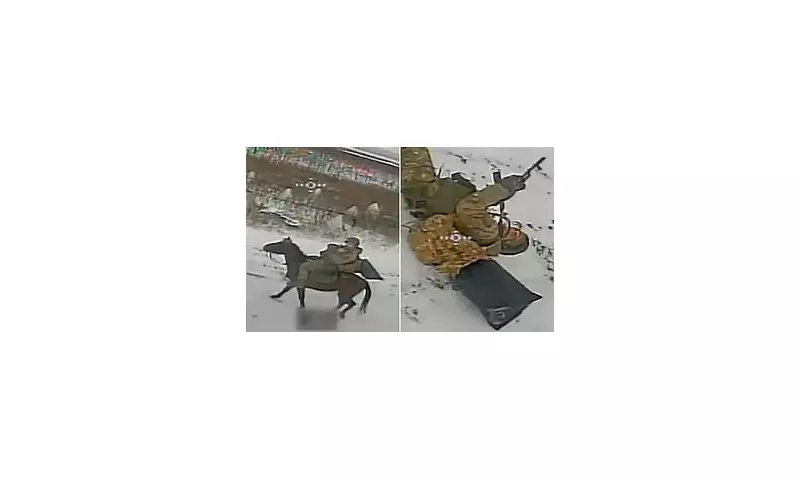
In a stark illustration of modern combat, Ukrainian forces have used a first-person view (FPV) drone to eliminate a Russian soldier on horseback, underscoring the technological gulf on the battlefield. The incident, captured in dramatic footage, highlights how drone warfare now dominates the conflict, rendering even age-old tactics like mounted cavalry vulnerable to precise, remote strikes.
The Drone Strike Footage
The Ukrainian military released video on December 26 showing a remotely piloted FPV drone swooping down on a Russian trooper riding a horse in an undisclosed area. The soldier is seen tumbling from the saddle before the explosives-laden drone strikes him directly. Subsequent footage shows his motionless body lying in the snow as the horse bolts away, apparently unharmed.
Commenting on the engagement, Ukraine’s 92nd Separate Assault Brigade stated on social media: 'The finale is quite predictable: the enemy’s so-called cavalry is destroyed by the precise strikes of our drones.' The brigade added, 'Thanks to the professionalism of the 92nd Separate Assault Brigade’s drone operator, not a single horse was injured.'

The Return of the Horse in Modern War
The use of horses by Russian forces points to deeper logistical issues within the invading army. After almost four years of full-scale war, Moscow's limited supply of military vehicles has forced some units to resort to equine transport, particularly to navigate muddy terrain while bombarding Ukrainian positions.
Russia was first reported to be training soldiers on horseback in October. Pro-war Russian blogger Semyon Pegov described how a commander known as 'Khan' employed horses in combat missions, publishing footage of mounted troops. Pegov claimed horses offer advantages: 'Horses see well at night, don’t need roads to accelerate on the final approach and their instincts can, reportedly, help them avoid mines.'
However, not all animals have been spared. Despite the Ukrainian brigade's assurances, another video appeared to show a horse injured or killed in a blast alongside its rider. The fate of a third soldier seen on horseback remains unclear.
The 'Kill Zone' and the Future of Combat
The incident epitomises the new reality of the frontline, where drone swarms have created a deadly, fluid zone of control. Olga Tokariuk, an academy associate at Chatham House, explained: 'There is no clear line of contact. Instead, drones from each side constantly swarm across a 10 to 15km-wide area (6-9 miles) called the "kill zone".' Within this zone, she noted, nothing can move without being targeted.
The reliance on animals extends beyond cavalry. Russian troops have also been using donkeys to transport ammunition between their lines. Viktor Sobolev, a retired general and member of Russia’s defence committee, defended the practice in February, stating: 'It’s better for a donkey to be killed than two people transporting supplies in a vehicle.'
The clash of eras on the battlefield comes amid continued cross-border strikes. On Thursday, Russia accused Ukraine of a drone attack on a hotel and cafe in the Russian-controlled part of Kherson region, claiming at least 24 civilian deaths, including a child. Ukraine's military, which has repeatedly accused Russia of killing civilians, did not immediately comment on the allegation.