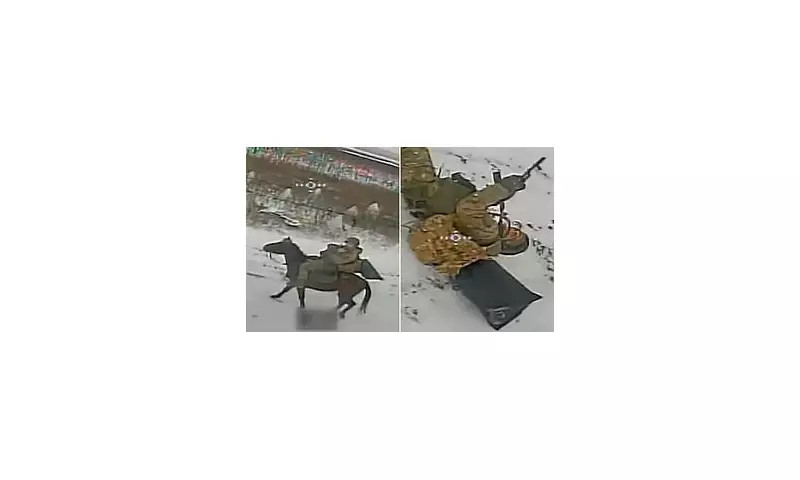
In a stark visual metaphor for the evolution of modern combat, Ukrainian forces have used a first-person view (FPV) drone to eliminate a Russian soldier on horseback, highlighting a brutal clash between cutting-edge technology and centuries-old tactics.
The Drone Attack That Symbolised a New Era
Dramatic footage released by Ukraine’s 92nd Separate Assault Brigade on 26 December shows a remotely piloted drone, packed with explosives, swooping down on a mounted Russian soldier in an undisclosed area of the frontline. The precision strike caused the soldier to tumble from his horse before the drone detonated. Subsequent video shows the soldier's motionless body lying in the snow as the horse bolts away, apparently unharmed.
Commenting on the social media post, the brigade stated: 'The finale is quite predictable: the enemy’s so-called cavalry is destroyed by the precise strikes of our drones.' They added, 'Thanks to the professionalism of the 92nd Separate Assault Brigade’s drone operator, not a single horse was injured.'

Why Russia is Resorting to Horses in a Tech-Driven War
This incident underscores a desperate adaptation by Russian forces. With Moscow's limited supply of military vehicles and Ukraine's vast, muddy terrain, some units have resorted to using horses to navigate the landscape and avoid getting bogged down while moving to bombard Ukrainian positions. The tactic was first reported in October, with pro-war Russian blogger Semyon Pegov detailing how a commander known as 'Khan' employed mounted troops.
Pegov argued for the utility of horses, claiming they see well at night, do not require roads, and their instincts may help them avoid minefields. Beyond horses, Russian forces have also been documented using donkeys to transport ammunition between lines. Retired General Viktor Sobolev, a member of Russia’s defence committee, defended the practice in February, stating, 'It’s better for a donkey to be killed than two people transporting supplies in a vehicle.'
The Omnipresent 'Kill Zone' and the Future of Combat
This event is a microcosm of the larger shift in warfare, where drone technology now dominates the frontline. Security analyst Olga Tokariuk of Chatham House describes a situation where there is no clear line of contact. Instead, drones from both sides constantly operate within a 'kill zone' spanning 10 to 15 kilometres, where any movement is targeted.
Despite the Ukrainian brigade's assurances, other footage they published suggested a horse may have been injured or killed in a separate blast alongside its rider. The fate of a third soldier seen on horseback remains unclear. This incident occurred against a backdrop of continued escalation, with Russia accusing Ukraine of a drone strike on New Year's Eve in Russian-occupied Kherson that allegedly killed 24 civilians, a claim Ukraine has not immediately addressed.
The image of a drone hunting a cavalryman powerfully encapsulates how technological advancement has fundamentally altered the nature of conflict, rendering some traditional methods both obsolete and tragically vulnerable.