
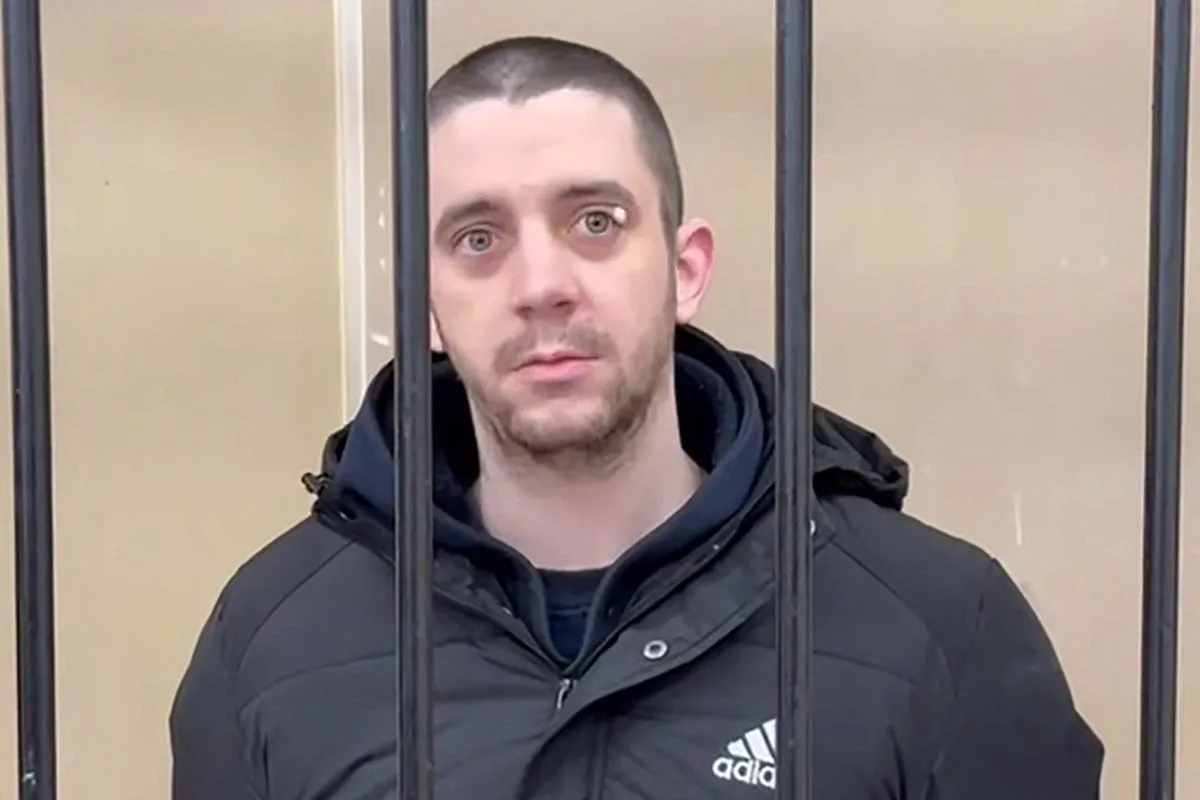
A British man, Hayden Davies, has been sentenced to 13 years in a Russian maximum security prison after being convicted of fighting as a mercenary for the Ukrainian army, according to Russian prosecutors. Davies, 30, was captured by Russian forces in winter 2024 while carrying a US-made assault rifle and ammunition, they said.
The Russian Prosecutor General's office stated that Davies was tried in a court in Russian-controlled Donetsk, one of four Ukrainian regions illegally annexed by Moscow in 2022. The court found him guilty of being a paid mercenary. It did not specify how he pleaded, though a video released by prosecutors shows Davies nodding and saying 'yeah' when asked if he pleaded guilty. It remains unclear if he was under duress.
Davies reportedly arrived in western Ukraine in August 2024, signed a contract with the International Legion for the Defence of Ukraine, received military training, and fought against Russian forces in Donetsk. In a video after his capture, Davies said he was from Southampton and was discharged from the British Army in 2023 for using cannabis. He claimed he struggled to find work and chose to fight in Ukraine as a result.
The British government has previously stated that Davies is not a mercenary but a prisoner of war entitled to protections under the Geneva Conventions. London condemned Moscow's exploitation of prisoners for political and propaganda purposes. The Foreign Office has not yet commented on the sentencing.
Davies went missing in January and was feared dead until Russia released a propaganda video of him speaking. In that video, he criticised Ukrainian commanders, saying they 'don’t care about you' and would 'use you as meat'. He also claimed that most International Legion members are Colombians, with hundreds serving.




