UK Defence Ambitions Falter as Army Shrinks and Spending Lags
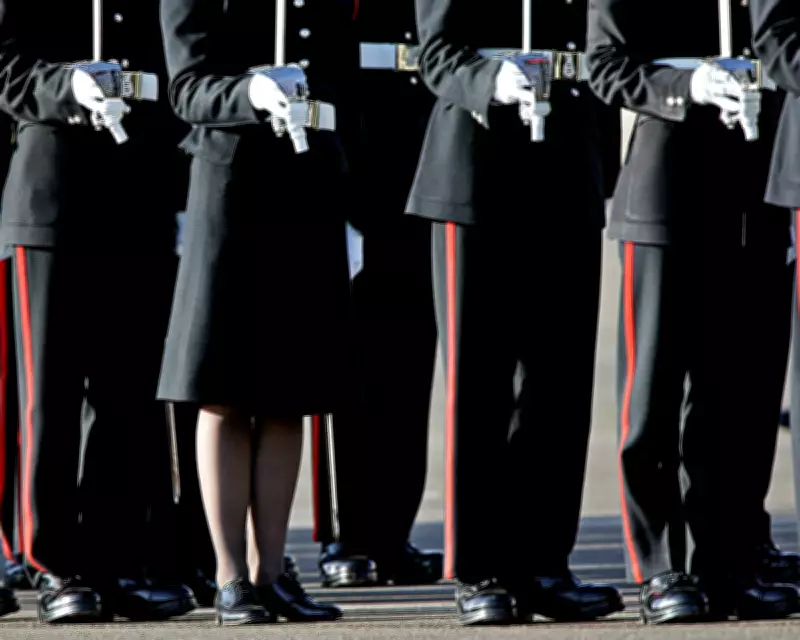
A passing out parade at the Royal Military Academy Sandhurst highlights a stark reality: recruits have fallen as the size of the British army has significantly shrunk. This decline underscores broader challenges in UK defence, where ambitions to be globally deployable do not match the on-ground capabilities, according to experts.
Wake-Up Calls from Global Conflicts
If Russia's full-scale invasion of Ukraine in 2022 served as a wake-up call for NATO, the war in the Gulf has brought harsh realities home to the British public about the state of the UK's armed forces. While air defence systems and fighter jets were deployed relatively swiftly, the time it took to send a single destroyer, HMS Dragon, to Cyprus focused minds on Britain's military readiness and capabilities.
An added sense of urgency emerged with intervention by George Robertson, a former NATO secretary general and author of the government's strategic defence review. He accused Keir Starmer of showing a "corrosive complacency towards defence" that puts the UK in peril. In response, ministers have stated they are wrestling with "decades of underinvestment" by previous governments and are now embarking on the largest sustained increase in defence spending since the Cold War. The Ministry of Defence has highlighted its target of spending 3.5% of GDP on defence by 2035.

Historical Context and Spending Trends
A glance at defence spending as a share of GDP since 1991 reveals a significant drop after the collapse of the Soviet Union, when western governments channeled a "peace dividend" into other public services. The end of the Cold War also led to a dramatic shrinking of the army. From 155,000 troops in 1991, with nine armoured and four infantry brigades, last year its strength was just 75,000 troops in two divisions, with two armoured and three infantry brigades.
Defence analysts, such as Ben Barry of the International Institute for Strategic Studies, blame this squeeze on a "lethal combination" of Treasury hostility to defence spending and the Ministry of Defence favouring investment in ships and aircraft. Matthew Savill, director of military sciences at the Royal United Services Institute, notes: "The army has suffered the most because it's been pulled in the most directions and it's really struggled with its biggest programmes, but it's also the area where you've had the huge change in how land forces might fight in the future, so they are the ones who are in the need the most remedial work to make the match fit."
Capability Gaps and Reliance on Allies
More broadly, Savill says the UK has a decent spread of reasonably modern capabilities in most areas, such as countering submarines or providing air defence, but faces several critical problems. One is mass: Britain does not have enough resources for its ambitions to be globally deployable and able to intervene at a high state of readiness.
"Problem number two is that we are thin in some areas. We've cut a lot of corners and in many cases we rely on our allies. That means we're particularly reliant on the US and others in certain areas and it can come back to bite," added Savill. While Robertson and others delivered the strategic defence review last year, delays in the appearance of the 10-year defence investment plan to fund it have sparked further concern.
Transformation Challenges and International Comparisons
Even before this, defence experts cautioned that Britain was slow to transform its defence. For example, while the armed forces now have counter-drone systems and are learning from their use in the Middle East, they are not being introduced in large enough numbers. "The problem with the defence investment plan is that on the current spending trajectory, we can do transformation but it'll be slow that's going to look bad in terms of our level of preparedness for modern warfare," Savill noted.

Britain is not alone in grappling with these questions. Elsewhere in Europe, the proximity of Russia and the war in Ukraine has prompted a military transformation by Poland, which is raising defence spending to 4.8% of GDP, higher than almost all other NATO countries. Britain's more comparable peer is nuclear-armed France, which experts say the UK can learn from, even if it also struggles with similar trade-offs in defence spending. A UK commitment to increase spending to 2.5% of GDP from April 2027 is somewhat more ambitious than France's plans.
Savill added: "We could look at Germany, who are coming from a quite poor baseline and are about to massively increase their defence. They will be a test case – which will be watched here as closely as anywhere – for whether you can inject that much extra money into a medium-sized military and get rapid results."