President Donald Trump has admitted he was gripped by fear that a high-stakes military operation to capture Venezuelan leader Nicolas Maduro could have become a catastrophic failure, defining his presidency in the worst possible way.
The Weight of Precedent: Fears of a Historic Failure
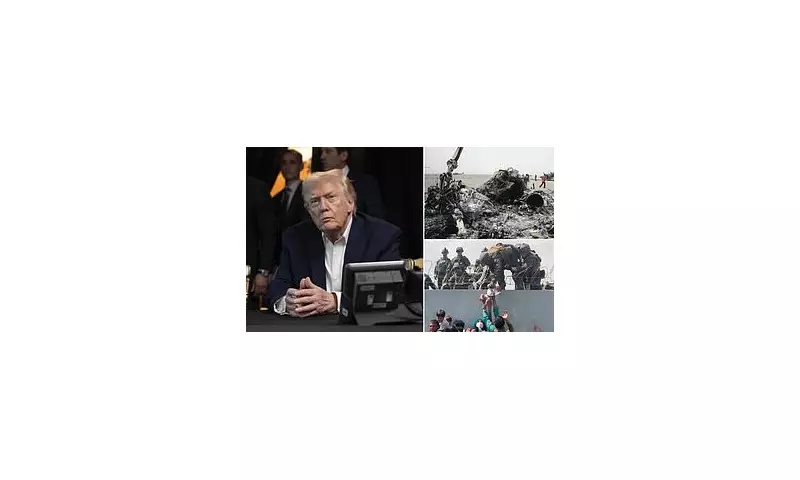
In an exclusive interview, Trump confided that as he watched the raid unfold from a makeshift situation room at his Mar-a-Lago estate on January 3, 2026, he was acutely aware of historical parallels. He worried a botched mission would be compared to two infamous events: Jimmy Carter's failed 1980 Iran hostage rescue and Joe Biden's disastrous 2021 withdrawal from Afghanistan.
"You know you didn't have a Jimmy Carter crashing helicopters all over the place, that you didn't have a Biden Afghanistan disaster where they couldn't do the simplest maneuver," Trump told the New York Times. He stated that such a failure "destroyed [Carter's] entire administration" and was determined to avoid a similar fate.

Operation Details: Casualties and Capture
The Delta Force operation, which received Trump's final authorisation during a briefing on January 2, 2026, was ultimately a success in its primary objective. Maduro and his wife, Cilia Flores, were captured and extracted from Venezuela, later arriving in Manhattan for arraignment on January 5, 2026.
However, the mission was not without cost. While no US service members were killed, approximately 70 Venezuelan and Cuban personnel died during the two-hour feat. Seven US forces were injured, with five having since returned to duty. The flight leader piloting the Chinook helicopter was struck three times and sustained serious injuries; he and another soldier remain hospitalised in Texas.
Trump revealed the intense preparation for the raid, which included special forces training on a life-size replica of Maduro's compound erected at a military facility in Kentucky.
A Long-Term Strategic Pivot: Controlling Venezuela's Oil
Looking beyond the raid's immediate success, President Trump outlined an ambitious and controversial long-term strategy for Venezuela. He confirmed the United States intends to operationally run the country and control its vast oil extraction for the foreseeable future.
When questioned if US oversight would last months or a year, Trump responded, "I would say much longer." He elaborated, "We're going to be using oil, and we're going to be taking oil. We're getting oil prices down, and we're going to be giving money to Venezuela, which they desperately need."
This plan, reportedly outlined to Congress by Secretary of State Marco Rubio, involves the US assuming control of selling Venezuela's oil. An interim government led by Maduro's former vice president, Delcy Rodriguez, is now in place and cooperating with Washington. Trump defended not informing Congress in advance, stating he feared leaks would jeopardise the mission.
The successful capture of Maduro, executed without American fatalities, has provided the Trump administration with a significant geopolitical victory. Yet, it also marks the beginning of a complex and open-ended commitment, with the President openly aiming to avoid the legacy of past foreign policy disasters while securing strategic energy resources.