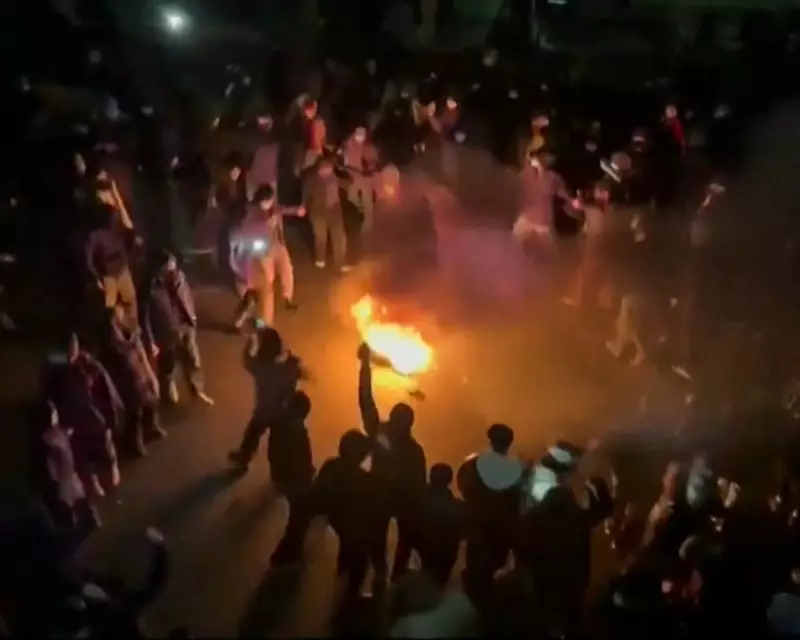
President Donald Trump is actively considering a spectrum of potential responses to the escalating unrest in Iran, where a violent government crackdown has reportedly left hundreds of protesters dead. This deliberation comes as demonstrations, which began over economic grievances, have transformed into a significant challenge to the country's theocratic establishment.
From Economic Grievance to Systemic Challenge
What started as public anger over the spiralling cost of living has evolved into a broader movement opposing the Islamic Republic's governing system, which has been in place since the 1979 revolution. The regime's harsh response has led to a significant and rising casualty count.
According to the US-based Human Rights Activists News Agency, more than 500 people have been killed in the violence, including at least 490 protesters. The same organisation reports that Iranian authorities have arrested over 10,600 individuals. The Iranian government has not released its own official figures, and the numbers cannot be independently verified.

A Fraught Menu of US Options
Sources indicate the Trump administration is weighing several courses of action. These reportedly include direct military strikes, the deployment of covert cyber weapons against Iranian military and civilian infrastructure, imposing additional sanctions on the government, and boosting support for anti-regime voices online.
However, the prospect of military intervention is laden with complications. Analysts warn that such action could bolster the Iranian government's narrative that the protests are being orchestrated by foreign powers like the US and Israel. Furthermore, the high population density in cities like Tehran makes targeted aerial campaigns extremely risky, with a high probability of significant civilian casualties. Key potential targets, such as Supreme Leader Ayatollah Ali Khamenei, are also understood to have heightened their personal security.
President Trump has repeatedly hinted at intervention, stating on social media over the weekend: "Iran is looking at FREEDOM, perhaps like never before. The USA stands ready to help!!!" In response, Iranian officials have issued stern warnings to the US against any form of attack.
Domestic and International Ripples
The situation in Iran unfolded against a backdrop of other significant international and domestic developments involving the Trump administration.
Domestically, Homeland Security Secretary Kristi Noem pledged to send hundreds more federal agents to Minneapolis following large-scale protests over the fatal shooting of a woman, Renee Nicole Good, by an Immigration and Customs Enforcement (ICE) officer. Minneapolis Mayor Jacob Frey has called for state officials to be included in the federal investigation, criticising the administration for being "so quick to jump on a narrative as opposed to the truth."
On the global stage, President Trump told Cuba to "make a deal" or face consequences, threatening to cut off Venezuelan oil and money. Meanwhile, Danish Prime Minister Mette Frederiksen described a "fateful moment" in relations with the US amid President Trump's threats regarding Greenland, suggesting America could be turning its back on NATO.
In further commentary, former Republican National Committee chair Michael Steele argued that US institutions had capitulated to President Trump, "the bully," but predicted a strong Democratic performance in the upcoming midterm elections.