A Tale of Two Realities at Sydney's Defence Expo
At the Indo-Pacific International Maritime Exposition in Sydney's Darling Harbour, a stark contrast unfolded. Inside the heavily guarded, climate-controlled halls, Australia's Defence Minister Richard Marles described the event as a 'kind of Disneyland... the happiest place on Earth' for some attendees. Meanwhile, outside the convention centre, protesters faced barricades and armed police, chanting 'War criminals are not welcome here' and holding signs declaring 'You can't bomb the truth away.'
Violent Clashes and 'Beautiful, Menacing' Technology
The confrontation between police and demonstrators turned violent, with protesters later claiming officers 'attacked us from all different angles' while police stated their officers were 'set upon.' The conflict resulted in pepper spraying and injuries on both sides. Inside, Minister Marles continued to praise the exhibition, calling it an 'incredible display of what our industry can produce' showcasing 'awesome power, ingenious autonomous systems' that spanned 'the beautiful, the menacing and the extremely cool.'
Global Arms Industry Presence and Controversial Connections
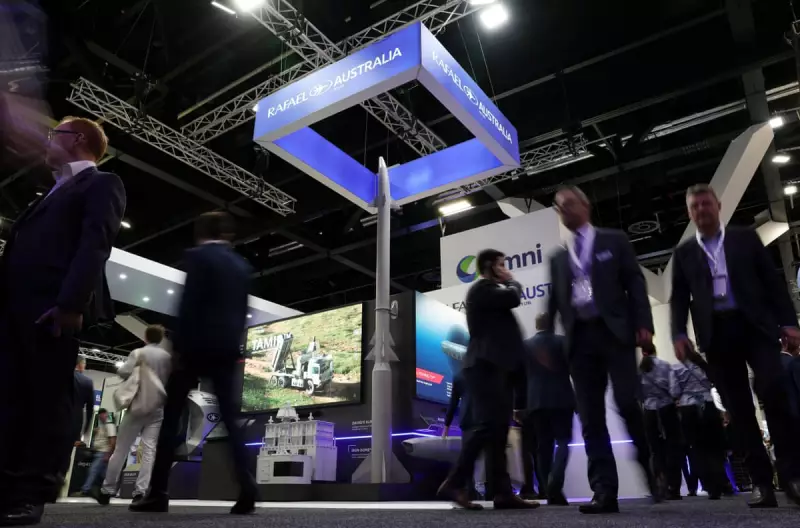
The event demonstrated Australia's deep integration into the global arms industry, with major weapons manufacturers prominently represented. Elbit Systems Australia, the Australian arm of Israel's largest weapons manufacturer, maintained a central stall despite revelations that an Israeli Hermes 450 drone - produced by Elbit Systems - was responsible for the April 2024 strike that killed Australian aid worker Zomi Frankcom in Gaza. Meanwhile, Lockheed Martin, participating in a defence department networking event, manufactures the F-35 strike fighter used by Israel in Gaza, with more than 70 Australian companies contributing to its global supply chain and over 700 critical pieces manufactured in Victoria alone.
Raytheon (now RTX Corporation) dominated a prominent corner with model missile launchers on display. The company is involved in producing the GBU-12 laser-guided bomb used in a 2022 airstrike on a Yemen detention centre that killed nearly 100 civilians. Australia's Future Fund holds more than $179 million investment in the company. Similarly, Boeing, another exhibitor, produces the GBU-39 small-diameter bombs used in another strike on the same detention centre in April this year that killed over 60 civilian detainees.
Bloodless Language and Real-World Consequences
Throughout the exhibition, weapons were discussed using sanitised terminology - described as 'capabilities', 'assets', 'solutions' and 'systems' that were 'mission-ready' and 'deployable' without mention of their intended targets. This language created a disconnect from the real-world consequences of these weapons, despite ongoing conflicts in Ukraine and Gaza. As the UN special rapporteur noted, Australia's continued transfer of F-35 parts contributes to what she described as 'the genocidal destruction of Gaza.'
By the exposition's final day, large-scale protests had diminished, leaving hundreds of police officers standing at barricades with little to guard. The event concluded with the surreal image of a small plane scrawling a wedding proposal across the sky, momentarily diverting attention from the weapons carnival inside as everybody looked the other way.