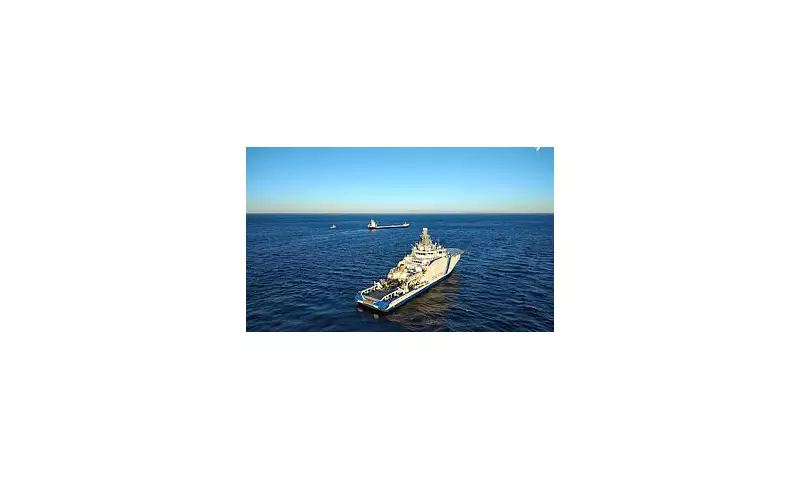
Finnish authorities have seized a vessel and detained its predominantly Russian crew on suspicion of deliberately or recklessly severing a vital undersea telecommunications cable. The incident, involving the ship dragging its anchor through the Gulf of Finland, has triggered a major security response amid heightened European fears over the sabotage of critical infrastructure.
Key Details of the Suspected Sabotage
The damage to the cable, which runs between the Finnish capital Helsinki and Tallinn in Estonia, was discovered on Wednesday. Finland's Border Guard swiftly intercepted and inspected the suspect vessel, named the Fitburg, after finding it inside Finland's exclusive economic zone with its anchor lowered. Investigators view this as a critical detail linking the ship directly to the severed cable.
Police have launched a criminal investigation into charges of aggravated criminal damage, attempted aggravated criminal damage, and serious interference with telecommunications. The cable is owned by the Finnish provider Elisa and is classified as critical underwater infrastructure.

All 14 crew members were detained. The crew comprises nationals of Russia, Georgia, Azerbaijan, and Kazakhstan. The Fitburg, registered in St Vincent and the Grenadines, was sailing from Russia to Israel at the time of the incident.
Pattern of Threats to European Infrastructure
Finnish National Police Commissioner Ilkka Koskimäki revealed that the ship had been dragging its anchor for hours prior to interception. While investigators are not currently speculating on whether a state-level actor was behind the damage, the context is deeply concerning.
This event echoes a similar case earlier this year, where Finnish authorities charged the captain and two senior officers of the Russia-linked Eagle S oil tanker for damaging undersea cables between Finland and Estonia on Christmas Day 2024. That vessel was part of what is termed Russia's 'shadow fleet'—older tankers with obscure ownership used to circumvent Western sanctions.
Estonian officials reported that a second undersea cable, owned by Swedish provider Arelion, was also damaged early on Wednesday. It remains unclear if the two incidents are connected. Arelion's spokesperson, Martin Sjögren, confirmed the damage and noted a separate cable between Sweden and Estonia was cut on Tuesday.
Broader Security and Geopolitical Implications
The network of undersea cables and pipelines crossing the Baltic Sea is a lifeline for Nordic, Baltic, and central European nations, facilitating trade, energy security, and reducing dependence on Russian resources. Their vulnerability is a significant strategic concern.
Finnish President Alexander Stubb stated on social media platform X, 'Finland is prepared for security challenges of various kinds, and we respond to them as necessary.' Estonian authorities are now cooperating with their Finnish counterparts to decide on pursuing a separate or joint prosecution in the Elisa cable case.
While Elisa confirmed its services were unaffected, repair work on the damaged cables is poised to begin once poor weather conditions subside. The incident underscores the persistent and tangible threat to Europe's submerged critical infrastructure, a threat that has escalated sharply since Russia's full-scale invasion of Ukraine in 2022.