SAS Veterans Face Prosecution Decades After Loughgall Victory
Twenty-four SAS soldiers who participated in what many consider the regiment's most successful operation against the IRA now face murder charges following a significant policy reversal by the Labour government. The development comes as the nation prepares for Remembrance Sunday services honouring military sacrifices.
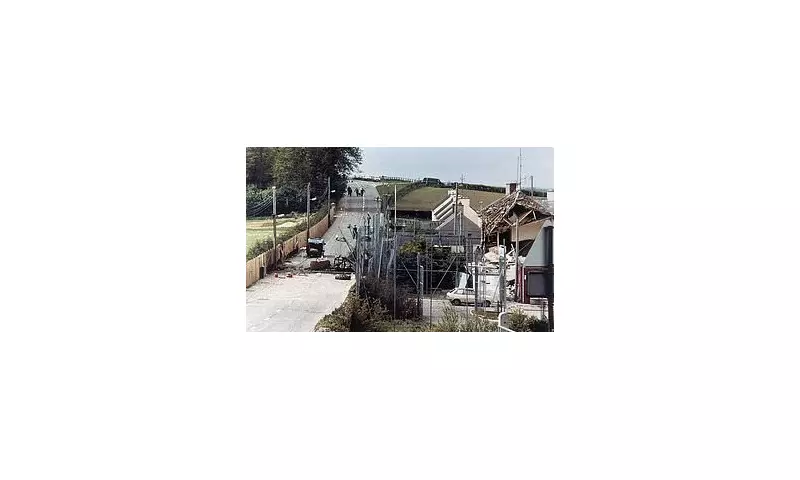
The threatened prosecutions stem from the 1987 Loughgall incident in County Armagh, Northern Ireland, where an eight-man IRA unit attacked a Royal Ulster Constabulary base. The militants were neutralised by SAS soldiers who had received intelligence about the planned assault and were waiting in ambush.
The Loughgall Operation: Defence or Human Rights Violation?
Despite being confronted by IRA rebels armed with assault rifles and a massive 400lb bomb, the SAS operatives now face allegations of violating the terrorists' human rights by using lethal force. The Loughgall attack had been orchestrated by two of the IRA's most notorious figures at the time - Jim 'The Executioner' Lynagh and Padraig McKearney - both of whom died during the confrontation.
For thirty-eight years, no British soldier involved in the operation had spoken publicly about the events until now. One veteran, who participated in the SAS mission and has suffered from post-traumatic stress disorder for decades, has broken his silence in an exclusive interview with the Daily Mail.
The veteran sharply criticised Labour's treatment of military personnel and what he described as capitulation to Republican agendas in Northern Ireland. He stated: "This situation is a farcical betrayal of soldiers - the politicians are completely in the wrong. They're hanging soldiers out to dry, traumatising veterans and damaging operations today because younger troops fear they will be treated the same if they open fire."
Legal Battles and Political Consequences
The decision to pursue new inquests for the Loughgall incident and eight other historical cases follows the recent acquittal of Soldier F, a former Parachute Regiment member accused of murder during Bloody Sunday in 1972. The Labour government has scrapped the Conservatives' Legacy Act, which had provided legal protections for military veterans facing historical investigations.
The new legal actions will proceed under European human rights law, specifically Article 2 of the European Convention on Human Rights, which protects the right to life. Republicans have argued in court proceedings that security forces failed to take adequate measures to prevent loss of life during the Loughgall operation.
The SAS veteran provided a vivid account of the chaotic scene: "Bullets were ricocheting everywhere as the IRA opened fire and the detonation of the bomb in the bucket caused the police station to partially collapse. There was dust and debris everywhere. I couldn't hear or see, the radios stopped working and I thought the SAS soldier next to me had been killed. It was total confusion."
He added, "We later found out those attacking us were the IRA's top guys. They had been active since the 1970s and were responsible for scores of deaths."
The Daily Mail's campaign to protect Troubles veterans has gained significant public support, with a petition demanding an end to their persecution attracting over 200,000 signatures. Meanwhile, former soldiers allege that the Northern Ireland Office is driving the legal actions against them, while the Ministry of Defence has failed to adequately defend veterans' interests.
The Conservative government's Legacy Act, introduced in 2023 by then veterans minister Johnny Mercer, had initially blocked these inquests. However, both the High Court and Court of Appeal in Belfast subsequently ruled that the immunity provisions were unlawful and incompatible with the European Convention on Human Rights.
Former SAS Sergeant Major George Simm expressed the frustration felt by many in the military community: "How many examples of this human rights lawfare stupidity do the British people have to witness before those inhabiting that parallel universe finally realise that the cunning schemes of the NIO are causing damage to the country's security?"
The government recently introduced the Northern Ireland Troubles Bill, aiming to establish a new framework for addressing Troubles-related deaths. Northern Ireland Secretary Hilary Benn confirmed that nine inquests would be restored, with Loughgall specifically identified among them, while twenty-four other cases would undergo a "sifting process" to determine if they should be investigated by the new Legacy Commission.
The Northern Ireland Office ultimately overruled the Ministry of Defence regarding whether to hold another inquest into Loughgall, with sources reporting "furious rows" between officials as the MoD attempted unsuccessfully to protect the soldiers involved.