
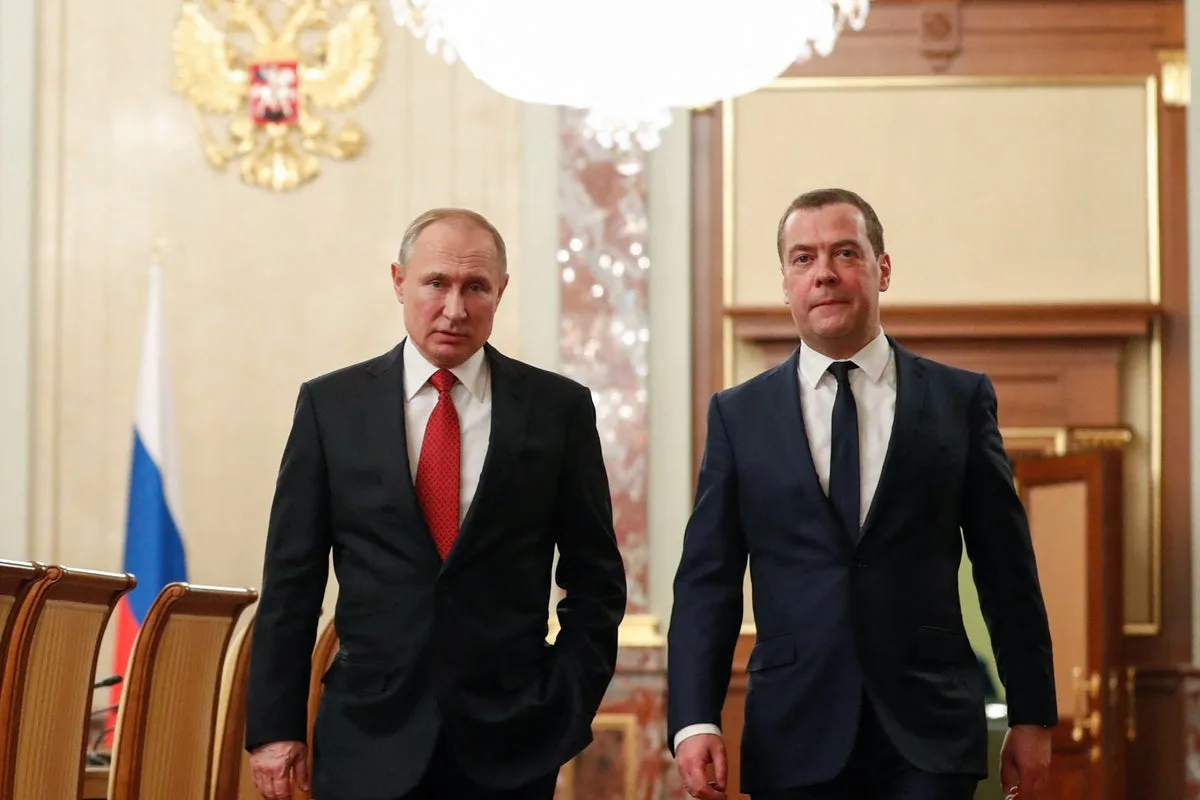
Dmitry Medvedev, the former Russian president and current deputy chair of Russia’s Security Council, has warned that the European Union’s plan to use frozen Russian assets to fund Ukraine could be considered an “act of war”. The EU proposal, announced by Commission President Ursula von der Leyen, aims to provide Ukraine with €90bn (£79bn) through a “reparations loan” backed by around £123bn of Russian state assets held in Belgium.
In a post on X, Medvedev stated that if the EU proceeds with what he called “stealing Russian assets”, Russia may view it as a casus belli—an act justifying war—with consequences for Brussels and individual EU countries. Medvedev is known for his aggressive rhetoric towards the West, having previously accused Donald Trump of playing an “ultimatum game” over sanctions.
Von der Leyen defended the plan, saying it would cover two-thirds of Ukraine’s funding needs and increase the costs of war for President Vladimir Putin. She noted that the proposal had been “positively received” by US Treasury Secretary Scott Bessent. However, Belgium, where most assets are held by Euroclear, has voiced legal concerns about bearing the risks alone.
The EU insists the scheme does not amount to confiscation, as Ukraine would only repay the loan if Russia pays reparations. The plan requires approval from 15 of 27 member states representing at least 65% of the bloc’s population. Moscow has repeatedly warned that any seizure of its assets would be considered theft.




