A Daring Escape and Tragic Capture
In a remarkable act of bravery in 1942, General John Nicholson made a stealthy escape from Singapore under the cover of darkness. He navigated perilous seas for five days in a mere 12ft dinghy, rowing across the Strait of Malacca with a single paddle. His destination was safety, but his journey ended in capture upon reaching Sumatra in Western Indonesia, where he was taken as a prisoner of war by the Japanese.
The Hidden Radio and Life in the Camp
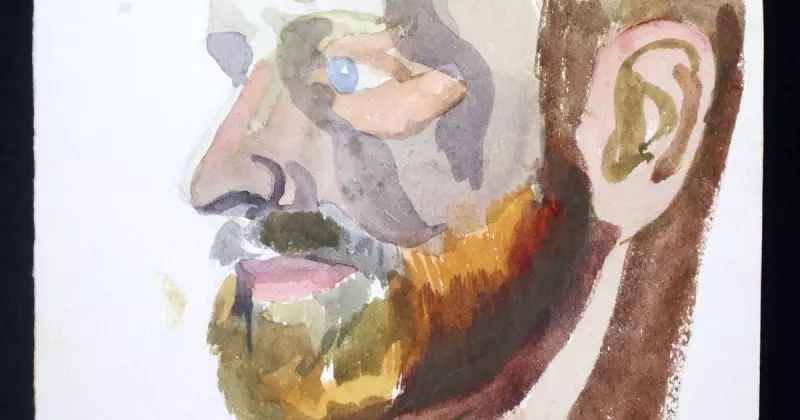
Now, nearly four decades after his death in 1988, a poignant portrait of John, drawn when he was a malnourished POW weighing just six and a half stone, is being featured in an exhibition at Westonbirt, the National Arboretum in Gloucestershire. His son, Michael Nicholson, 75, describes his father's story as extraordinary, detailing the terrible conditions he endured.
"Although he wasn’t wounded, the war didn’t leave him untouched," Michael told the Mirror. "He’d been undernourished and had all sorts of ghastly diseases like Malaria. Before the war he was healthy and sporty and typically would have been about 12 stone. But he went down to six and a half stone and all his muscle was wasted away."
John, an engineer, performed an act of immense courage by hiding a disassembled radio inside the camp. He risked his life daily to assemble the pieces and relay crucial information, such as the start of the Battle of Midway, to fellow prisoners. He also aided escape attempts.
"Every day he must have been worried that the Japanese guards were going to search the camp properly and find the radio," Michael explained. "It was a mad thing to do... If they’d have found it they would have shot him."
After a failed escape attempt that saw him get within sight of Ceylon (now Sri Lanka), John was recaptured by a Japanese tanker and brought back to be incarcerated in the notorious Changi POW camp.
The Portrait's Emotional Reunion
It was in Changi that he met vicar Frank Stallard, who painted his portrait. This sketch was one of 90 discovered decades later by Stallard's grandsons, Charlie Inglefield and Ben Stallard. Using the family history site Ancestry.co.uk, they tracked down the relatives of the soldiers depicted, including Michael Nicholson.
John was liberated by the Russians three weeks before the end of the war. He returned to the UK, married Michael's mother Phyllis 18 months later, and led a happy life, though he rarely spoke of his wartime ordeal.
"I didn't know anything about the portraits until last year," Michael said. Seeing his father's portrait for the first time was an incredibly moving experience. "I remember thinking my dad was better looking in real life but this portrait was completed at a difficult time in his life which somehow made me feel that it was important."
The exhibition at The Royal Arboretum, which Michael attended, brought together many relatives who had been found through Ancestry. He described the gathering as terribly moving, a poignant echo of the eclectic group of people who had been imprisoned together decades before.
The collection of portraits is currently on exhibition at The Royal Arboretum and can also be viewed online at Ancestry.co.uk.