Poland Withdraws from International Land Mine Ban Treaty
Poland has officially withdrawn from the Ottawa Convention, the international treaty that prohibits the use of antipersonnel mines. The decision, announced on Friday, 20 February 2026, marks a significant shift in the country's defense strategy amid escalating tensions with Russia.
Defensive Measures Against Russian Aggression
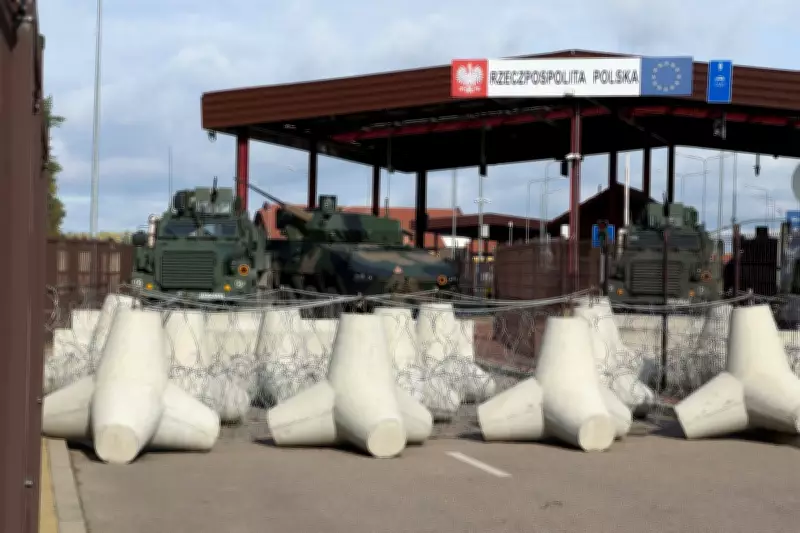
Deputy Defense Minister Paweł Zalewski stated that Poland will utilize both antipersonnel and anti-tank land mines to fortify its eastern border. This move is part of a broader effort to counter what he described as Russia's "very aggressive intentions" towards its neighbors. Poland, which ratified the treaty in 2012 and destroyed its stockpile by 2016, now plans to resume manufacturing these weapons domestically.
Zalewski emphasized that the mines are a critical component of the defense infrastructure being constructed on NATO's eastern flank. "These mines are one of the most important elements of the defense structure we are constructing on the eastern flank of NATO, in Poland, on the border with Russia in the north and with Belarus in the east," he explained.

Regional Reassessment of Treaty Commitments
Since Russia's full-scale invasion of Ukraine, several neighboring countries have reconsidered their participation in the Ottawa Convention. Last year, Poland joined Finland, Estonia, Latvia, Lithuania, and Ukraine in announcing their withdrawal. Notably, Russia and the United States are among the nearly three dozen nations that have never acceded to the treaty.
Prime Minister Donald Tusk highlighted Poland's preparedness, stating that the country would soon have the capability to mine its eastern borders within 48 hours in response to a threat. He noted that due to the extensive length of these borders, a substantial quantity of mines would be required.
Domestic Production and Strategic Deployment
Poland intends to achieve self-sufficiency by producing both antipersonnel and anti-tank mines through collaboration with local manufacturers. While anti-tank mines are not prohibited by the Ottawa Convention, antipersonnel mines are banned due to their long-lasting danger to civilians, as seen in conflict zones like Cambodia, Angola, and Bosnia and Herzegovina.
The mines will be stockpiled as part of the Eastern Shield initiative, an enhanced fortification system along the borders with Belarus and Russia, initiated in 2024. However, Zalewski assured that deployment would only occur "when there is a realistic threat of Russian aggression," to avoid disrupting daily life for Polish citizens.
Human Rights Concerns and Defense Balance
Human rights groups have condemned Poland's withdrawal, arguing that antipersonnel mines pose severe risks to civilians. In response, Zalewski maintained that Poland is striking a balance by keeping the mines in reserve unless the country faces an attack. "We are not an aggressive country," he asserted, "but we have to use all means to deter Russia."
This decision underscores Poland's commitment to bolstering its defense capabilities in a volatile regional landscape, prioritizing national security while navigating international humanitarian concerns.