Pakistan-Afghanistan War: Why the Taliban Hate the Blood-Soaked Border Explained
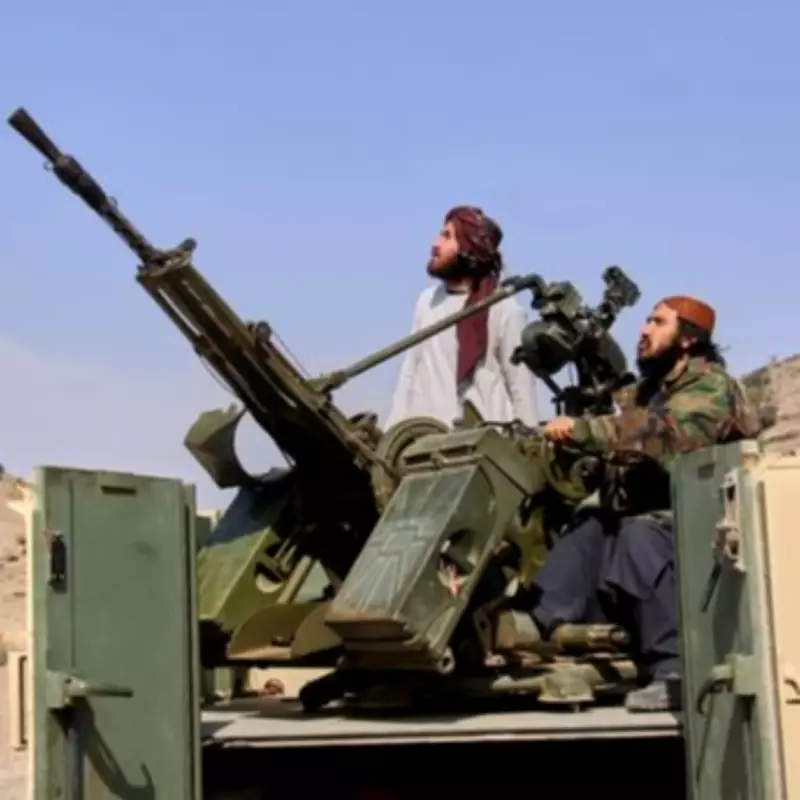
Pakistan has launched a series of airstrikes on the Afghan capital, Kabul, and several other cities, following months of escalating tensions and cross-border attacks. In retaliation, the Afghan Taliban have initiated artillery assaults across the border, with both sides reporting significant casualties inflicted on the other. Defence Minister Khawaja Mohammad Asif declared on Friday that Pakistan is now in an "open war" with Afghanistan, marking the most severe armed confrontation between the two uneasy neighbours since a Qatari-mediated ceasefire in October 2025.
Why Are They Fighting?
Months of sporadic cross-border attacks have erupted into full-scale military action, with Islamabad's Defence Minister Khawaja Asif formally declaring 'open war' on Afghanistan. Hours earlier, the Afghan Taliban rulers announced they had launched 'large-scale offensive operations' against Pakistani troops. These attacks primarily occurred along the Durand Line, a 1,640-mile boundary established in 1893 by British diplomat Sir Mortimer Durand to separate the British Indian Empire from Afghanistan, amid intense rivalry with the Russian Empire.
This frontier has always been contested by Afghanistan, as it aimed to create a border between the country and what was then India. One of the most sensitive aspects of this boundary, which in 1947 became the border between Afghanistan and Pakistan, is that it splits two major ethnic groups: the Pashtun and the Baloch. This division means the predominantly Pashtun Taliban have people on both sides, effectively splitting their tribe and fuelling resentment.

The Taliban have never accepted the border, but tensions escalated further in 2017 when Pakistan began constructing extensive razor-wire fences and watchtowers. This fortified, armed border directly challenged the Taliban's claim to the land they believe is rightfully theirs, leading to bloody clashes and frequent emergency closures of key crossing points at Torkham and Chaman.
Why Now?
When the Taliban took over Afghanistan in 2021, the situation deteriorated significantly. Since then, there have been an estimated 75 major flare-ups and armed clashes between the two sides, with Pakistan growing increasingly impatient with the violence. In October 2025, Afghanistan and Pakistan agreed to a ceasefire mediated by Qatar and Turkey after a week of bloodshed on the border.
This latest flare-up has precipitated a crisis that will be difficult for both sides to de-escalate, particularly since the Kabul government is run by the Afghan Taliban. Although previously more distinct from their Pakistani counterparts, who had stronger links to al-Qaeda and global terror networks, the Afghan Taliban are unlikely to clamp down on armed fighters. This reluctance is partly due to the growing threat from Islamic State in the Khorasan (ISIS-K), a regional franchise of ISIS that has been poaching Taliban fighters. Sources indicate the Afghan Taliban are hesitant to punish the Tehrik-e-Taliban Pakistan (TTP) not only because of their links but also to avoid driving them into the arms of ISIS-K.
Afghanistan launched an extensive cross-border attack into Pakistan along six provinces on Thursday night, claiming it was retaliation for Pakistani airstrikes on Afghanistan on Sunday. Pakistan asserted those airstrikes targeted and killed dozens of militants in Afghanistan, but Kabul reported only civilians, including women and children, had been killed. In response, Pakistan conducted airstrikes in the early hours of Friday on the Afghan capital and two other areas, Kandahar and Paktia. The border fighting, which had temporarily ceased, resumed and continued throughout Friday.
Could International Powers Play a Part?
The fighting has alarmed the international community, especially as the region is a hotspot for other militant groups, including al-Qaeda and the Islamic State group, which are attempting to resurface. In October, Turkey, Qatar, and Saudi Arabia facilitated talks between the sides. At the time, U.S. President Donald Trump also weighed in, stating he intended to resolve the conflict "very quickly." Whether he will intervene again remains uncertain.

Turkish Foreign Minister Hakan Fidan engaged in discussions with his Pakistani, Afghan, Qatari, and Saudi counterparts on Friday, according to a Turkish official speaking anonymously in line with government policy. Russia has called for an immediate halt to the fighting and a diplomatic resolution to the conflict, while Iran has expressed readiness to assist in facilitating dialogue.
The explosion of violence along the border could lead to significant regional destabilisation, amid Pakistani claims that India may have supported Afghan-launched attacks. Anarchy across the continent encourages the growth of terror groups and poses a general threat to Western interests. The ongoing conflict underscores the deep-seated historical and ethnic divisions that continue to fuel one of the world's most politically explosive borders.