
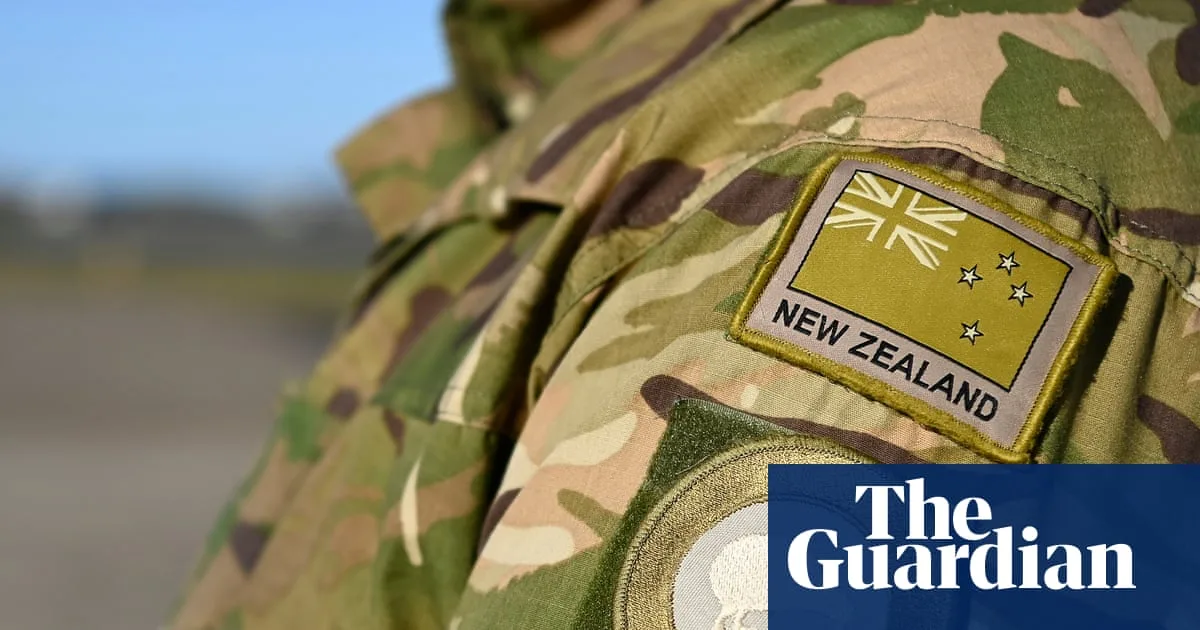
A military court has convicted a New Zealand soldier of attempted espionage for a foreign power, marking the first spying conviction in the country's history. The court martial heard that the soldier was caught offering to share military base maps and photographs with an undercover officer posing as an agent of an unnamed foreign nation.
The soldier's name, the country he attempted to spy for, and the identity of the undercover officer were all suppressed by the court. The serviceman wiped away tears as evidence was recounted, with relatives present in court to support him. His wife also wept, while his father repeatedly leaned forward with his head in his hands.
The court accepted the soldier's guilty plea on Monday, but the hearing continued to allow the panel to determine a sentence, which is expected within days. The soldier admitted to attempted espionage, accessing a computer system for a dishonest purpose, and knowingly possessing an objectionable publication.
The court heard that the soldier became a person of interest after the March 2019 Christchurch mosque shootings, as police cracked down on rightwing extremist groups. According to a prosecution summary, he had made contact with a third party indicating he was a soldier wanting to defect. An undercover officer then made contact, claiming to be from that foreign nation. The soldier offered to provide mapping and photographs, along with a possible covert device to be placed into Army Headquarters. He also provided telephone directories of military camps, including restricted information, and offered an assessment of vulnerabilities at Linton Military Camp, as well as access codes for unauthorised entry to the camp and nearby Ohakea airbase.
A search of the soldier's house found service ammunition, a computer drive containing a video of the Christchurch mosque attack, and the shooter's manifesto. In an affidavit read out by his lawyer, the soldier admitted membership of extremist groups Action Zealandia and the Dominion Movement, though he said members were not involved in untoward activity and were not terrorist groups. He said he understood why those groups were investigated after the shootings but did not condone the attack, calling it 'shocking'. He accused investigators of being 'aggressive' and 'violent', and said his only motivation was to leave New Zealand and reach what he thought was safety.




