Nigeria's newly appointed army chief has committed to significantly escalating military operations against terrorist factions operating in the country's northern regions. The announcement comes less than a week after a stark warning from the United States regarding potential military intervention.
Military Resolve in the Face of External Pressure
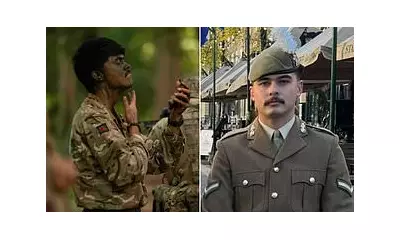
Speaking directly to troops in Maiduguri, the capital of Borno State, Lieutenant General Waidi Shaibu, the Chief of Army Staff (COAS), delivered a forceful address on Friday, 7th November 2025. He emphasised that the renewed offensive against insurgents was entering a critical phase and that failure was 'not an option' in the decade-long conflict.
"You have been training to defeat the terrorists... This time, you are going to do it differently," General Shaibu told the assembled soldiers. He assured them that all necessary combat enablers had been provided and that new platforms had been introduced to ensure the mission's success.
International Context and Expert Analysis
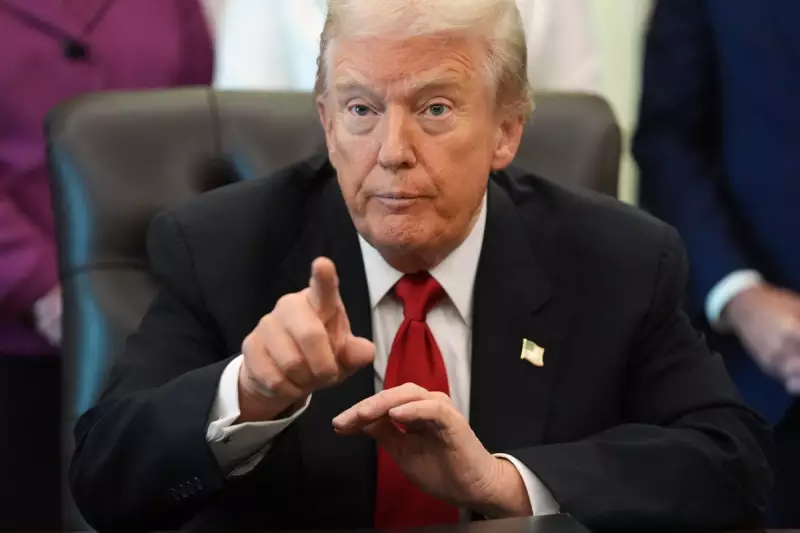
This military pledge follows a significant diplomatic development on 1st November, when US President Donald Trump threatened to terminate all American aid to Nigeria. President Trump declared he would 'wipe out the Islamic Terrorists' in the country if Nigeria did not halt attacks on its Christian population.
In response, Nigeria's President, Bola Ahmed Tinubu, rejected President Trump's characterisation of the nation as a 'country of particular concern' for allegedly failing to protect Christians from persecution.
Security analysts have since questioned the accuracy of Trump's comments, pointing to the complex nature of the insecurity plaguing Nigeria. The nation's population of 220 million is almost evenly divided between Christians and Muslims.
Experts clarify that the conflict is not solely religious. While Christians have been targeted, the majority of victims from armed groups are actually Muslims in the predominantly Muslim north, where most attacks occur. The violence stems from a tangled web of motives, including:
- Religiously motivated attacks on both faiths.
- Clashes between farmers and herders over scarce resources.
- Communal rivalries and ethnic conflicts.
- The activities of secessionist groups.
- The extremist aims of Boko Haram, which seeks to impose its radical interpretation of Islamic law and has also targeted Muslims it considers insufficiently devout.
A Critical Juncture for National Security
The combined pressure from a major international ally and the new, determined stance from its own military leadership places Nigeria at a pivotal moment. The success of Lieutenant General Shaibu's intensified operations will be closely watched both domestically and on the global stage, as the country strives to address its profound security challenges.