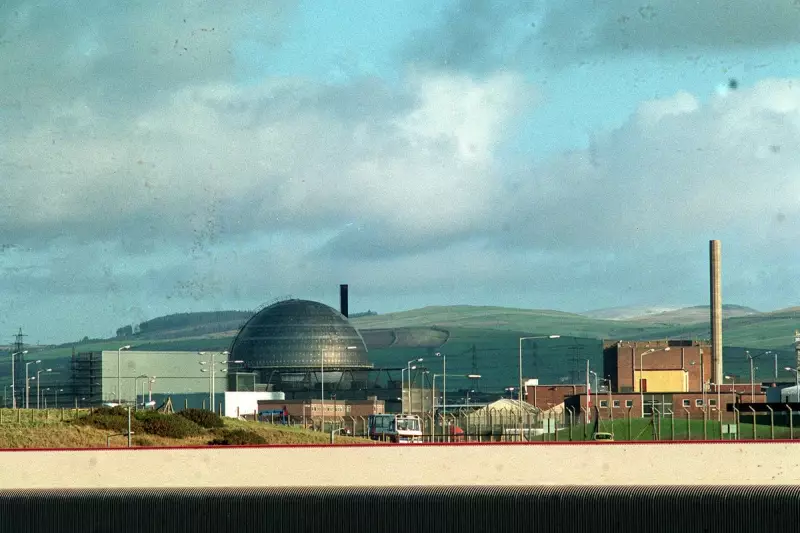
Newly declassified government documents reveal that former Prime Minister Tony Blair, acting on advice from MI5, refused a direct request from his Irish counterpart to share secret intelligence on potential terrorist threats to the Sellafield nuclear facility.
The Irish Warning of a "Transnational Catastrophe"
The request came from then-Taoiseach Bertie Ahern in the wake of the devastating March 2004 Madrid train bombings. The coordinated attacks by Islamist extremists, which killed 193 people, sharply focused minds on the vulnerability of critical infrastructure across Europe.
In a letter to Mr Blair, Ahern argued that the atrocity underlined the "ruthlessness and determination" of global terrorists. He expressed profound concern that an attack on the Cumbrian coastal nuclear plant could lead to a disaster engulfing Ireland. "I think it is fair to say that terrorist targets that could result in transnational catastrophes deserve to receive special attention," Ahern wrote.

While acknowledging the need to protect sensitive information, the Irish leader believed "it should be possible to devise arrangements for the communication of sensitive information in a secure manner."
MI5's Firm Veto and UK's Stance
Despite this plea, the UK's Security Service, MI5, delivered a firm warning against sharing any terror-related intelligence with Dublin. The advice was relayed to Number 10 by Shantha Shan, an official in then Trade and Industry Secretary Patricia Hewitt's private office.
The core of MI5's objection was a fundamental lack of trust in the security of the information once it left UK control. "We have consulted with the Security Service and conclude that we must maintain a firm line not to release terrorist-related intelligence of any kind," Shan advised, adding that "there could be no guarantees about who will have access to it, no matter what arrangements were put in place."
Consequently, Tony Blair rejected the formal intelligence-sharing pact. He informed Ahern that the UK had to protect the confidentiality of its sources. Instead, the British government offered a lesser assurance: if a specific threat to Sellafield was uncovered, the British ambassador in Dublin would brief Irish officials.
Diplomatic Fallout and Irish Frustration
The compromise did not satisfy the Irish government. Bertie Ahern responded with clear frustration, stating that while he understood the need to protect intelligence sources, "the protection of the lives and health of our citizens should have priority."
British diplomatic telegrams from the time, also released to the National Archives at Kew, provide context. The then British Ambassador to Ireland, Sir Ivor Roberts, suggested the intensified Irish focus on Sellafield was partly a result of the success of the Good Friday Agreement. With the Northern Ireland conflict receding, bilateral relations were no longer viewed "exclusively through the Northern Ireland prism," allowing other longstanding issues like Sellafield to rise up the agenda.
Ambassador Roberts reported that the Irish government was itself under significant domestic pressure, fighting "a vigorous rearguard action against opposition parties and NGOs" who pushed for a tougher stance. This pressure, he noted, had led Dublin to initiate multiple legal cases against the UK in international courts and to ramp up its public rhetoric on the issue.
The files, released under the 20-year rule, lay bare the enduring tension between international security cooperation and the protection of vital intelligence sources and methods, a dilemma sharply intensified by the spectre of nuclear terrorism.