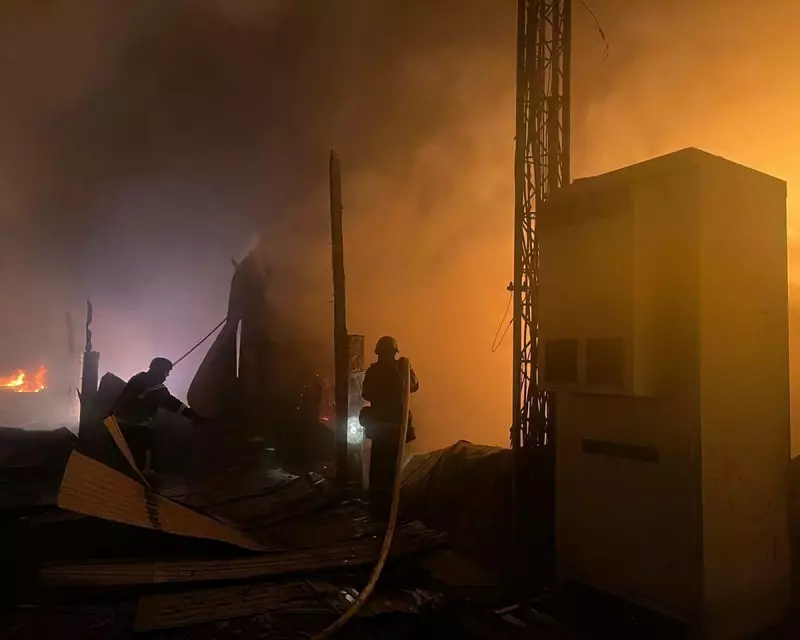
As high-stakes diplomatic discussions aimed at ending the war continued in the United States, Russia launched one of its largest aerial assaults on Ukraine in recent months. The massive overnight barrage targeted critical infrastructure across the nation, including western regions far from the front lines.
Scale of the Overnight Barrage
According to Ukraine's armed forces, the attack involved a staggering more than 650 drones and 51 missiles. The assault was widespread, with drones striking locations hundreds of miles from the active combat zones. The intensity of the attack was such that air raid warning sirens were activated in parts of eastern Poland, a NATO member state bordering Ukraine.
In the Kyiv region, the strikes resulted in at least three people being injured. Ukraine's national energy operator, Ukrenergo, reported that a significant portion of the overnight assault was directed at power stations and other elements of the country's energy grid. This continues a relentless Russian campaign to degrade Ukraine's energy capabilities as it endures a fourth winter of full-scale conflict.

Diplomatic Moves Amid the Violence
The aerial offensive coincided with a third day of talks between US and Ukrainian negotiators in Miami, Florida. The White House, under President Donald Trump, is keen to broker an end to the war. However, the proposed framework—reportedly involving Ukraine surrendering territory in exchange for vague security guarantees—is seen as deeply problematic for Kyiv in its current position.
There is also no clear signal that Russia is prepared to agree to terms suggested by the Trump administration. The diplomatic complexity was underscored by US Vice-President JD Vance, who stated the conflict had been a "source of perennial frustration" for the White House, admitting the administration had been surprised it was not easily solved.
Regional Reactions and Cross-Border Strikes
Meanwhile, European allies have expressed unease with the unilateral nature of some US diplomatic efforts. EU foreign policy chief Kaja Kallas, speaking in Qatar, sought to downplay divisions after the Trump administration's new security strategy suggested Europe faced "civilisational erasure" from immigration. "The US is still our biggest ally," Kallas asserted, emphasising the need for unity.
On the military front, Russia's defence ministry claimed it had shot down 116 Ukrainian drones over Russian territory. Unverified reports on Telegram indicated a Ukrainian drone strike damaged an oil refinery in Ryazan, with regional officials confirming damage to a residential building and an industrial site from falling debris.
The simultaneous escalation of violence and diplomacy highlights the profound challenges in reaching a settlement. With Ukraine's energy system under renewed pressure and peace talks struggling to find common ground, the path to ending Europe's largest conflict in decades remains fraught and uncertain.