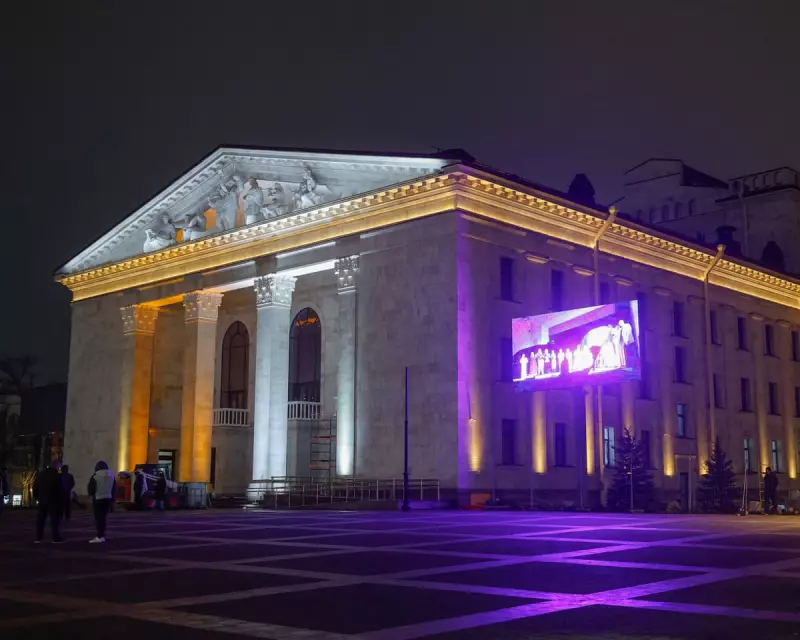
The Mariupol Drama Theatre, a building synonymous with one of the most notorious atrocities of Russia's war in Ukraine, is preparing to reopen its doors under Russian control. Its restoration is being presented by occupation authorities as a symbol of renewal, but for many former residents and artists, it represents a macabre act of "dancing on bones".
A Notorious Attack and a Controversial Rebirth
The theatre was destroyed in a Russian airstrike in March 2022 while hundreds of civilians, including children, were using its basement as a shelter. The word "CHILDREN" had been painted in large block letters on the ground outside in a desperate bid to deter attack. At least a dozen people were killed, though the actual death toll is believed to be far higher.
Russia has consistently denied responsibility, claiming the building was blown up from inside. However, multiple independent investigations, including one by Amnesty International, concluded Russian forces were responsible, labelling the strike a potential war crime for deliberately targeting civilians.

Now, after a two-year reconstruction, the theatre is set to reopen by the end of the month. Its inaugural performance will be The Scarlet Flower, a classic Russian fairytale. In a statement, the new management said, "The theatre is being reborn together with Mariupol. Russian and Soviet classics have returned to the stage."
'A Memorial, Not an Entertainment Venue'
For those who fled Mariupol, the reopening is an affront. Evgeny Sosnovsky, a photographer who worked with the theatre before moving to Kyiv, called it cynical. "There should be a memorial at the site in memory of the Mariupol residents who died during Russia’s capture of the city, not an entertainment venue," he said.
Vira Lebedynska, a former actor at the theatre now based in Uzhhorod, western Ukraine, echoed the sentiment. "Having entertainment, songs and dances on top of all the bones? I have the feeling that the souls of the people who died there won’t let them perform well there," she stated. Her theatre-in-exile tours Europe with a play called Mariupol Drama, based on the horrific events of 2022.
However, not all former company members left. Some have remained and are collaborating with the new Russian-appointed management. The theatre's former Ukrainian director was demoted to run the orchestra, replaced by Igor Solonin, formerly of the Donetsk Circus. In an interview, Solonin repeated the Russian narrative that the building was destroyed by an internal explosion.
Reconstruction and Property Seizure: The Broader Russification Effort
The theatre's restoration is a centrepiece of a vast Russian reconstruction programme in Mariupol, a city largely reduced to rubble during its capture. This rebuilding is tightly coupled with a policy of Russification and asset seizure.
Earlier this month, President Vladimir Putin signed a decree allowing officials in occupied Ukrainian territories to confiscate homes deemed "ownerless"—those whose owners fled or were killed. Compensation is only available to those who obtain Russian citizenship. In Mariupol alone, over 12,000 apartments are now listed as ownerless.
The Guardian spoke to several former residents who have lost or are losing their property. One man, Volodymyr, described a notice posted on his rebuilt apartment block demanding owners confirm ownership or face "nationalisation," a process requiring a perilous journey to the occupied city and accepting Russian citizenship.
Evgeny Sosnovsky found his own apartment on the list. "I know that I will never return to Mariupol. In my lifetime, it is unlikely that it will return to Ukraine," he said, accepting the loss as he tries to rebuild his life in Kyiv.
This policy also affects residents who stayed. A woman named Anna Guzevskaya appealed directly to Putin in a video, saying that although her home was destroyed, she was offered inadequate cash compensation instead of a promised new apartment.

For Vira Lebedynska, the physical loss of her apartment, now occupied by others, is secondary. "I have closed that place in my life, I have built a wall. The place is dead to me. Let them enjoy their 'Russian World'," she said. The reopening of the theatre, for her and many others, is not a revival but a profound desecration of a mass grave.