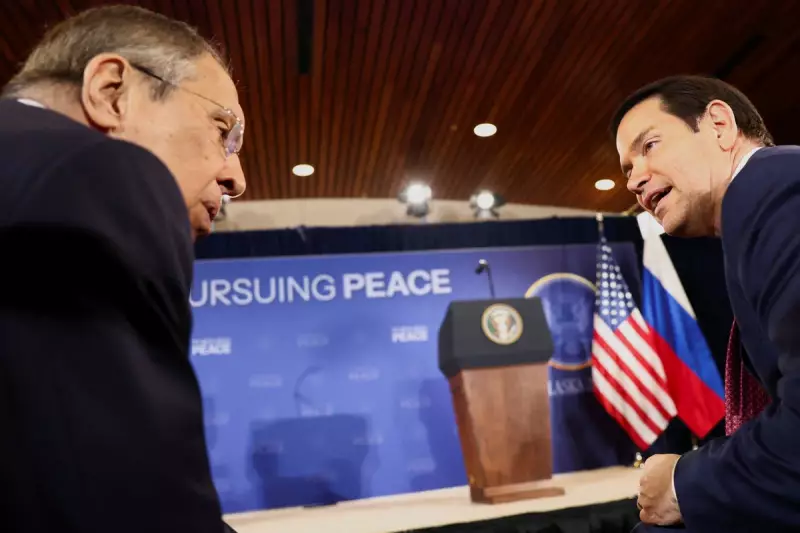
Russian Foreign Minister Sergei Lavrov has declared his readiness to meet with US Secretary of State Marco Rubio, signalling potential diplomatic engagement amid escalating military aggression in Ukraine.
The announcement comes as Russia launched one of its largest coordinated assaults on Ukrainian energy infrastructure since the war began in 2022, killing at least seven people and forcing widespread power outages.
Diplomatic Overtures Amid Escalating Conflict
Lavrov told Russia's state-run RIA Novosti agency that both he and Secretary Rubio recognise the necessity for regular communication between the two nations. The Russian foreign minister, who has served under Vladimir Putin since 2004, emphasised the importance of discussing bilateral relations and the ongoing conflict in Ukraine.
However, Lavrov reiterated Moscow's firm stance on peace negotiations, stating that any resolution must account for Russian interests - a phrase commonly used by the Kremlin to indicate its unwavering maximalist demands regarding Ukraine's future.
The potential meeting follows reports of strained relations between Lavrov and President Putin, though the foreign minister's comments suggest continued alignment with Kremlin policy.
Massive Energy Infrastructure Attacks
Between Friday and Saturday, Russian forces launched hundreds of drones and missiles targeting critical energy facilities across Ukraine. The assault represents one of the most significant attacks on Ukraine's power grid since the full-scale invasion began, according to state-owned energy company Tsentrenergo.
The company was forced to suspend operations at plants in both the Kyiv and Kharkiv regions, with repair crews working around the clock to restore electricity to approximately 100,000 homes left without power in Kharkiv alone.
Ukrainian President Volodymyr Zelensky confirmed that restoration efforts are ongoing across most regions, with thousands of workers involved in stabilising the damaged energy system.
International Responses and Nuclear Posturing
Czech Foreign Minister Jan Lipavsky urged European nations to increase investment in Ukraine's defence, stating plainly: "We know that if we want to stop Russia, we have to pay for it." The Czech government has remained one of Kyiv's strongest allies throughout the conflict.
Meanwhile, the Kremlin addressed global concerns about nuclear escalation, with spokesperson Dmitry Peskov affirming that Russia will abide by its obligations under the global nuclear test ban. This assurance follows controversial remarks from US President Donald Trump that suggested Washington might resume atomic testing after more than three decades.
President Putin had previously ordered officials to study the possibility of resuming nuclear tests, though Russia committed not to do so unless the United States acted first.
European Divisions and UK Support
The European Commission's proposal to use frozen Russian assets worth up to €185 billion to support Ukraine has exposed divisions within the bloc. Slovak Prime Minister Robert Fico declared his country would not participate in any scheme to seize Russian assets for military support to Ukraine, arguing such measures would only prolong the conflict.
In a significant development for European security, Britain is deploying anti-drone equipment and military specialists to Belgium following a series of drone sightings near critical airports and military bases. The UK intervention comes after both Brussels International Airport and Liege cargo airport faced temporary closures due to drone incursions.
Defence Secretary John Healey confirmed that Royal Air Force specialists are being sent to assist NATO ally Belgium, stating: "As hybrid threats grow, our strength lies in our alliances and our collective resolve to defend, deter and protect our critical infrastructure and airspace."
Ukrainian officials continue to appeal for enhanced air defence capabilities, with President Zelensky revealing that Ukraine seeks to acquire 27 Patriot systems from US companies while borrowing essential anti-missile defence systems from European allies in the interim.