A Nation Remembers: Solemn Tributes at the Cenotaph
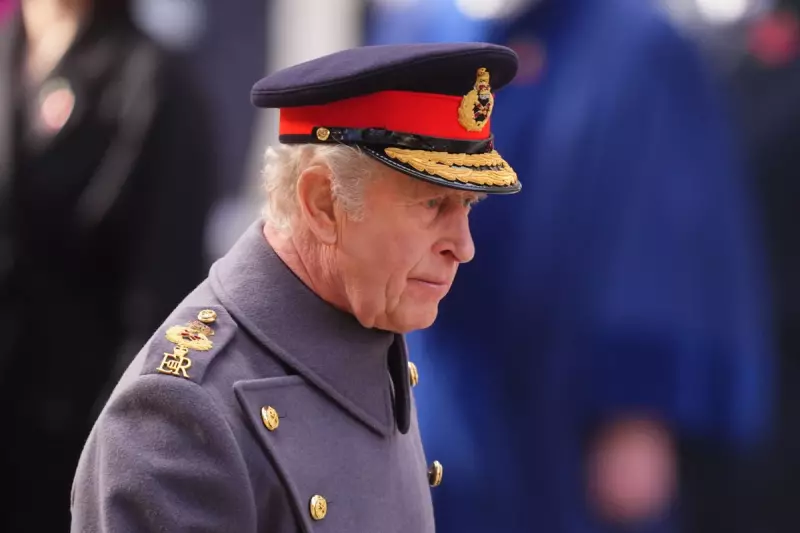
On a poignant Remembrance Sunday, King Charles led the United Kingdom in honouring those who made the ultimate sacrifice in conflict. The monarch stood at the heart of the national ceremony at the Cenotaph in Whitehall, London, where thousands of veterans and dignitaries gathered to pay their respects on 09 November 2025.
Royal and Political Tributes
His Majesty, wearing the uniform of a Field Marshal with a ceremonial frock coat, took centre stage to lay the first wreath at the iconic war memorial. He then solemnly led the nation in the traditional two-minute silence, a powerful moment of collective reflection observed across the country.
The King was followed by his son, The Prince of Wales, who laid his own wreath while wearing his Royal Air Force uniform in the rank of Wing Commander. William, who completed seven-and-a-half years of full-time military service in 2013, has long championed the welfare of service personnel, a key focus of his royal work.
From a balcony overlooking the solemn scene, The Princess of Wales and The Queen, both dressed in black, watched the proceedings alongside other members of the royal family, including the Duke and Duchess of Gloucester, the Duke of Kent, and the Duchess of Edinburgh.
The political establishment was strongly represented, with Prime Minister Sir Keir Starmer laying a floral tribute. He was joined by senior figures from across the political spectrum, including Kemi Badenoch, Sir Ed Davey, Yvette Cooper, Shabana Mahmood, and Sir Lindsay Hoyle, as well as representatives from the Commonwealth.
Veterans and D-Day Heroes Honoured
The ceremony held profound significance for the veterans in attendance, including several heroes from the Second World War. Among them were three D-Day veterans whose presence connected the ceremony directly to one of the most pivotal moments of the conflict.
Henry Rice, a former signalman who arrived off Juno Beach five days after D-Day, was present to pay his respects. He was joined by Mervyn Kersh, who arrived in Normandy as a 19-year-old, just three days after the D-Day invasion began.
One of the most remarkable attendees was Sid Machin, one of only six 101-year-olds registered to march. Mr Machin is one of the last surviving "Chindit" soldiers from the Second World War's Burma campaign, having landed behind enemy lines in a glider at night in the jungle as part of a special forces unit that disrupted Japanese supply lines.
Ahead of the service, a moving scene unfolded as around a dozen people wearing military uniforms and poppies were pushed in wheelchairs along Whitehall, receiving respectful applause from the crowd near the Cenotaph, with one veteran offering a salute.
National Observance and Ceremonial Precision
The wreath-laying ceremony at the Cenotaph followed the two-minute silence observed not only in Whitehall but at war memorials in villages, towns, and cities across the entire country. The silence was broken by the firing of a gun, immediately followed by the haunting sound of the Last Post, played by the Buglers of the Royal Marines.
In a display of the United Kingdom's political continuity, eight former prime ministers stood close to the Cenotaph: Sir John Major, Sir Tony Blair, Gordon Brown, Lord Cameron, Baroness May, Boris Johnson, Liz Truss, and Rishi Sunak.
Meanwhile, in Scotland, First Minister John Swinney marked the occasion at a Remembrance Sunday service in Edinburgh, laying a wreath at the Stone of Remembrance outside the City Chambers.
The ceremony concluded with the singing of the national anthem, after which the King departed to applause from the crowd. Both Queen Camilla and the Princess of Wales were seen smiling as His Majesty left, bringing to a close another chapter in the nation's enduring act of remembrance.