A City of Strength Under a New Kind of Siege
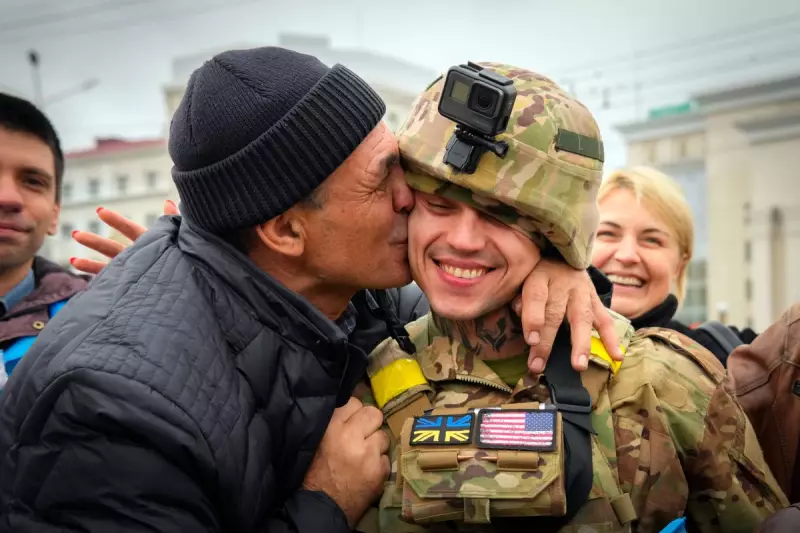
Three years after its joyous liberation from a nine-month Russian occupation, the Ukrainian port city of Kherson is gripped by a tense and wary stillness. The streets, once filled with celebrating crowds, now lie mostly empty. Daily life has retreated behind walls and underground, a stark contrast to the scenes on November 11, 2022, when residents embraced their liberators, believing the worst was behind them.
Instead, the war has transformed. From positions across the Dnipro River, Russian forces launch strikes with regular intensity. The skies above a city of broken windows and deserted courtyards now prowl with drones, creating a persistent state of fear for the remaining residents of a place that was once home to nearly 280,000 people.
Life Amidst the Ruins: A Florist's Story
In the bomb-scarred centre of Kherson, the small flower kiosk of 55-year-old Olha Komanytska offers a surreal burst of colour. Her red and white roses spill from tall buckets on a corner that once drew crowds but now sees only a handful of customers. "Hardly anyone buys flowers," she admits. "We're just trying to make it through."
For nearly three decades, Komanytska and her husband grew flowers in the Kherson countryside. The kiosk is all that remains after their greenhouses were destroyed. She now wears a black headscarf, mourning her husband who died of a heart condition—a death she believes was hastened by the war. Her eyes fill with tears when she speaks of him, and she confesses she cannot stay at his grave for more than five minutes due to the ever-present threat of drones.
Her stand offers little security. She recounts a shell flying directly over her head, surviving only because she bent down at the crucial moment. Like many in Kherson, she has learned the city's new rules of survival. She can identify every weapon by its sound but says drones are the worst. She mimics their low, screeching whine. "They're always searching for a target," she says. She now closes early and walks home pressed against walls, sometimes hiding under trees to escape their "eyes." The only time her sombre face softens is when she remembers the day of liberation. "That day was amazing," she repeats, as if to make the memory real again.
The Electronic Shield and a Childhood Underground
Kherson's defence is a two-fold effort. Above the streets, municipal workers stretch protective mesh netting—the same plastic mesh once used on construction sites—to shield civilians from drones. At one hospital, the entrance is entirely wrapped in this netting, with only a narrow passage left for staff and patients. Officials state such sites are top priorities as they are often targeted.
Above these nets, an invisible electronic shield protects the city. This is the work of electronic warfare systems that use radio signals to detect, jam, or disable enemy drones. Max, 28, of the 310th Separate Marine Electronic Warfare Battalion, works from a gamer-style workstation. He reports that up to 250 FPV drones can head toward Kherson in just half a day, yet his unit intercepts more than 90% of them. "When you see a strike hit a soldier or a civilian, it hurts you," he said. "You want to do everything possible to make sure it never happens."
To preserve a semblance of normal life, many activities for children have moved underground. Former apartment basements are now cosy rooms with carpets and colourful decorations. A children's club meets here weekly to play chess and checkers. Chess coach Oksana Khoroshavyna explains that the club is now primarily a place for Kherson's isolated children to meet and make friends. "These kids stay home all the time," she says. "They study online; everything in their lives is remote."
In another basement, 16-year-old Artem Tsilynko, a high school senior, practices boxing with his peers. "For me, this place is about unity," he says. Having spent nearly a quarter of his life in war, he notes that his fear has dulled with time but returns during heavy shelling. "When you're sitting in the basement, your heart races," he admits. "After that, it's hard to fall asleep."
Despite the constant tension, Kherson remains alive. Post offices operate behind concrete slabs, and buses still run, with small cement bunkers at the stops as a stark reminder of the ever-present danger. The city, a forgotten stretch of the front line, endures beneath billboards that still proclaim: "City of strength, freedom and resilience."