Iran's Military Transformation Over Five Decades of Conflict
The Islamic Republic of Iran has systematically developed its offensive military capabilities across nearly fifty years, a period marked by continuous warfare or imminent threats of conflict. This evolution has positioned Iran as a significant regional power with complex military structures and advanced weaponry.
Historical Foundations and Western Dependence
Prior to the 1979 Islamic Revolution, Iran's military relied heavily on Western suppliers, particularly the United States. As the Iran-Iraq War commenced in 1980, Iran possessed substantial modern equipment, including approximately 80 F-14 fighter jets, over 200 F-4 and F-5 aircraft, and thousands of tanks. However, by the war's conclusion in 1988, Iran's military was severely depleted, and the nation had become an international pariah, facing near-total isolation from global arms markets.
This isolation ironically catalyzed Iran's journey toward military self-sufficiency. With resupply virtually impossible due to embargoes, the regime turned inward, developing a robust domestic arms industry. Initial imports from the Soviet Union and China in the 1990s were limited by economic constraints, forcing Iran to innovate independently.

Domestic Innovation and Technological Advances
Modern Iranian military equipment largely consists of reverse-engineered American and Soviet designs, many of which are now obsolete. However, since 1990, Iran has made significant strides in missile technology through domestic production and collaboration with other marginalized states like North Korea. Additionally, Iran pioneered cost-effective one-way attack drones in the 1990s, providing a relatively inexpensive method for targeting distant adversaries.
The Iranian military is bifurcated into the regular Artesh, which functions as a domestic defense militia, and the more professional Islamic Revolutionary Guard Corps (IRGC). The IRGC receives the majority of military resources, including top personnel and equipment, and is responsible for projecting regional influence.
Regional Proxy Warfare and Cyber Capabilities
The IRGC's Quds Force specializes in unconventional warfare, exporting revolutionary ideology by arming and guiding proxies across the Middle East. Iran has long supported Hezbollah in Lebanon, which aims to eradicate Israel, and more recently has provided substantial aid to Hamas in Gaza, despite sectarian differences between Shiite Iran and Sunni Hamas.
Iran has also embraced cyber warfare as a low-cost, high-impact tool for exerting influence without direct confrontation. Iranian hackers have targeted Western military and government networks, including the personal emails of an FBI director, and have attacked critical infrastructure such as wastewater treatment plants and electrical grids in the United States.
Nuclear Ambitions and International Tensions
Iran's pursuit of nuclear weapons dates back to at least the 1980s, though the government maintains its program is for peaceful energy purposes. Evidence of uranium enrichment beyond civilian needs has led to Western demands for cessation. The 2010 Stuxnet cyberattack, attributed to no nation but widely believed to be Western-backed, significantly disrupted Iran's nuclear progress.
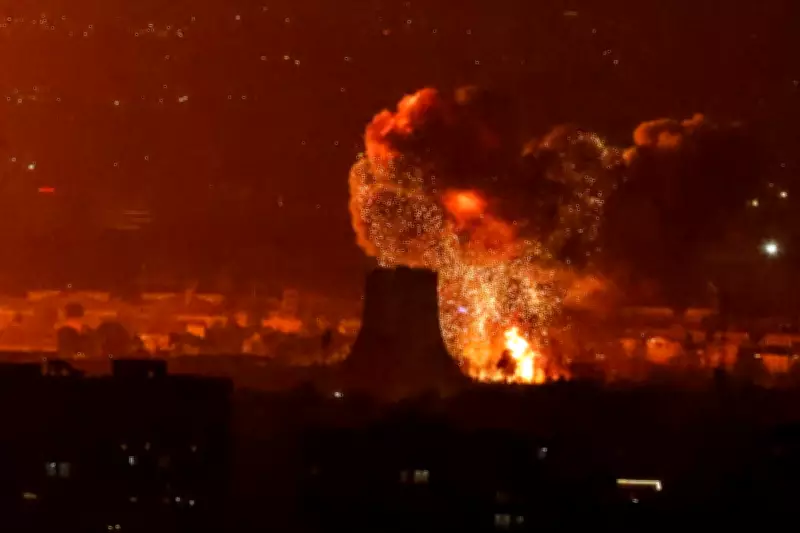
In 2015, Iran agreed to the Joint Comprehensive Plan of Action (JCPOA), halting enrichment in exchange for sanctions relief. Despite the U.S. withdrawal in 2018 under the Trump administration, the deal initially held, but Iran resumed its nuclear program in 2020, accelerating ballistic missile and drone production. In June 2025, U.S. and Israeli airstrikes targeted Iranian nuclear facilities, prompting Iranian missile and drone retaliations against Israel, most of which were intercepted.
Current Conflict and Strategic Reserves
Prior to recent conflicts, analysts estimated Iran held 3,000 ballistic missiles and tens of thousands of attack drones, with significant production capacity. In the first six weeks of ongoing hostilities, Iran launched at least 650 missiles at Israel and hundreds more regionally, though the rate has declined. U.S. and Israeli efforts have focused on destroying production and storage sites, but Iran's remaining stockpiles remain uncertain, with some analysts suspecting reserved caches for sustained conflict.

This military buildup, shaped by decades of adversity, underscores Iran's strategic shift from dependency to autonomy, leveraging proxy networks and asymmetric warfare to maintain regional clout amidst ongoing geopolitical tensions.