European powers, led by Britain and France, are advancing plans to deploy a multinational 'Reassurance Force' to Ukraine following a potential ceasefire, aiming to rebuild the nation's war-ravaged military and act as a deterrent against future Russian aggression.
Forging a Post-War Security Guarantee
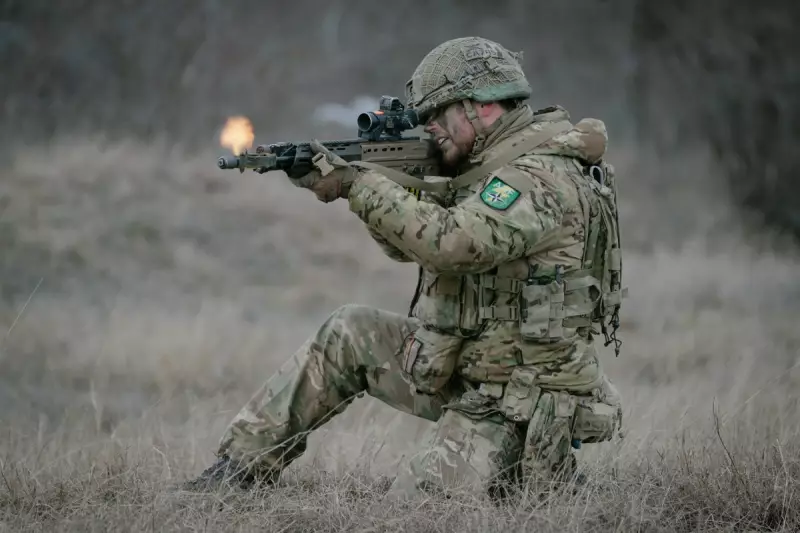
After months observing US-led peace negotiations from the sidelines, European nations are now asserting themselves in shaping Ukraine's future security. The concept, developed through discussions between Kyiv and a 'Coalition of the Willing', involves sending thousands of allied troops to cities across Ukraine. Their primary mission would be to retrain the Ukrainian army and help it recover its strength, thereby upholding any eventual peace deal.
Downing Street confirmed Britain is actively preparing for this multinational force, drawing personnel from continental partners. This planning continues despite the Kremlin's firm rejection this week, labelling any such foreign deployment as "unacceptable". The final deployment hinges on both warring sides agreeing to terms.

What Would the Force Actually Do?
The proposed force represents a significant shift. Initially, a European ground presence was dismissed when Washington revealed a draft peace proposal last week that ruled out international peacekeepers. However, the US has since warmed to the European security model, especially after European contributions helped foster decisive progress in recent talks in Geneva.
According to former British Army Colonel Philip Ingram, the contingent would likely function more as a "presence force" than a large military buffer designed to confront the Russian army directly. He suggested that European training units already working with Ukrainian soldiers in other countries could be redeployed to Ukraine. "This could be done on a series of bilaterals between Ukraine and contributing nations, and therefore negate it being labelled as Nato," Ingram told The Independent.
The scale of the force remains undecided. Earlier estimates ranged wildly from 20,000 to 100,000 troops, but by August, military chiefs were reportedly scaling back to more "realistic" numbers. French President Emmanuel Macron, during a virtual coalition meeting last week, stated a taskforce had been established to turn ideas into tangible commitments. The coalition is also considering providing air support based in nearby countries.
Key Players and Their Positions
Britain and France are positioned at the forefront of the initiative. Downing Street remains committed to stationing troops in Ukraine. Just before the US revealed its initial peace draft, Defence Secretary John Healey confirmed over £100 million was being prepared to cover the costs of sending British forces post-ceasefire, with specific military units already selected.
France is also vying for a leadership role, though Macron has been cautious with domestic messaging. He assured French radio that France would not rush to send troops, suggesting they could be stationed "in fallback positions in Kyiv or Odesa" to avoid sowing public panic.
Turkey has been more hesitant, confirming readiness to contribute to regional security but stating firm commitments require a ceasefire first. Macron indicated Turkey could play a naval role in the Black Sea. The United States, while intentionally keeping distance initially, has shown greater engagement recently. US Secretary of State Marco Rubio joined the virtual coalition meeting in a show of support, though Washington is unlikely to provide a physical troop presence.
Expert Analysis: Promise vs. Practicality
Experts caution that Europe must ensure it can deliver on its promises. Leo Litra, a visiting fellow with the European Council on Foreign Relations, argued that a smaller, effective force could still be impactful, citing the initial US mission in Vietnam which started with just 900 instructors. However, he noted that the US would still need to provide primary guarantees like air defence and intelligence to deter a full-scale invasion.

Sophia Besch, of the Carnegie Endowment for International Peace, echoed this sentiment. "Europeans cannot speak a credible American backstop into existence," she warned. She advised that Europe should focus on tangible support like training and helping Ukrainian forces regroup, rather than overpromising military action it cannot sustain alone.
The plans for a Reassurance Force underscore Europe's attempt to carve out a decisive role in guaranteeing a sustainable peace for Ukraine, even as Russia continues its assault and the path to a ceasefire remains fraught with difficulty.