
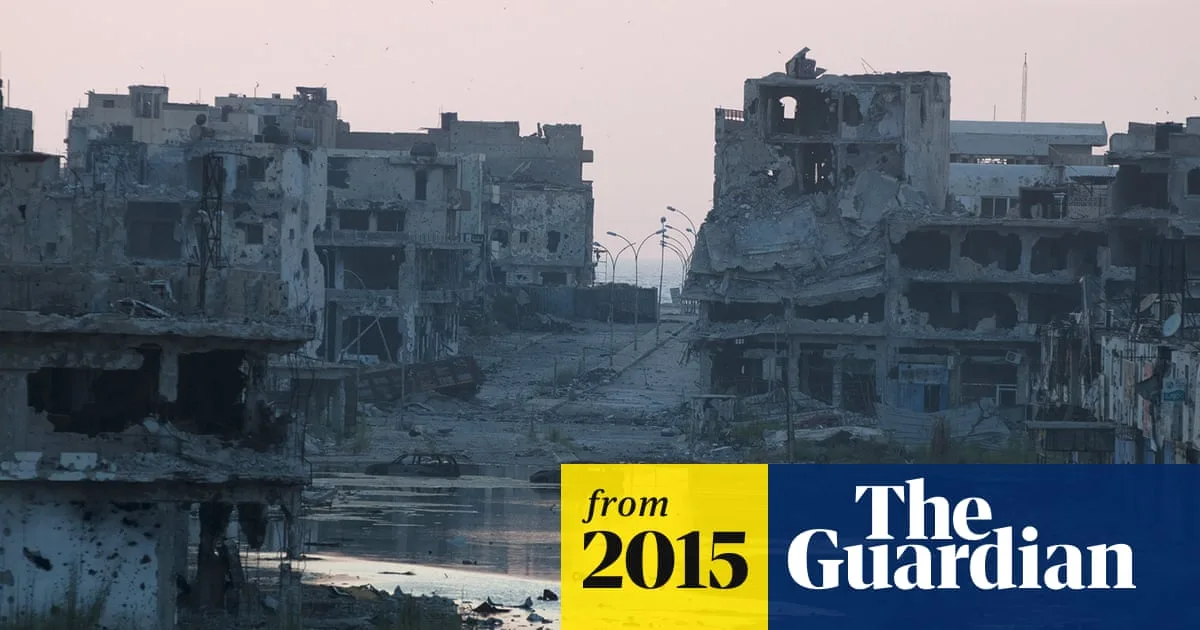
The Foreign Office will face questions over Libya's descent into a failed state after the foreign affairs select committee launched an inquiry into Britain's role in the overthrow of Muammar Gaddafi and the troubled aftermath.
Crispin Blunt, the Conservative chairman of the committee, said the intervention and subsequent breakdown had been a catastrophe for the Libyan people and now posed a growing global security threat, with Islamic State beginning to establish control in parts of the country and migration pressures mounting.
Blunt said the inquiry would examine the quality of analysis underpinning the decision to intervene, whether the consequences had been properly thought through, and whether the Foreign Office had the resources for such post-intervention planning. He questioned whether the UK, as a permanent member of the UN Security Council, had the means to act as a global player.
The inquiry will also consider whether the action went beyond the mandate of UN security council resolution 1973, as many have claimed, including the Russian government. Blunt noted that Moscow's anger over how the resolution was interpreted had made diplomacy on Syria and Ukraine more difficult, reinforcing a sense of western exceptionalism.
This is the first inquiry under Blunt's chairmanship, and he said he hoped it would be awkward for the government. He pointed out that only one member of his committee had voted against the no-fly zone in 2011, and asked what the international community should have done when faced with the imminent slaughter of people in Benghazi.
Chris Doyle, director of the Council for Arab-British Understanding, said the inquiry was timely because Libya remained a potential failed state and posed security risks to Europe. He added that it was difficult not to be critical, as UK policy in the region had not been a success.




