
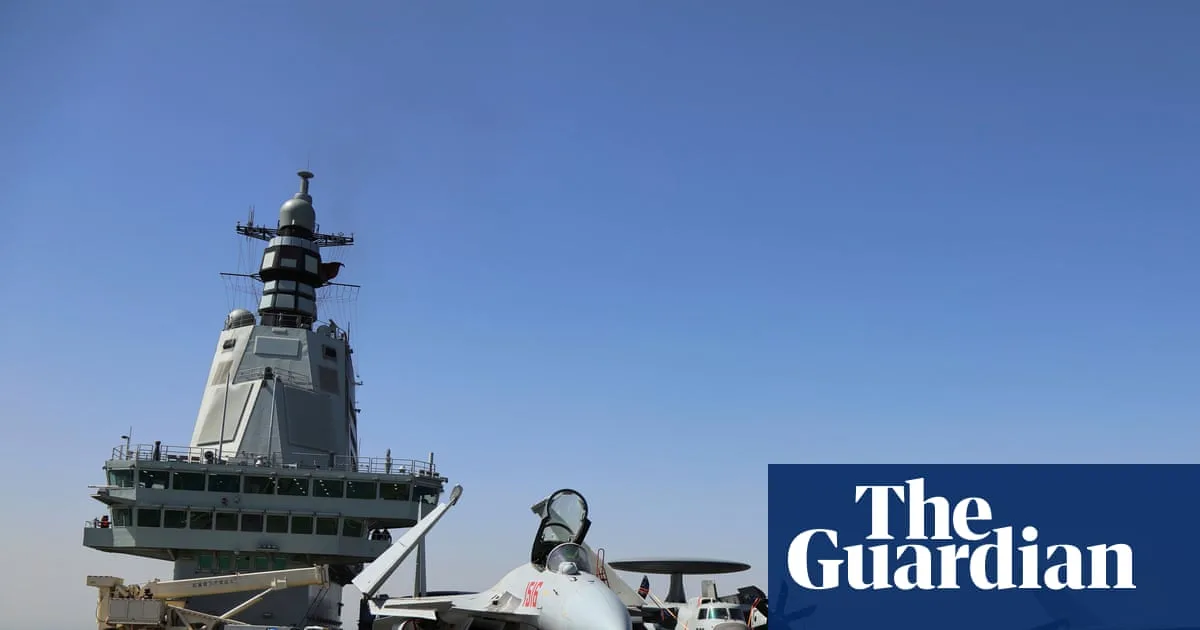
China has commissioned its most advanced aircraft carrier, the Fujian, at a ceremony overseen by President Xi Jinping, state media has confirmed. The vessel is the first to be designed and built entirely in China and becomes the third carrier in the People's Liberation Army Navy's rapidly expanding fleet.
The Fujian's electromagnetic launch system is a significant upgrade from the ski-jump systems used on its predecessors, the Liaoning and Shandong. The new system reduces stress on aircraft and ship, allows for more precise speed control, and can launch a wider range of aircraft, including heavier fighters with full fuel loads and the KJ-600 early warning and control plane.
With three carriers, China now has the second-largest carrier fleet in the world, behind the United States' 11. The navy said it has launched J-35 stealth fighters and J-15T heavy fighters from the Fujian, giving it 'full-deck operation capability'. US analysts note that the carrier does not allow for concurrent takeoffs and landings, unlike newer US carriers, but its electromagnetic catapult is found only on the latest Ford-class.
The expansion of China's carrier fleet is a key part of President Xi's military modernisation drive. Analysts say the new carrier will allow China to keep at least two carriers at sea at any time, vastly extending its patrol areas and strengthening its ability to put pressure on Taiwan and enforce claims in the South China and East China Seas.
Greg Poling of the Center for Strategic and International Studies said that while carriers are not particularly useful in the First Island Chain, they are essential for any contest with the US in the wider Indo-Pacific. Raymond Kuo of the RAND Corporation noted that US carriers are more capable but also more vulnerable to anti-ship missiles, adding that a third Chinese carrier 'severely complicates' Taiwanese defensive planning.
China's shipbuilding programme continues at an unrivalled pace, with observers monitoring new barge ships designed for amphibious landings and dual-use ferries able to carry military equipment across the Taiwan Strait. Evidence suggests a fourth carrier may already be under development.




