
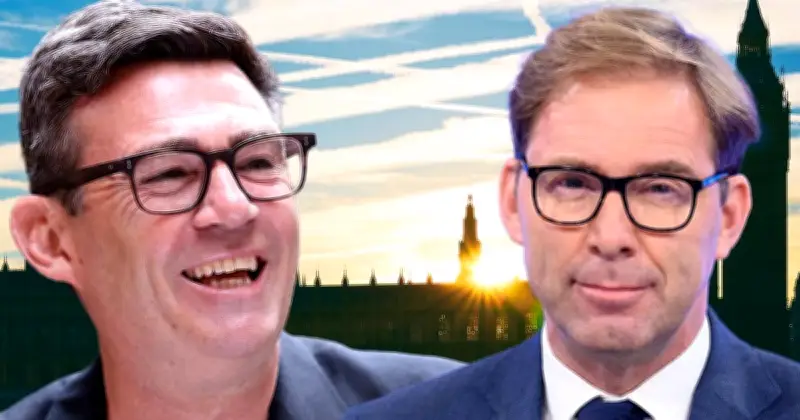
Former Conservative MP Tobias Ellwood has challenged incoming Prime Minister Andy Burnham to prove his commitment to national security by making two specific pledges: increasing defence spending and reversing cuts to development aid. In an opinion piece for the Express, Ellwood argues that Burnham's rhetoric on security lacks substance without concrete action.
Burnham's Defence Record Under Scrutiny
Ellwood notes that Burnham, who has yet to formally take office, recently declared that "the first responsibility of any government is to keep its people safe by strengthening our national security." However, his much-trailed speech in Manchester last month on economic vision barely mentioned defence. Ellwood warns that the economy and national security are now inseparable: "Without security, our economy becomes increasingly vulnerable; without a growing economy, we cannot afford to protect it."
Burnham has limited experience in defence and foreign affairs, yet around half of Britain's GDP depends on international trade. Ellwood suggests this may explain why Burnham felt compelled to set out his defence thinking early.
Beyond Military Hardware
Ellwood, author of Ten Steps to Prevent World War Three, argues that protecting Britain requires more than tanks, ships, and aircraft. "It requires statecraft," he writes. The purpose of a serious national security strategy should be to prevent wars, not just fight them. He emphasises that force is a last resort, most effective when backed by diplomacy, partnerships, intelligence, and development.
The drivers of conflict—weak states, food insecurity, infectious disease, organised crime, extremism, and mass displacement—must be addressed. Ellwood insists that "development and diplomacy must once again be recognised as core tools of national security, not optional extras." Properly targeted aid is an investment in Britain's security, building resilience and creating diplomatic off-ramps to prevent crises escalating into wars.
Two Pledges for a Safer Britain
Ellwood calls on Burnham to commit to two pledges: first, to ensure defence spending meets NATO's 2% GDP target and increases towards 2.5% as threats grow; second, to reverse cuts to the development budget, which fell from 0.7% to 0.5% of GNI. He argues that cutting development spending deepens instability overseas, driving refugees towards Europe and allowing extremists to exploit failing states.
"If Burnham is serious about making Britain safer, he must champion both hard and soft power," Ellwood concludes. "Otherwise, the threats no tank, warship or fighter jet can stop will increasingly arrive on our shores."




