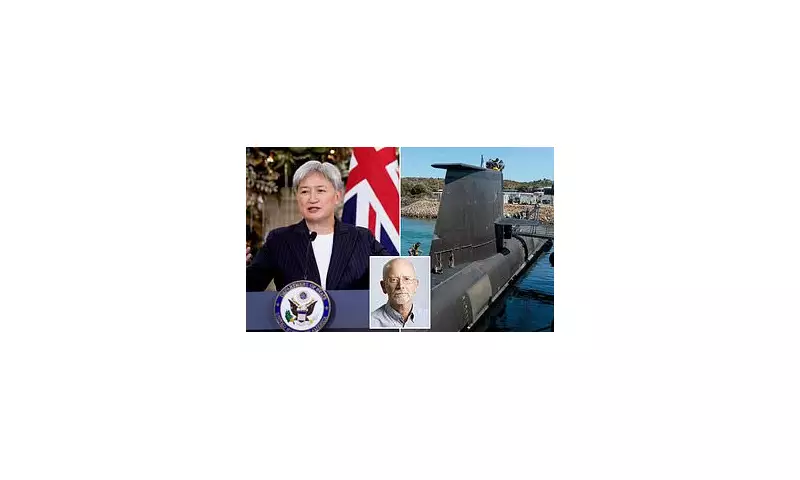
The landmark AUKUS security pact, set to cost Australia up to $368 billion over three decades, is facing renewed scrutiny over fundamental dangers, including the threat of making the nation a nuclear target. This comes as the deal receives backing from former US President Donald Trump and gains increasing support among the Australian public.
Rising Public Support Amid Strategic Concerns
Recent polling indicates a shift in Australian sentiment towards the trilateral agreement with the United States and United Kingdom. A nationwide survey of 2,045 people by the University of Technology Sydney (UTS) found that half of respondents (50%) in 2025 believe the deal, which will see Australia acquire nuclear-powered submarines, could help keep the country secure against a potential military threat from China. This marks a rise from 48% in 2024.
The poll also revealed strong backing for using AUKUS to deepen technological cooperation, with 68% supporting collaboration with the US and UK on advanced technologies in cyber security, artificial intelligence, and quantum computing.

A "Nuclear Target" on Perth and Sovereignty Questions
Despite growing public approval, prominent AUKUS critic Professor Mark Beeson, an adjunct professor at the Australia-China Relations Institute, has highlighted critical risks he believes most Australians are overlooking. A central component of the pact is the establishment of a facility at the Australian Navy's HMAS Stirling base in Perth from 2027, which will host up to 1,200 US and UK personnel, their families, and five nuclear-powered submarines.
"We will undoubtedly be a nuclear target," Professor Beeson warned. "I don't think many of the people living in Perth realise that, if they weren't a nuclear target before, they certainly will be when all these submarines start arriving." He described the base as a potential "launch pad for whatever American strategic adventure they decide to take on next."
This foreign military presence raises profound questions about Australian sovereignty. The UTS poll paradoxically found that 77% of Australians believe the country should make its foreign policy decisions regarding China independently, even when they differ from US preferences.
Strategic Redundancy and a "Ludicrous" Investment?
Professor Beeson questioned the strategic value and timing of the submarine acquisition. He argued that Australia's military contribution would be negligible in any major US-China conflict. "If the Chinese aren't deterred by America's overwhelming military power, they're not going to be deterred by anything we can do," he stated.
He also cast doubt on the submarines' long-term utility, suggesting the technology might be obsolete upon delivery. "I would bet an awful lot of money that the AUKUS subs will be duds by the time they get here, if they ever do," Beeson said, pointing to revolutions in drone technology that could make submarines easier to detect. He labelled the expenditure a "ludicrous long term investment of a lot of money we don't really have."
The deal's political future appears stable for now, with US Secretary of State Marco Rubio confirming earlier this month that AUKUS is going "full steam ahead" following a review initiated by the Trump administration.