
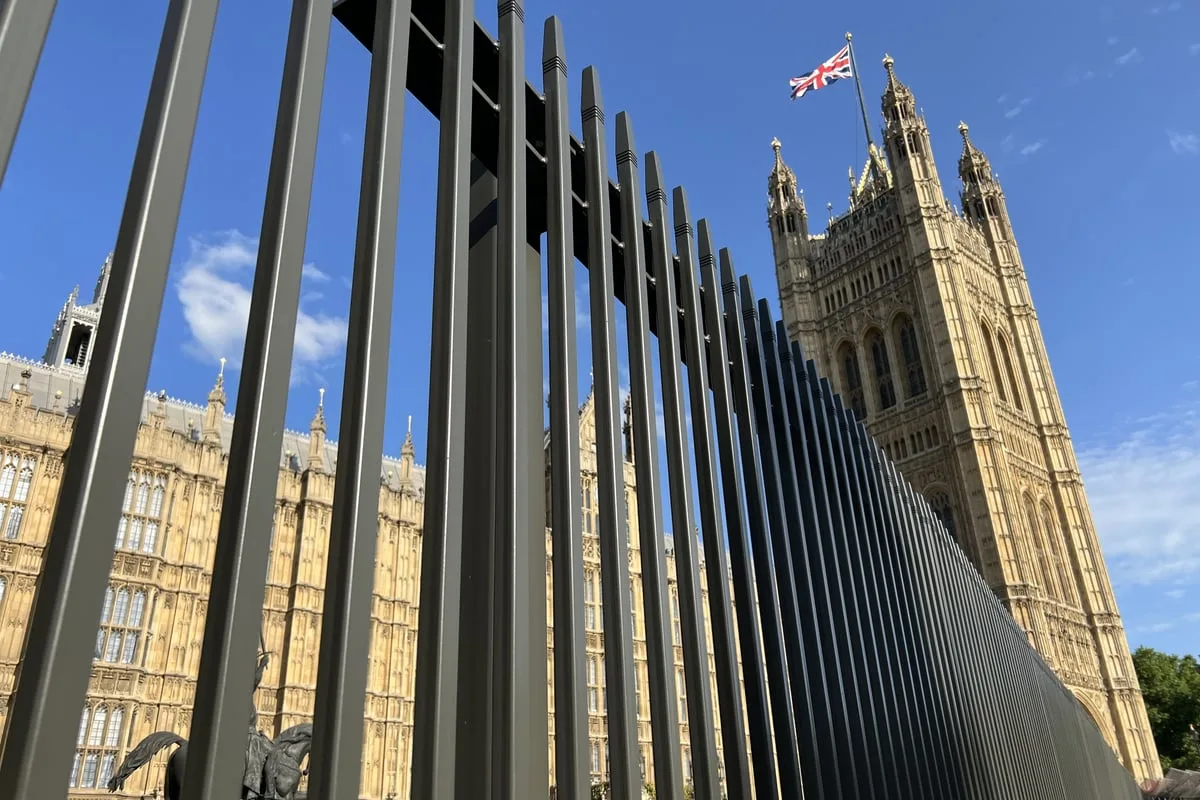
Parliament has confirmed there are “no plans” to erect watch towers in front of the House of Lords, following concerns over a new security fence. The metal barrier, installed along the western boundary of the Palace of Westminster, has sparked controversy among peers who argue it “cuts off sightlines” for security personnel.
Former Home Office minister Lord Blencathra had questioned whether observation posts would be added to give officers a clear view over the fence. In a written reply, Lords senior deputy speaker Lord Gardiner of Kimble stated that the fence design “carefully balances security requirements and heritage considerations” while maintaining necessary lines of sight.
The Metropolitan Police denied claims that officers considered the barrier “dangerous”, insisting it was erected in full consultation with firearms and counter-terror experts. The force emphasised that the fence, which separates Old Palace Yard from St Margaret Street and Abingdon Street, was designed to be removable to accommodate access needs.
Conservative former cabinet minister Lord Forsyth of Drumlean pressed for cost details, but Lord Gardiner refused to disclose them, citing security risks. He noted that publishing costs would provide adversaries with information about the level of mitigation in place. Instead, the House of Lords Finance Committee will conduct quarterly reviews of security works.
The controversy follows a separate row over a £10 million new door for the Lords, which was found to be faulty. A former public spending watchdog has been asked to investigate that project, branded “a scandalous waste of public money”.




